






- Industrial LCD display
-
Industrial Products
- DC Servo Drive
- AC Servo Drive
- other
- Heidelberg
- FANUC
- IFM
- Meter
- CCD
- Membrane Keypad
- Film
- YOKOGAWA Module
- Card
- ABB
- MITSUBISHI
- FANUC
- KEYENCE
- BECKHOFF
- Honeywell
- HOLLYSYS
- FUJI servo drives
- HP
- solenoid valve
- thermostat
- Siemens adapter
- color oscilloscope
- Fujitsu connector
- CHELIC
- SMC
- CISCO Module
- INTEL
- Key board
- FAIRCHILD
- Motherboard
- Board
- Bearing
- other
- Control Panel
- Contactor
- Circuit
- OMRON
- Relay
- Controller
- Photoelectric Switch
- Photoelectric Sensor
- Original
- Fan
- Motor Driver
- Limit Switch
- Amplifier
- power supply
- LENZE
- Cable
- Encoder
- Sensor
- Transformer
- Fiber Optic Sensor
- Protection Relay
- Temperature Controller
- Proximity Switch
- Switch Sensor
- Siemens
- Industrial board
- HMI Touch Glass
-
HMI Full Machine Whole unit
- OMRON HMI Touch Panel
- Siemens HMI Touch Panel
- Mitsubishi HMI Touch Panel
- Allen-Bradley automation HMI Touch Panel
- DELTA HMI Touch Panel
- EVIEW DELTA HMI Touch Panel
- KINCO DELTA HMI Touch Panel
- HITECH HMI Touch Panel
- WEINTECK HMI Touch Panel
- TECVIEW HMI Touch Panel
- WEINVIEW HMI Touch Panel
- PRO-FACE HMI Touch Panel
- SIMATIC HMI Touch Panel
- AMPIRE HMI Touch Panel
- HEIDELBERG HMI Touch Panel
- PANASONIC HMI Touch Panel
- PATLITE HMI Touch Panel
- KYOCERA HMI Touch Panel
- KEYENCE HMI Touch Panel
- WEINVIEW HMI Touch Panel
- HITECH HMI Touch Panel
- FUJI HMI Touch Panel
- HAKKO HMI Touch Panel
- SCHNEIDER HMI Touch Panel
- SAMKOON touch panel
- other
- Module
- lcd inverter
- Membrane Keypad Switch
- Winni Touch Screens
- Frequency Inverter
- Servo Motor
- PLC


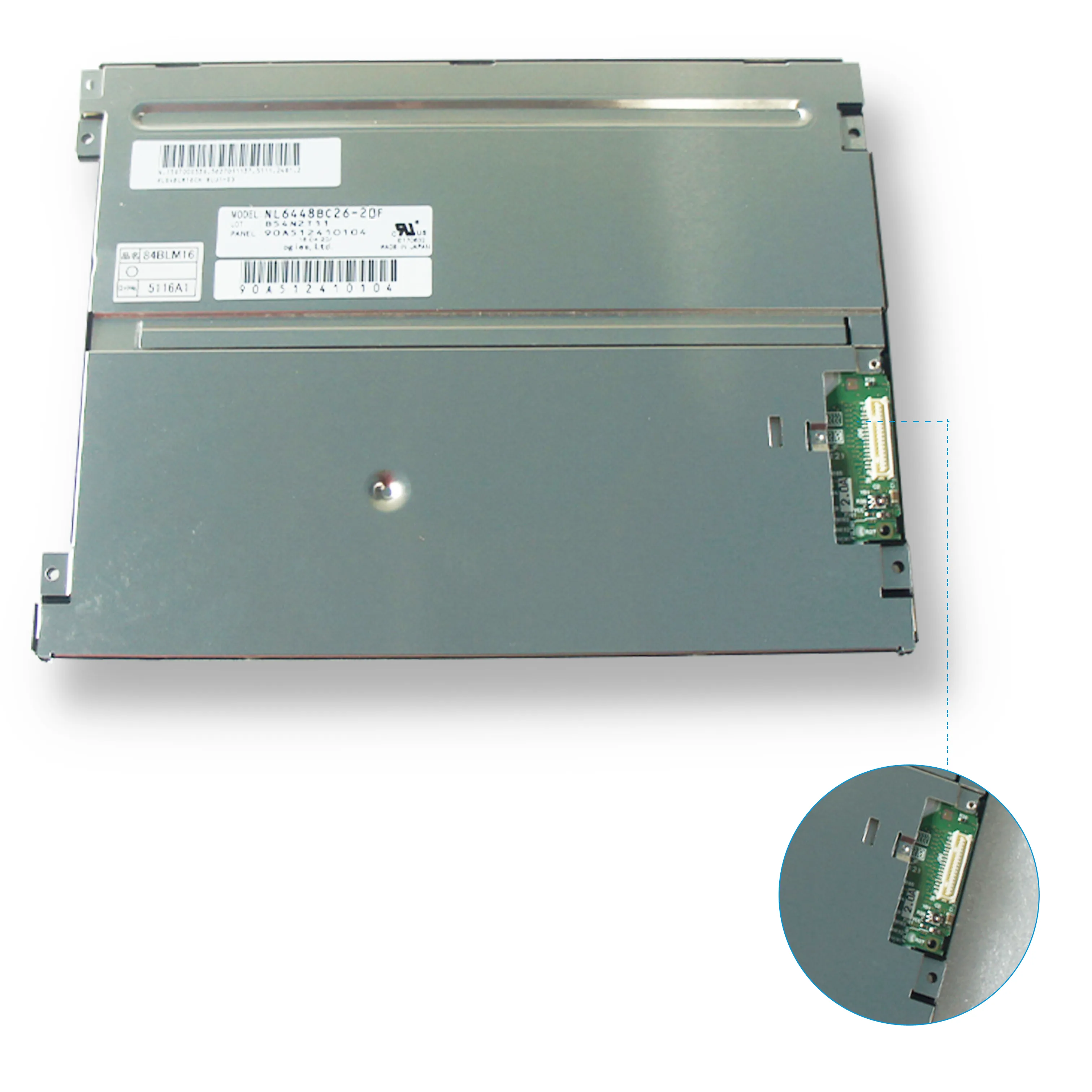


In the intricate world of industrial automation, medical equipment, and specialized instrumentation, the display is far more than a simple output window. It is the critical interface through which complex data is translated into actionable insight, where reliability and clarity are non-negotiable. At the heart of many such demanding applications lies a specific component: the AA084VB02, an 8.4-inch LCD display module manufactured by Mitsubishi Electric. This isn't a consumer-grade screen; it is a precision-engineered solution built for environments where failure is not an option.
This article delves deep into the technical essence and practical significance of the Mitsubishi AA084VB02. We will move beyond basic specifications to explore the engineering rationale behind its design, its optimal application landscapes, and the tangible value it delivers to system integrators and OEMs. Understanding this module is to understand a key component in the backbone of mission-critical visual systems.
Unpacking the Core Specifications: A Foundation of Clarity
The Mitsubishi AA084VB02 is defined by a set of deliberate specifications that target specific industrial needs. Its 8.4-inch diagonal screen size offers a substantial viewing area while remaining compact enough for embedded systems. The native resolution of 640 x 480 pixels (VGA) is a classic and robust standard. While not high-definition by modern consumer standards, this resolution provides excellent sharpness for character, numeric, and schematic display at this screen size, with the significant advantage of lower processing overhead and proven compatibility with legacy and modern industrial PCs alike.
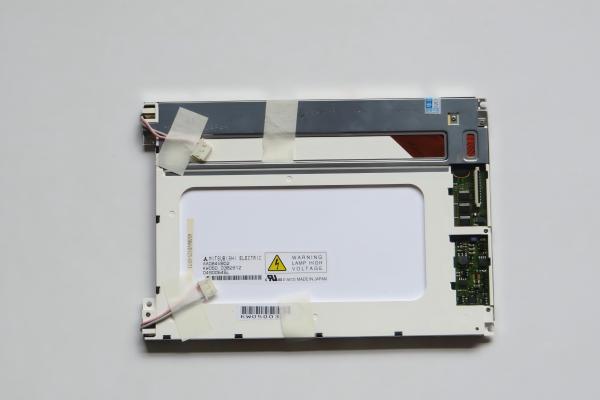

The module utilizes a transmissive TFT LCD technology with a CCFL backlight. This choice ensures consistent, bright illumination and wide viewing angles, crucial for panels that may be viewed from off-axis in control panels or medical carts. The inclusion of an LVDS interface is a key feature, providing a robust, noise-resistant digital signal transmission that is ideal for the electrically noisy environments typical in factories or medical facilities, ensuring signal integrity over longer cable runs compared to older TTL interfaces.
The Engineering Philosophy: Durability and Precision
Mitsubishi's design for the AA084VB02 is rooted in industrial-grade reliability. Every aspect is chosen for longevity and stable performance. The CCFL backlight, though now supplemented by LED alternatives in newer models, offers a proven track record of long life and stable color temperature output, which is vital in color-critical diagnostic applications. The module is engineered to operate within a wide temperature range, tolerating the heat of enclosed machinery cabinets or the controlled chill of a lab.
Precision in timing and signal handling is paramount. The module's controller is designed for exacting synchronization, eliminating ghosting or artifacts that could lead to misinterpretation of data. This focus on precision extends to the mechanical design, with a rigid frame and secure connector system that resists vibration and ensures a reliable connection throughout the product lifecycle, embodying the "set it and forget it" requirement of embedded industrial design.
Ideal Application Landscapes: Where This Module Excels
The AA084VB02 finds its true home in environments where performance trumps novelty. It is a staple in industrial Human-Machine Interfaces (HMIs) for factory automation, PLC control stations, and test equipment, where its clear display of process variables, alarms, and diagrams is essential. In the medical field, it has been integrated into patient monitoring systems, diagnostic devices, and laboratory analyzers, where its reliability can be a matter of patient safety.
Further applications include transportation systems (for information displays or control units), point-of-sale/kiosk terminals, and specialized military and aerospace instrumentation. In these roles, the module is valued not for its pixel count, but for its predictable behavior, ease of integration, and proven ability to perform continuously for thousands of hours without degradation—a metric far more important than sheer visual spectacle.
Integration Considerations for System Designers
For engineers designing this module into a system, several factors are critical. The LVDS interface requires a compatible controller on the host side, but this is a standard feature on most industrial SBCs and graphics cards. Power supply design must account for the CCFL backlight's inverter, which requires a high-voltage AC supply, adding a layer of complexity compared to direct-drive LED backlights. Thermal management is also crucial; ensuring adequate airflow around the module, particularly the inverter, will maximize its operational life.
Mechanically, designers must account for the module's bezel and mounting points, often designing a front panel that securely holds and protects the screen. Furthermore, understanding the electromagnetic compatibility (EMC) characteristics is vital, as the display must neither be susceptible to nor a source of interference in its final application, a strength of the LVDS design philosophy.
The Value Proposition: Beyond the Datasheet
The enduring relevance of a module like the AA084VB02 lies in its total cost of ownership and risk mitigation. For an OEM, choosing a display from a tier-one manufacturer like Mitsubishi means accessing extensive technical documentation, reliable supply chain history (even for legacy products), and consistent quality. This reduces development risk and long-term support headaches.
The value is in system stability. By deploying a known, qualified component with predictable performance under stress, integrators avoid the unforeseen compatibility issues or early failures that can plague cheaper, untested alternatives. In critical applications, the cost of display failure—from production downtime to a missed diagnostic—dwarfs the initial component cost, making the AA084VB02 a strategically prudent investment.
Legacy and Future Context in a Changing Market
The AA084VB02 represents a specific era of display technology—the reliable workhorse of the VGA/CCFL/LVDS paradigm. While newer technologies like LED backlighting, higher resolutions, and capacitive touch have since become prominent, this module maintains a vital role. It supports the long service life of existing equipment, often measured in decades, where form-fit-function replacement is necessary for maintenance.
Its legacy also informs future design. The principles it embodies—signal integrity via LVDS, wide operating tolerances, and mechanical robustness—remain absolutely relevant. Newer modules evolve these principles with modern technology. Thus, understanding the AA084VB02 provides a foundational framework for evaluating any industrial display, past, present, or future, based on the core tenets of reliability and suitability for purpose.
Frequently Asked Questions (FAQs)
Q10: Where can I find technical documentation for integration?A: Detailed datasheets, interface manuals, and mechanical drawings are typically available through authorized Mitsubishi distributors or industrial electronic component suppliers.
Conclusion
The Mitsubishi AA084VB02 8.4-inch LCD display is a testament to the principle that in industrial and medical technology, optimal performance is defined by context, not just specifications. It exemplifies how a deliberately chosen resolution, a robust LVDS interface, and a focus on enduring reliability create value that far exceeds the sum of its pixels.