






All Categories
- Industrial LCD display
-
Industrial Products
- DC Servo Drive
- AC Servo Drive
- other
- Heidelberg
- FANUC
- IFM
- Meter
- CCD
- Membrane Keypad
- Film
- YOKOGAWA Module
- Card
- ABB
- MITSUBISHI
- FANUC
- KEYENCE
- BECKHOFF
- Honeywell
- HOLLYSYS
- FUJI servo drives
- HP
- solenoid valve
- thermostat
- Siemens adapter
- color oscilloscope
- Fujitsu connector
- CHELIC
- SMC
- CISCO Module
- INTEL
- Key board
- FAIRCHILD
- Motherboard
- Board
- Bearing
- other
- Control Panel
- Contactor
- Circuit
- OMRON
- Relay
- Controller
- Photoelectric Switch
- Photoelectric Sensor
- Original
- Fan
- Motor Driver
- Limit Switch
- Amplifier
- power supply
- LENZE
- Cable
- Encoder
- Sensor
- Transformer
- Fiber Optic Sensor
- Protection Relay
- Temperature Controller
- Proximity Switch
- Switch Sensor
- Siemens
- Industrial board
- HMI Touch Glass
-
HMI Full Machine Whole unit
- OMRON HMI Touch Panel
- Siemens HMI Touch Panel
- Mitsubishi HMI Touch Panel
- Allen-Bradley automation HMI Touch Panel
- DELTA HMI Touch Panel
- EVIEW DELTA HMI Touch Panel
- KINCO DELTA HMI Touch Panel
- HITECH HMI Touch Panel
- WEINTECK HMI Touch Panel
- TECVIEW HMI Touch Panel
- WEINVIEW HMI Touch Panel
- PRO-FACE HMI Touch Panel
- SIMATIC HMI Touch Panel
- AMPIRE HMI Touch Panel
- HEIDELBERG HMI Touch Panel
- PANASONIC HMI Touch Panel
- PATLITE HMI Touch Panel
- KYOCERA HMI Touch Panel
- KEYENCE HMI Touch Panel
- WEINVIEW HMI Touch Panel
- HITECH HMI Touch Panel
- FUJI HMI Touch Panel
- HAKKO HMI Touch Panel
- SCHNEIDER HMI Touch Panel
- SAMKOON touch panel
- other
- Module
- lcd inverter
- Membrane Keypad Switch
- Winni Touch Screens
- Frequency Inverter
- Servo Motor
- PLC

Recommended Products




Home » News
AA090TB01 9.0 Inch 1280x768 TFT-LCD Panel
In the intricate world of electronic displays, the choice of a panel is a foundational decision that ripples through the performance and user experience of the final product. At the heart of countless industrial, commercial, and embedded systems lies a specific component: the AA090TB01, a 9.0-inch TFT-LCD panel with a resolution of 1280 x 768 pixels. This article delves deep into this particular display module, moving beyond basic specifications to explore its technological significance, inherent advantages, and optimal application landscapes.
While seemingly just another part number, the AA090TB01 represents a carefully balanced set of features tailored for reliability and clarity in demanding environments. We will dissect its core architecture, analyze the strategic benefits of its WXGA resolution on a 9-inch canvas, and evaluate its compatibility with various interface technologies. Furthermore, we will contrast it with common alternatives, provide a roadmap for seamless integration, and project its role in the evolving display market. This comprehensive analysis aims to equip engineers, product designers, and procurement specialists with the insights needed to make an informed decision about this pivotal component.
Decoding the AA090TB01: Core Architecture and Specifications
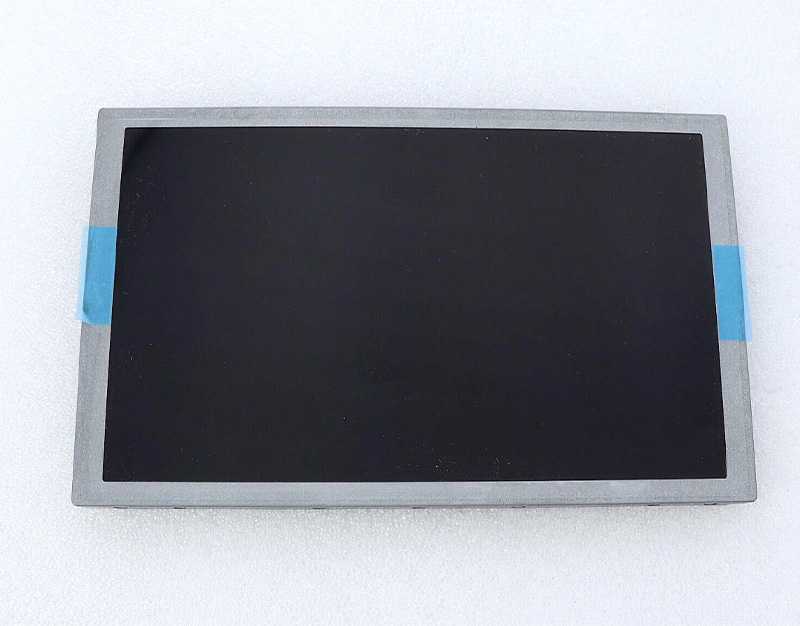
The AA090TB01 is built upon a Twisted Nematic (TN) or potentially an Advanced Fringe Field Switching (AFFS) TFT-LCD architecture, designed for robust performance. Its defining physical characteristic is the 9.0-inch diagonal active area, providing a substantial viewing real estate within a relatively compact form factor. The native resolution of 1280 horizontal pixels by 768 vertical pixels is a key differentiator, achieving a WXGA (Wide Extended Graphics Array) standard. This results in a pixel density of approximately 166 PPI (Pixels Per Inch), which offers a sharp image suitable for text, graphics, and detailed user interfaces.
Beyond pixels, critical specifications include its aspect ratio of 15:9 (effectively 5:3), which is slightly taller than the ubiquitous 16:9 widescreen, allowing for more vertical content. Typical brightness levels range from 300 to 500 nits, ensuring good visibility in various lighting conditions. The panel supports a standard color depth of 262K (6-bit + FRC) or 16.7M (8-bit) colors, delivering adequate color reproduction for most industrial and instrumentation applications. Understanding these foundational specs is crucial for assessing its fit for any given project.

The Strategic Advantage of 1280x768 WXGA Resolution
The choice of 1280x768 resolution on a 9-inch panel is a calculated engineering decision rather than a coincidence. This WXGA format provides a significant information density advantage over lower-resolution alternatives like 800x480. The extra horizontal and vertical pixels allow for the display of complex HMI (Human-Machine Interface) dashboards, multi-column data logs, detailed schematic diagrams, or wider spreadsheet views without excessive scrolling or compromised legibility.
Furthermore, this resolution strikes an optimal balance between clarity and system resource load. While higher resolutions like Full HD would demand more powerful and expensive processing units, faster interface bandwidth, and potentially impact power consumption, 1280x768 delivers a crisp image while remaining efficiently manageable by mainstream embedded processors and LVDS or MIPI interfaces. This makes it a sweet spot for applications where functional clarity and cost-effective system design are paramount.
Interface Compatibility and Signal Integration
Integrating the AA090TB01 into a system hinges on its interface. Most commonly, this panel utilizes an LVDS (Low-Voltage Differential Signaling) interface, often in a 1-channel, 8-bit configuration (e.g., 1CH 8-bit LVDS). LVDS remains a gold standard in industrial displays for its robustness, noise immunity, and ability to transmit high-speed data over longer cable lengths with lower electromagnetic interference. This makes the panel ideal for environments with electrical noise, such as factory floors or medical equipment.
Some versions may also offer compatibility with other interfaces like RGB or MIPI DSI. The integration process involves matching the panel's pinout, voltage requirements (typically 3.3V or 5V for logic and a higher voltage for the backlight), and timing characteristics with the host controller's output. Success requires careful consultation of the panel's datasheet to align power sequencing, signal mapping, and EDID data to ensure a stable and flicker-free display output from power-on.
Application Landscapes: Where the AA090TB01 Excels
The technical profile of the AA090TB01 directs it towards specific, demanding application verticals. Its blend of medium size, high resolution, and reliable interface makes it a premier choice for Industrial Human-Machine Interfaces (HMIs) on PLCs, test and measurement equipment, and automation control panels, where data clarity and operational reliability are non-negotiable.
In the medical device field, it finds use in portable diagnostic instruments, patient monitoring systems, and smaller surgical displays, where its accuracy is critical. The transportation sector utilizes it for in-vehicle infotainment systems, rear-seat displays, and navigation units for commercial vehicles. Additionally, it serves well in point-of-sale (POS) terminals, kiosks, and ruggedized portable devices across retail, logistics, and field service. Its value shines in applications where durability, readability, and consistent performance outweigh the need for consumer-grade ultra-high color gamuts or refresh rates.
Competitive Analysis: Positioning in the Market
Positioning the AA090TB01 requires comparison with common alternatives. Against 9-inch 1024x600 panels, the AA090TB01 offers superior sharpness and information capacity, justifying a potentially higher cost for performance-critical uses. Compared to 10.1-inch 1280x800 panels, it provides a slightly more compact solution with nearly identical resolution, beneficial where space is constrained.
The most significant contrast is with modern IPS (In-Plane Switching) panels. While IPS offers far superior viewing angles (often 178/178 degrees) and better color consistency, the AA090TB01's TN/AFFS technology typically provides faster response times, lower power consumption, and a lower cost structure. Therefore, the choice becomes application-defined: choose IPS for consumer-facing devices with wide viewing angles; opt for the AA090TB01 or similar for fixed-viewing-angle, cost-sensitive, or battery-conscious industrial and embedded projects where its specific resolution is an asset.
Future-Proofing and Long-Term Supply Considerations
Selecting a display module like the AA090TB01 often involves planning for product lifecycles that span years. Therefore, evaluating its future viability is essential. Key considerations include the manufacturer's commitment to the product line, the availability of second-source suppliers for compatible panels, and the longevity of its core interface technology. LVDS, while mature, is expected to remain supported in embedded processors for the foreseeable future.
To mitigate supply chain risk, designers should identify compatible alternative panel models from other manufacturers with matching mechanical footprints, interface protocols, and electrical characteristics. Furthermore, designing a driver board with some flexibility in timing controller programming can accommodate minor variances between panel batches or alternative sources. Planning for these contingencies ensures that the product remains in production without costly last-minute redesigns, securing the investment made in integrating this specific display solution.
FAQs: AA090TB01 9.0-Inch LCD Panel
1. What is the exact resolution and aspect ratio of the AA090TB01?It is 1280 x 768 pixels (WXGA) with an aspect ratio of 15:9 (or 5:3).
2. What type of LCD technology does it use?It typically uses TN (Twisted Nematic) or AFFS-type technology, offering good response times and cost-effectiveness.
3. What is the most common interface for this panel?A 1-channel, 8-bit LVDS (Low-Voltage Differential Signaling) interface is standard.
4. Is this panel suitable for outdoor use?With a typical brightness of 300-500 nits, it may be readable in shaded outdoors. For direct sunlight, a high-brightness version (700+ nits) or a separate optical bonding service would be needed.
5. What are its primary application areas?Industrial HMIs, medical devices, transportation systems, POS terminals, and various embedded systems.
6. How does it compare to a 9-inch 1024x600 panel?It provides significantly higher pixel density and information display capacity, making it sharper and better for complex interfaces.
7. Does it have a touch screen?The AA090TB01 refers to the LCD panel only. Touch functionality (resistive or capacitive) is usually added as a separate overlay or module.
8. What is the typical operating voltage?The logic interface typically runs on 3.3V, while the backlight LED array may require a higher voltage (e.g., 12V or 24V), depending on the configuration.
9. Can it be replaced with an IPS panel easily?Not directly. Mechanical dimensions, interface pinouts, and power requirements may differ. A driver board redesign may be necessary.
10. Where can I find the detailed datasheet?The datasheet should be obtained from authorized distributors or the panel manufacturer (such as Innolux, AUO, or others, depending on the source).
Conclusion
The AA090TB01 9.0-inch WXGA TFT-LCD panel stands as a testament to targeted engineering, offering a specific blend of size, resolution, and reliability that meets the exacting demands of professional and industrial markets. Its 1280x768 resolution provides a critical advantage in information density, while its robust LVDS interface ensures stable operation in challenging environments.
Through this analysis, it becomes clear that this panel is not a generic consumer component but a specialized tool. Its value is maximized in applications where clarity, durability, and system-level efficiency are prioritized over ultra-wide viewing angles or consumer media consumption features. For designers navigating the complex display landscape, understanding the nuanced strengths of modules like the AA090TB01 is key to developing products that are not only functional but also competitively optimized for their intended lifespan and operational context.