






- Industrial LCD display
-
Industrial Products
- DC Servo Drive
- AC Servo Drive
- other
- Heidelberg
- FANUC
- IFM
- Meter
- CCD
- Membrane Keypad
- Film
- YOKOGAWA Module
- Card
- ABB
- MITSUBISHI
- FANUC
- KEYENCE
- BECKHOFF
- Honeywell
- HOLLYSYS
- FUJI servo drives
- HP
- solenoid valve
- thermostat
- Siemens adapter
- color oscilloscope
- Fujitsu connector
- CHELIC
- SMC
- CISCO Module
- INTEL
- Key board
- FAIRCHILD
- Motherboard
- Board
- Bearing
- other
- Control Panel
- Contactor
- Circuit
- OMRON
- Relay
- Controller
- Photoelectric Switch
- Photoelectric Sensor
- Original
- Fan
- Motor Driver
- Limit Switch
- Amplifier
- power supply
- LENZE
- Cable
- Encoder
- Sensor
- Transformer
- Fiber Optic Sensor
- Protection Relay
- Temperature Controller
- Proximity Switch
- Switch Sensor
- Siemens
- Industrial board
- HMI Touch Glass
-
HMI Full Machine Whole unit
- OMRON HMI Touch Panel
- Siemens HMI Touch Panel
- Mitsubishi HMI Touch Panel
- Allen-Bradley automation HMI Touch Panel
- DELTA HMI Touch Panel
- EVIEW DELTA HMI Touch Panel
- KINCO DELTA HMI Touch Panel
- HITECH HMI Touch Panel
- WEINTECK HMI Touch Panel
- TECVIEW HMI Touch Panel
- WEINVIEW HMI Touch Panel
- PRO-FACE HMI Touch Panel
- SIMATIC HMI Touch Panel
- AMPIRE HMI Touch Panel
- HEIDELBERG HMI Touch Panel
- PANASONIC HMI Touch Panel
- PATLITE HMI Touch Panel
- KYOCERA HMI Touch Panel
- KEYENCE HMI Touch Panel
- WEINVIEW HMI Touch Panel
- HITECH HMI Touch Panel
- FUJI HMI Touch Panel
- HAKKO HMI Touch Panel
- SCHNEIDER HMI Touch Panel
- SAMKOON touch panel
- other
- Module
- lcd inverter
- Membrane Keypad Switch
- Winni Touch Screens
- Frequency Inverter
- Servo Motor
- PLC


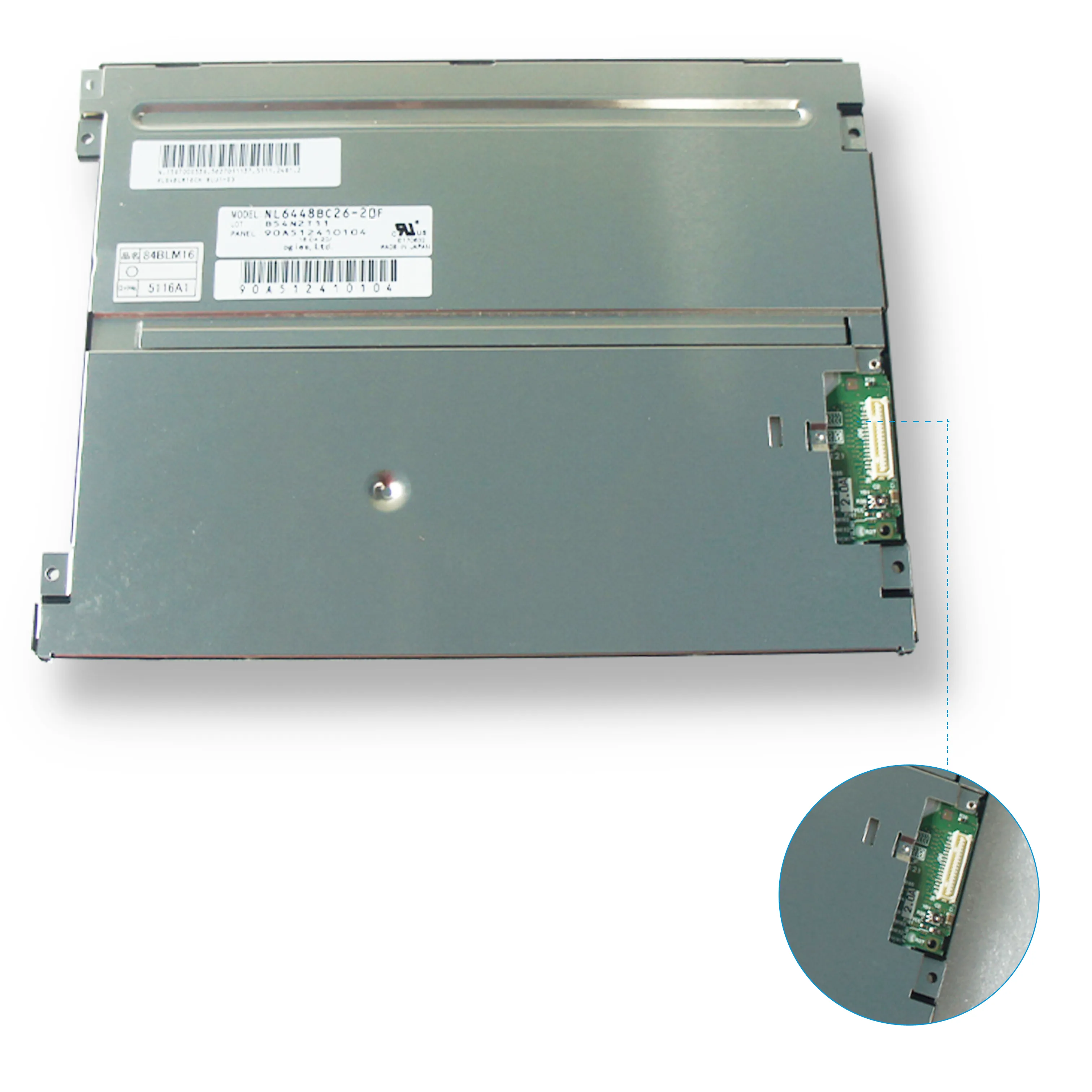


AA070ME13 New Mitsubishi 7.0"800*480 TFT-LCD
In the intricate world of industrial and embedded display solutions, the choice of a TFT-LCD module can fundamentally shape the performance, reliability, and user experience of the final product. At the forefront of this critical component category stands the AA070ME13, a 7.0-inch display engineered by the renowned Mitsubishi Electric. This 800 x 480 pixel TFT-LCD is not merely a screen; it represents a sophisticated convergence of optical performance, rugged durability, and versatile integration capabilities designed for demanding environments.
This article delves into a comprehensive analysis of the AA070ME13, moving beyond basic specifications to explore its core technological advantages and practical applications. We will examine the unique attributes of its optical system, its robust mechanical and electrical design, and the specific market sectors where it delivers unparalleled value. For engineers, product designers, and procurement specialists, understanding the depth of this module's features is key to unlocking its potential in creating superior human-machine interfaces.
Optical Excellence and Visual Performance
The AA070ME13 establishes its foundation with exceptional optical characteristics. Its 800 x 480 WVGA resolution provides a sharp and clear image suitable for displaying complex data, graphical user interfaces, and diagnostic information. A critical feature is its high brightness, typically reaching 1000 nits or more, which ensures perfect readability even under direct sunlight or in brightly lit industrial settings. This is often coupled with an optical bonding option.
Optical bonding fills the air gap between the LCD panel and the cover glass with a transparent resin. This process drastically reduces surface reflections, enhances contrast by minimizing internal light scattering, and prevents condensation or dust ingress. The result is a display that offers superior visual clarity, ruggedness, and a wider viewing angle, making it ideal for applications where visual accuracy is non-negotiable, from outdoor kiosks to vehicle dashboards.
Robust Construction for Demanding Environments
Mitsubishi Electric has designed the AA070ME13 to thrive where standard commercial displays would fail. Its construction is inherently rugged and reliable. The module features a robust metal frame that provides structural integrity and effective electromagnetic shielding. This design ensures stable operation in the presence of electrical noise common in industrial machinery, medical equipment, or transportation systems.
Furthermore, the display is built to withstand extended temperature ranges, often from -30°C to +80°C, guaranteeing performance in both freezing cold and scorching hot environments. Its resistance to vibration and shock makes it a dependable choice for mobile or heavy machinery applications. This durability translates directly into reduced downtime, lower maintenance costs, and a longer operational lifespan for the end product, a crucial consideration for B2B and industrial clients.
Interface and Integration Flexibility
Ease of integration is a paramount concern for design engineers, and the AA070ME13 addresses this with a versatile and straightforward interface. It commonly utilizes a standard LVDS (Low-Voltage Differential Signaling) interface, a widely adopted and robust protocol for transmitting high-speed video data with minimal electromagnetic interference. This compatibility simplifies connection to a vast array of embedded processors and single-board computers.
The module typically includes a comprehensive backlight driver circuit, often supporting LED backlighting for greater efficiency, longer life, and better dimming control compared to older CCFL technology. The inclusion of a controller board (driver IC) on the module itself handles timing and signal processing, offloading this task from the host system and streamlining the development process, allowing teams to focus on application software rather than low-level display drivers.
Target Applications and Industry Solutions
The specific combination of features in the AA070ME13 makes it a targeted solution for several key vertical markets. In industrial automation, it serves as the perfect HMI for PLCs, control panels, and factory floor monitoring systems, where readability and durability are critical. The transportation sector utilizes it in dashboard displays, fleet management terminals, and railway control systems, benefiting from its wide temperature tolerance and resistance to vibration.
Other significant applications include medical devices (where reliability is paramount), point-of-sale and kiosk systems (requiring sunlight readability and constant operation), and marine and aviation instrumentation. In each case, the module is not a generic component but a tailored display engine that meets the stringent environmental and performance standards of the industry.
Comparative Advantage in the Market Landscape
When positioned against other 7-inch displays, the AA070ME13's value proposition becomes clear. While many modules may offer similar resolution, Mitsubishi's strength lies in its holistic engineering. The integration of high-brightness panels with optical bonding as a standard or readily available option is a key differentiator. Furthermore, Mitsubishi Electric's reputation for exceptional quality control and long-term product support provides an assurance of supply and consistency that is highly valued in long-lifecycle projects.
Competitors might compete on price for basic specs, but for applications where failure is not an option, the AA070ME13's proven reliability, superior optical performance in challenging lighting, and robust construction justify its position as a premium, solution-oriented component. It reduces project risk and total cost of ownership over the product's lifespan.
Design Considerations and Implementation Best Practices
Successfully implementing the AA070ME13 requires attention to several design factors. Power supply design must be clean and stable, with particular attention to the backlight driver's current requirements. Thermal management, though aided by the module's wide operating range, should still be considered within the end-product's enclosure to ensure peak performance and longevity.
Mechanically, designers must account for the module's exact footprint, mounting hole positions, and connector placement. Engaging with Mitsubishi's technical documentation and support early in the design phase is recommended to address interface specifics, such as signal timing and initialization sequences. Proper ESD protection on the host board is also essential to safeguard the sensitive LVDS inputs during handling and operation.
FAQs: AA070ME13 TFT-LCD Module
Q10: Why choose this over a cheaper commercial display?A10: For its ruggedness, reliability in extreme conditions, superior optical performance in bright light, and long-term supply support—critical for industrial and professional products.
Conclusion
The Mitsubishi AA070ME13 7.0-inch TFT-LCD module stands as a testament to engineering focused on performance under pressure. It transcends the role of a simple display by integrating high-brightness optics, ruggedized construction, and reliable electronics into a single, cohesive solution. Its value is most apparent in applications where environmental challenges, long product lifecycles, and unwavering reliability are mandatory requirements.
For product developers navigating the complex landscape of embedded displays, the AA070ME13 offers a compelling proposition: reduced integration risk, enhanced end-user experience, and a foundation of quality that supports the brand reputation of the final product. In a world where the human-machine interface is increasingly critical, choosing a component like the AA070ME13 is an investment in clarity, durability, and ultimate performance.