






- Industrial LCD display
-
Industrial Products
- DC Servo Drive
- AC Servo Drive
- other
- Heidelberg
- FANUC
- IFM
- Meter
- CCD
- Membrane Keypad
- Film
- YOKOGAWA Module
- Card
- ABB
- MITSUBISHI
- FANUC
- KEYENCE
- BECKHOFF
- Honeywell
- HOLLYSYS
- FUJI servo drives
- HP
- solenoid valve
- thermostat
- Siemens adapter
- color oscilloscope
- Fujitsu connector
- CHELIC
- SMC
- CISCO Module
- INTEL
- Key board
- FAIRCHILD
- Motherboard
- Board
- Bearing
- other
- Control Panel
- Contactor
- Circuit
- OMRON
- Relay
- Controller
- Photoelectric Switch
- Photoelectric Sensor
- Original
- Fan
- Motor Driver
- Limit Switch
- Amplifier
- power supply
- LENZE
- Cable
- Encoder
- Sensor
- Transformer
- Fiber Optic Sensor
- Protection Relay
- Temperature Controller
- Proximity Switch
- Switch Sensor
- Siemens
- Industrial board
- HMI Touch Glass
-
HMI Full Machine Whole unit
- OMRON HMI Touch Panel
- Siemens HMI Touch Panel
- Mitsubishi HMI Touch Panel
- Allen-Bradley automation HMI Touch Panel
- DELTA HMI Touch Panel
- EVIEW DELTA HMI Touch Panel
- KINCO DELTA HMI Touch Panel
- HITECH HMI Touch Panel
- WEINTECK HMI Touch Panel
- TECVIEW HMI Touch Panel
- WEINVIEW HMI Touch Panel
- PRO-FACE HMI Touch Panel
- SIMATIC HMI Touch Panel
- AMPIRE HMI Touch Panel
- HEIDELBERG HMI Touch Panel
- PANASONIC HMI Touch Panel
- PATLITE HMI Touch Panel
- KYOCERA HMI Touch Panel
- KEYENCE HMI Touch Panel
- WEINVIEW HMI Touch Panel
- HITECH HMI Touch Panel
- FUJI HMI Touch Panel
- HAKKO HMI Touch Panel
- SCHNEIDER HMI Touch Panel
- SAMKOON touch panel
- other
- Module
- lcd inverter
- Membrane Keypad Switch
- Winni Touch Screens
- Frequency Inverter
- Servo Motor
- PLC



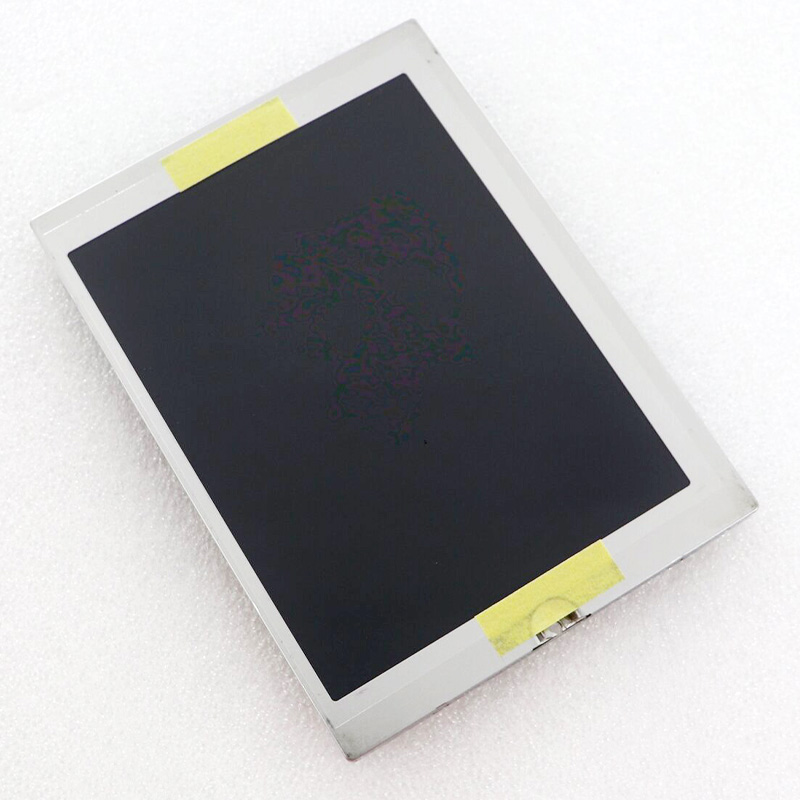
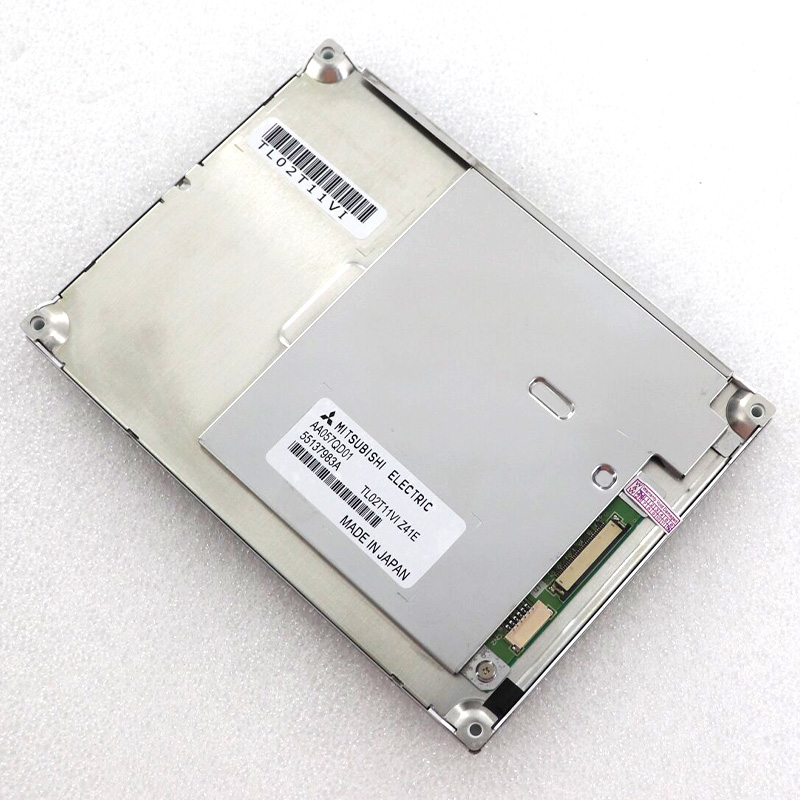
AA057QD01 5.7 inch TFT-LCD Display 320x240
In the intricate ecosystem of electronic components, certain parts become unsung heroes, enabling the functionality of countless devices we rely on. The AA057QD01 TFT-LCD module is one such component. Designed as a 5.7-inch display with a resolution of 320 by 240 pixels, this specific panel represents a crucial intersection of legacy compatibility, robust performance, and enduring utility in a market increasingly dominated by high-resolution screens.
This article delves deep into the world of the AA057QD01, moving beyond basic specifications to explore its unique value proposition. We will examine its fundamental technology, the specific industrial and commercial niches where it excels, and the critical interface considerations for integration. Furthermore, we will analyze its performance characteristics, compare it with modern alternatives, and provide practical guidance for sourcing and implementing this enduring display solution. Our goal is to provide engineers, product developers, and procurement specialists with a comprehensive resource that underscores why this "classic" display remains relevant in today's technological landscape.
Understanding the AA057QD01: Core Technology and Specifications
The AA057QD01 is a Twisted Nematic (TN) type TFT-LCD module. While newer technologies like IPS offer wider viewing angles, TN technology provides a cost-effective solution with fast response times and good contrast for monochrome or basic color applications. The 5.7-inch diagonal screen size and its QVGA (320 x 240) resolution are defining characteristics. This 4:3 aspect ratio was once a standard and remains perfectly suited for displaying traditional user interfaces, machine status data, or simplified graphics without the need for complex scaling.
Key specifications typically include a landscape-oriented active area, an RGB interface, and an integrated LED backlight ensuring uniform brightness. The module often operates on a single power supply voltage, simplifying power design. Understanding these core specs is the first step in recognizing its application fit—it is not a display for multimedia consumption, but rather a reliable, readable window for system interaction and data presentation in controlled environments.
The Enduring Niche: Primary Applications and Industries
Despite the proliferation of high-definition displays, the AA057QD01 finds its strength in specialized, often demanding sectors. Its primary home is in industrial automation and human-machine interfaces (HMIs). Factory machine control panels, test equipment, and embedded systems favor its durability, clear readability under various lighting conditions, and proven long-term reliability. The resolution is sufficient for displaying control buttons, numerical readouts, and process flow diagrams.
Furthermore, it is prevalent in point-of-sale (POS) systems, medical monitoring devices, and automotive diagnostic tools. In these fields, the focus is on functionality, longevity of supply, and resistance to obsolescence rather than pixel density. The module's form factor and interface compatibility with legacy processor architectures allow manufacturers to maintain and update product lines without completely redesigning core display subsystems, protecting investments and ensuring consistency.
Integration Essentials: Interfaces and Electrical Characteristics
Successfully integrating the AA057QD01 requires a detailed understanding of its interface. It predominantly uses a parallel RGB interface, which transmits color data for each pixel over multiple data lines (e.g., 6 bits per color). This is distinct from modern serial interfaces like MIPI-DSI. Engineers must ensure the host controller (CPU, FPGA) can generate the correct timing signals—HSYNC (horizontal sync), VSYNC (vertical sync), DOTCLK (pixel clock), and DE (data enable).
Electrical integration involves careful attention to the power sequencing requirements and backlight driver circuit. The LED backlight typically requires a constant current driver to maintain stable brightness and longevity. Additionally, considering the operating temperature range is vital for industrial applications. Proper handling of these electrical and timing parameters is non-negotiable for achieving a stable, flicker-free image and ensuring the module operates within its specified lifespan.
Performance Analysis: Readability, Durability, and Longevity
The performance of the AA057QD01 is evaluated on metrics different from consumer displays. Readability is paramount. Its contrast ratio and brightness levels are engineered for environments with ambient light, not dark rooms. Anti-glare treatments on the surface are common to reduce reflections. Viewing angles are more constrained than IPS panels, but this is often acceptable as industrial panels are frequently viewed head-on.
Durability and longevity are its hallmarks. These modules are built to withstand continuous operation, often 24/7, for many years. They are designed to resist vibration, temperature fluctuations, and have a high Mean Time Between Failures (MTBF) rating. The LED backlight's lifespan, often rated for tens of thousands of hours, is a critical factor. This reliability reduces total cost of ownership and maintenance needs for the end-product, justifying its use over more fragile consumer-grade panels.
Comparative Landscape: AA057QD01 vs. Modern Display Alternatives
When selecting a display, comparing the AA057QD01 with contemporary options clarifies its strategic value. Modern alternatives might include higher-resolution IPS panels of similar size or TFTs with capacitive touch. The AA057QD01's advantages lie in cost-effectiveness for basic needs, lower system complexity (simpler interface), and extended availability cycles. It avoids the overhead of driving unnecessary pixels or integrating complex touch controllers.
Its disadvantages are clear: lower pixel density, narrower viewing angles, and typically no integrated advanced touch technology. The choice, therefore, is not about which is "better" in absolute terms, but which is optimal for the application. For a new design displaying complex graphics, a modern panel is preferable. For maintaining or creating a device where simplicity, reliability, and cost are key, the AA057QD01 and its QVGA peers remain compelling solutions.
Sourcing and Lifecycle Considerations for System Designers
For product designers, sourcing a component like the AA057QD01 involves strategic planning. As a mature product, it may be in a long-term supply or "not recommended for new designs" (NRND) phase with the original manufacturer. This makes finding reliable, franchised distributors or authorized alternative sources crucial to avoid counterfeit parts. Understanding the manufacturer's product lifecycle roadmap is essential for forecasting.
Designing with such a module necessitates planning for eventual obsolescence. Strategies include identifying second-source or pin-compatible alternatives, considering last-time-buy quantities for long-term product support, or designing a carrier board that allows for future display module swaps with minimal redesign. Proactive lifecycle management ensures that products in the field can be supported for their intended service life, preserving brand reputation and customer satisfaction.
FAQs: AA057QD01 TFT-LCD Module
10. How do I ensure stable image display?Precisely follow the timing requirements from the datasheet and ensure clean, stable power with correct sequencing.
Conclusion
The AA057QD01 5.7-inch QVGA TFT-LCD module exemplifies how tailored, robust technology maintains vital relevance. In an era chasing higher pixels and faster refresh rates, this display serves a different master: unwavering reliability, functional clarity, and design stability. Its value is not measured in megapixels but in mean time between failures, not in viewing angles but in years of continuous service in a factory or hospital.
For engineers and product managers, understanding this component is an exercise in applied pragmatism. It represents a strategic choice that prioritizes long-term system integrity, cost control, and simplicity for applications where these factors define success. As we design the future, components like the AA057QD01 remind us that technological progress is not a linear path toward complexity, but an optimization for purpose, ensuring that even the most fundamental interfaces—the screens through which we command machines—perform their duty with steadfast dependability.