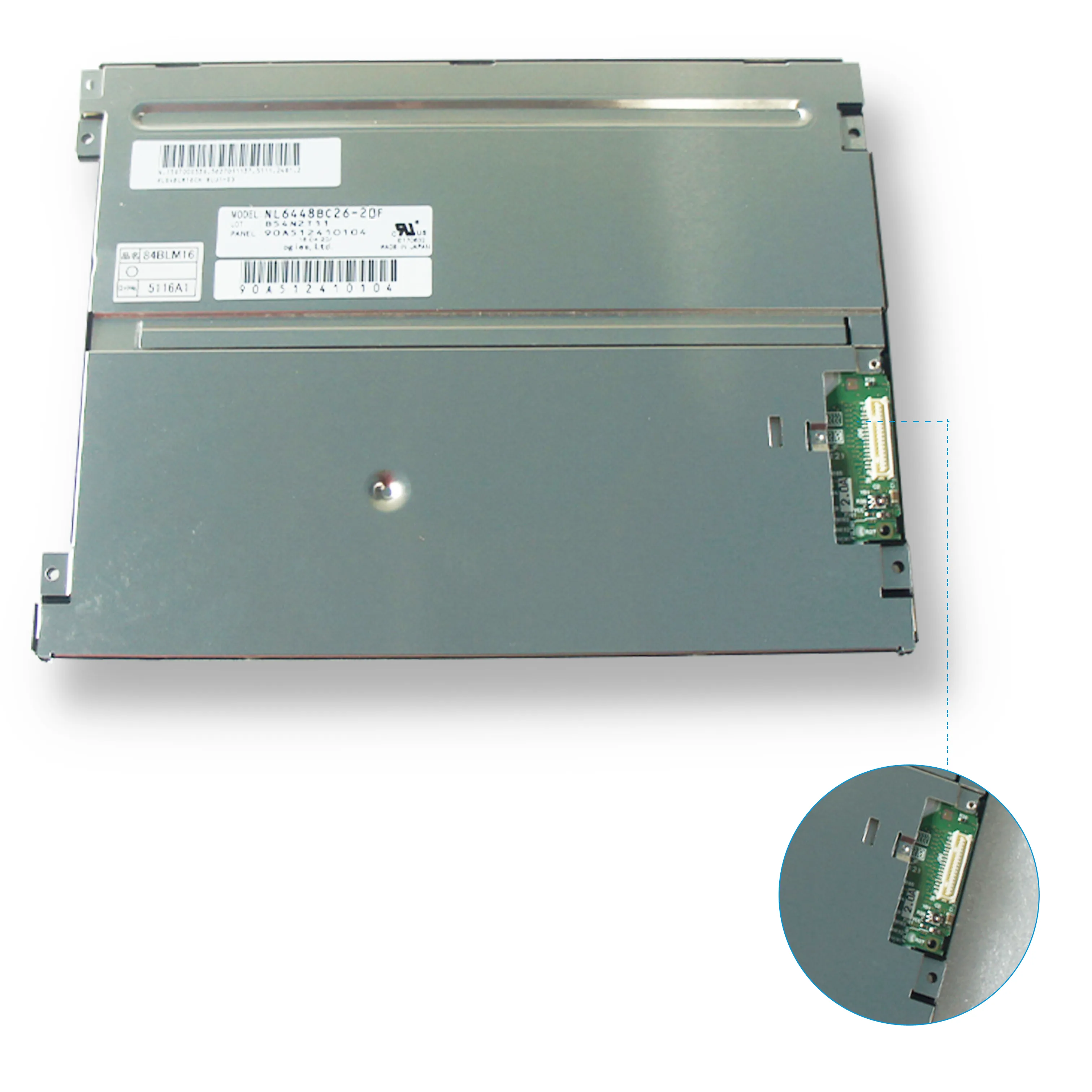
CLAA170EA10 CPT Industrial Lcd Screen
In the intricate world of industrial automation and human-machine interfaces (HMI), the display is the critical bridge between complex machine data and human operators. The CLAA170EA10CPT industrial LCD screen stands as a quintessential component in this realm, engineered to meet the rigorous demands of environments where commercial-grade monitors would falter. This article delves into a comprehensive analysis of this specific panel, moving beyond basic specifications to explore its architectural design, performance under duress, and the pivotal role it plays within larger industrial systems.
Our exploration will uncover why the CLAA170EA10 is more than just a screen; it is a reliability-engineered solution. We will dissect its core technology from the manufacturer CPT (Century Pacific Technology), examine its robust construction tailored for 24/7 operation, and analyze its optical performance in challenging lighting conditions. Furthermore, we will guide you through its seamless integration into industrial applications, provide essential maintenance and sourcing insights, and finally, project its relevance in the future of industrial visualization. This deep dive aims to equip engineers, system integrators, and procurement specialists with the knowledge to evaluate and leverage this industrial workhorse effectively. Core Technology and Manufacturer Profile: The CPT Advantage
The CLAA170EA10 is a product of Century Pacific Technology (CPT), a Taiwanese manufacturer with a longstanding reputation in the TFT-LCD industry. CPT's expertise lies in producing industrial-grade panels that prioritize longevity and stability over the rapid refresh cycles of consumer electronics. This 17-inch screen utilizes a Twisted Nematic (TN) technology panel, a choice that offers distinct advantages for industrial settings. While modern IPS panels provide superior viewing angles, TN technology excels in delivering faster response times—a critical factor in displaying real-time machine data without ghosting or lag. At its heart, the panel features a resolution of 1280 x 1024 (SXGA), adhering to the 5:4 aspect ratio common in industrial and medical equipment. This format provides more vertical screen real estate compared to widescreen formats, ideal for displaying long data lists, ladder logic diagrams, or vertical process schematics. The backlighting system typically employs high-quality, long-life CCFL (Cold Cathode Fluorescent Lamp) lamps, known for their consistent brightness and wide operating temperature range, forming the foundation of the panel's durability.


Robust Construction for Demanding Environments
What truly differentiates the CLAA170EA10 from a standard desktop monitor is its industrial-grade construction. This panel is built to withstand the harshest conditions commonly found on factory floors, in outdoor kiosks, or within transportation systems. Its design accounts for extended operational life, often rated for 50,000 to 70,000 hours of continuous use. The chassis and components are selected to resist vibrations, shocks, and the accumulation of dust, ensuring consistent performance where machinery is in constant motion. Furthermore, the screen is engineered to operate across a wide temperature range, typically from -20°C to 70°C. This thermal resilience is paramount for applications in unheated warehouses or under direct sunlight. The electrical design also incorporates protections against power fluctuations and electromagnetic interference (EMI), which are prevalent in industrial environments packed with motors, drives, and high-voltage equipment. This ruggedization ensures the interface remains the most reliable part of the HMI system.
Optical Performance and Readability Under Stress
In an industrial context, readability is non-negotiable. The CLAA170EA10 is optimized for clarity under various stressful optical conditions. It boasts a high brightness output, often reaching 400 nits or more, to combat ambient glare from overhead factory lighting or sunlight. Conversely, it can also maintain image integrity in very low-light control rooms. The anti-glare surface treatment on the screen is crucial, diffusing reflections to prevent operator eye strain and ensure critical data is always visible. The viewing angle, while typical for TN technology, is sufficient for most industrial applications where the operator is positioned directly in front of the display. The color performance is balanced for accuracy in representing status indicators—red for alarms, green for normal operation—rather than for vibrant multimedia content. This focus on functional optical characteristics ensures that safety alerts and process variables are communicated instantly and unambiguously to the user, minimizing the risk of human error.
System Integration and Interface Compatibility
Integrating the CLAA170EA10 into an existing or new HMI system requires understanding its interface and control signals. This panel commonly features a standard LVDS (Low-Voltage Differential Signaling) interface. LVDS is favored in industrial applications for its robustness, noise immunity, and ability to transmit high-speed data over longer cable runs within a cabinet. It requires a compatible controller board to translate video signals from a source, such as an industrial PC or single-board computer. System integrators must pay close attention to the pin configuration, power requirements (often 3.3V or 5V for logic and a higher voltage for the backlight inverter), and the specific timing controller (T-Con) specifications. Successful integration hinges on matching the panel's native resolution and refresh rate precisely. Many suppliers offer the CLAA170EA10 as a "bare panel" or as part of a complete kit including metal bezel, inverter, and interface cables, simplifying the assembly process for custom machinery and control panels.
Maintenance, Longevity, and Sourcing Considerations
Proactive maintenance and reliable sourcing are key to maximizing the investment in an industrial component like the CLAA170EA10. The most common point of failure in such panels is the backlight system. While CCFL lamps have long lifespans, they will eventually dim. Understanding how to access and replace the backlight assembly or the entire CCFL tube is essential for long-term upkeep. Keeping the unit free from obstructive dust and ensuring adequate ventilation around its enclosure also prolongs its life. Given that industrial equipment may be in service for decades, sourcing becomes a critical issue. The CLAA170EA10 is a mature product, and while it may be phased out for newer models by the manufacturer, it remains widely available through specialized industrial electronic component distributors. When procuring, it is vital to verify the authenticity of the panel, ensure compatibility with the exact model number (as minor revisions may exist), and consider the supplier's ability to provide technical support and future stock, especially for large-scale or long-term projects.
The Future Context: Legacy Reliability in a Modernizing Landscape
As technology advances, with the rise of LED backlighting, higher-resolution IPS panels, and touch-screen integration, the CLAA170EA10 represents a proven legacy standard. Its enduring relevance lies in its unmatched reliability record, cost-effectiveness for specific applications, and the vast installed base of machinery designed around its form factor and interface. For upgrading existing systems or building new equipment where cutting-edge color or touch is unnecessary, this panel offers a risk-averse, dependable solution. Its future is intertwined with the principles of industrial IoT and predictive maintenance. While the panel itself is a display device, its consistent operation is a data point for system health. The trend towards modularity and easier serviceability also benefits such standardized components. The CLAA170EA10 exemplifies that in the industrial world, where mean time between failures (MTBF) is a key metric, technological maturity and robustness often trump the allure of the latest consumer display trends.
FAQs: CLAA170EA10 Industrial LCD Screen
1. What is the screen size and resolution of the CLAA170EA10?It is a 17-inch diagonal screen with an SXGA resolution of 1280 x 1024 pixels (5:4 aspect ratio).
2. Who manufactures the CLAA170EA10 LCD panel?It is manufactured by Century Pacific Technology (CPT), a Taiwanese TFT-LCD specialist.
3. What type of LCD technology does it use?It typically uses Twisted Nematic (TN) panel technology, chosen for its fast response time.
4. What is the primary interface for this industrial screen?The standard interface is LVDS (Low-Voltage Differential Signaling), common for industrial integration.
5. Why is it considered "industrial-grade"?It features rugged construction, a wide operating temperature range (-20°C to 70°C), high brightness, extended lifespan (50k+ hours), and resistance to vibration/EMI.
6. What is the typical backlight technology?It commonly uses a CCFL (Cold Cathode Fluorescent Lamp) backlight system for consistent performance across temperatures.
7. Can it be used as a direct replacement for a standard monitor?No, it is a bare panel requiring an LVDS controller board and power supply for integration, unlike a plug-and-play commercial monitor.
8. Where is this panel commonly used?Applications include factory HMIs, medical devices, point-of-sale systems, transportation displays, and process control panels.
9. What is the most common maintenance concern?The eventual dimming or failure of the CCFL backlights after extensive use is the most common issue requiring service.
10. Is the CLAA170EA10 still a good choice for new projects?Yes, for applications prioritizing proven reliability, long-term availability, and cost-effectiveness over ultra-wide viewing angles or touch functionality.
Conclusion
The CLAA170EA10 CPT industrial LCD screen embodies the core principles of industrial design: reliability, durability, and functional clarity. Through our examination, it is clear that this component is not merely a commodity display but a carefully engineered interface built to serve as the unwavering eyes of complex machinery. From its TN panel and CCFL backlight optimized for real-time data to its rugged construction that laughs off environmental stress, every aspect is tailored for mission-critical operation. In a landscape increasingly focused on smart factories and IoT, the value of such a dependable, legacy-compatible component cannot be overstated. It provides a stable foundation upon which advanced data visualization and control systems can be built. For engineers and integrators, understanding the intricacies of panels like the CLAA170EA10—from integration specs to maintenance logistics—is crucial for designing systems that are not only intelligent but also profoundly robust and trustworthy over the long haul.