






- Industrial LCD display
-
Industrial Products
- DC Servo Drive
- AC Servo Drive
- other
- Heidelberg
- FANUC
- IFM
- Meter
- CCD
- Membrane Keypad
- Film
- YOKOGAWA Module
- Card
- ABB
- MITSUBISHI
- FANUC
- KEYENCE
- BECKHOFF
- Honeywell
- HOLLYSYS
- FUJI servo drives
- HP
- solenoid valve
- thermostat
- Siemens adapter
- color oscilloscope
- Fujitsu connector
- CHELIC
- SMC
- CISCO Module
- INTEL
- Key board
- FAIRCHILD
- Motherboard
- Board
- Bearing
- other
- Control Panel
- Contactor
- Circuit
- OMRON
- Relay
- Controller
- Photoelectric Switch
- Photoelectric Sensor
- Original
- Fan
- Motor Driver
- Limit Switch
- Amplifier
- power supply
- LENZE
- Cable
- Encoder
- Sensor
- Transformer
- Fiber Optic Sensor
- Protection Relay
- Temperature Controller
- Proximity Switch
- Switch Sensor
- Siemens
- Industrial board
- HMI Touch Glass
-
HMI Full Machine Whole unit
- OMRON HMI Touch Panel
- Siemens HMI Touch Panel
- Mitsubishi HMI Touch Panel
- Allen-Bradley automation HMI Touch Panel
- DELTA HMI Touch Panel
- EVIEW DELTA HMI Touch Panel
- KINCO DELTA HMI Touch Panel
- HITECH HMI Touch Panel
- WEINTECK HMI Touch Panel
- TECVIEW HMI Touch Panel
- WEINVIEW HMI Touch Panel
- PRO-FACE HMI Touch Panel
- SIMATIC HMI Touch Panel
- AMPIRE HMI Touch Panel
- HEIDELBERG HMI Touch Panel
- PANASONIC HMI Touch Panel
- PATLITE HMI Touch Panel
- KYOCERA HMI Touch Panel
- KEYENCE HMI Touch Panel
- WEINVIEW HMI Touch Panel
- HITECH HMI Touch Panel
- FUJI HMI Touch Panel
- HAKKO HMI Touch Panel
- SCHNEIDER HMI Touch Panel
- SAMKOON touch panel
- other
- Module
- lcd inverter
- Membrane Keypad Switch
- Winni Touch Screens
- Frequency Inverter
- Servo Motor
- PLC



We will investigate the core technological architecture that defines its performance, examine its key visual and electrical characteristics, and assess its suitability for various industrial and commercial environments. Furthermore, we will consider critical integration factors, compare it within the broader landscape of display solutions, and project its role in future technological trends. This deep dive aims to provide design engineers, procurement specialists, and technology enthusiasts with the nuanced understanding necessary to evaluate the DMF-50316N not just as a component, but as a pivotal element in creating successful end-user products.
Architectural Foundation: Deconstructing the DMF-50316N
The TFT active-matrix technology is fundamental to its performance. Unlike passive matrices, each pixel is controlled by one to four transistors, allowing for faster response times, higher contrast ratios, and superior color fidelity. This architecture eliminates the "ghosting" effect and enables the display of complex, fast-moving graphics—a necessity for modern human-machine interfaces (HMIs). The integration level simplifies the design-in process for engineers, as the critical and sensitive analog driving electronics are pre-assembled and tested.
Performance Specifications and Visual Characteristics
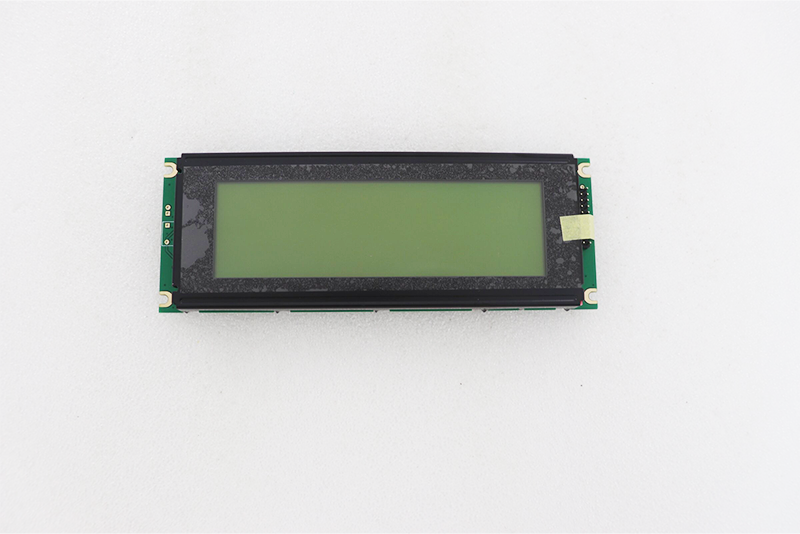
Its visual performance is characterized by a high brightness output, typically around 300 nits or more, facilitated by its CCFL backlight. This ensures viewability under various ambient lighting conditions, including indoor industrial settings. The module supports a color depth that delivers a clear and stable image. Key parameters such as viewing angles (both horizontal and vertical), contrast ratio, and color gamut are engineered to meet the rigorous demands of continuous operation in professional equipment, from medical devices to test and measurement instruments.
Interface and Electrical Integration
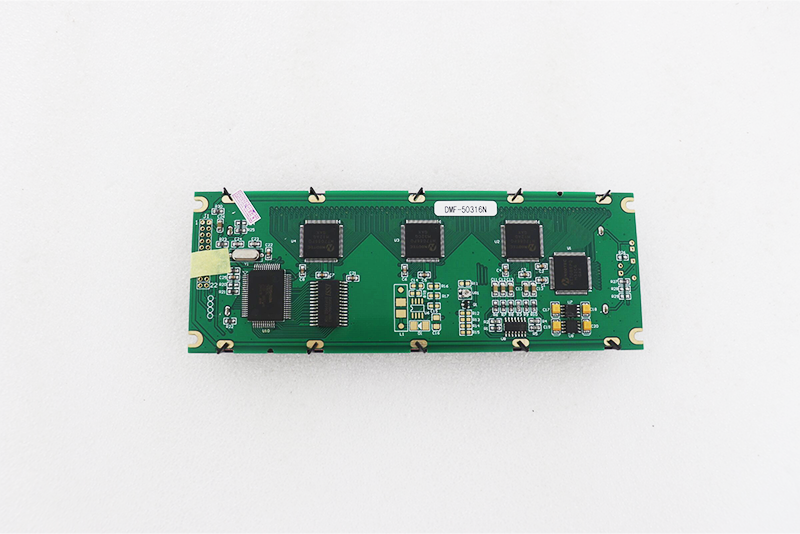
Designers must carefully manage the power sequencing for the module, which includes separate voltage rails for the logic board and the backlight inverter. The CCFL backlight requires a high-voltage AC drive, which is usually generated by an inverter circuit either onboard the module or provided externally. Understanding the timing requirements of the interface and the power-up/down sequence is paramount to avoid latent damage and ensure long-term reliability. Proper electromagnetic compatibility (EMC) design around the display cables and drivers is also essential for system stability.
Application Landscape and Suitability
Beyond these, it finds use in point-of-sale (POS) systems, automotive test equipment, and specialized instrumentation. The choice for this panel over a consumer-grade alternative often boils down to lifecycle considerations; industrial products have longer development and field life cycles, and the DMF-50316N is designed to be procurable and consistent over many years, unlike rapidly changing consumer display models.
Comparative Analysis in the Display Ecosystem
When compared to graphical or character-based OLEDs, the DMF-50316N lacks the perfect black levels and ultra-high contrast but offers superior sunlight readability and generally a longer operational lifespan without risk of burn-in. Its value proposition lies in its proven technology, industrial-grade construction, and predictable performance—factors that often outweigh raw specification superiority in critical applications.
Future Outlook and Legacy Considerations
For new designs, the decision involves a trade-off: leveraging a well-understood, reliable component with a known supply chain versus adopting a newer panel that may offer better specs but with unproven long-term availability in the industrial market. The DMF-50316N exemplifies the principle that in embedded design, the optimal component is not always the newest, but the one that most reliably meets the system's requirements over its entire lifecycle.
FAQs: DMF-50316N Optrex 5.2" LCD Panel
Q10: What does the "Optrex" name signify?A10: Optrex was a major manufacturer of high-quality LCDs, especially for industrial markets. The brand is synonymous with reliability in embedded display solutions.