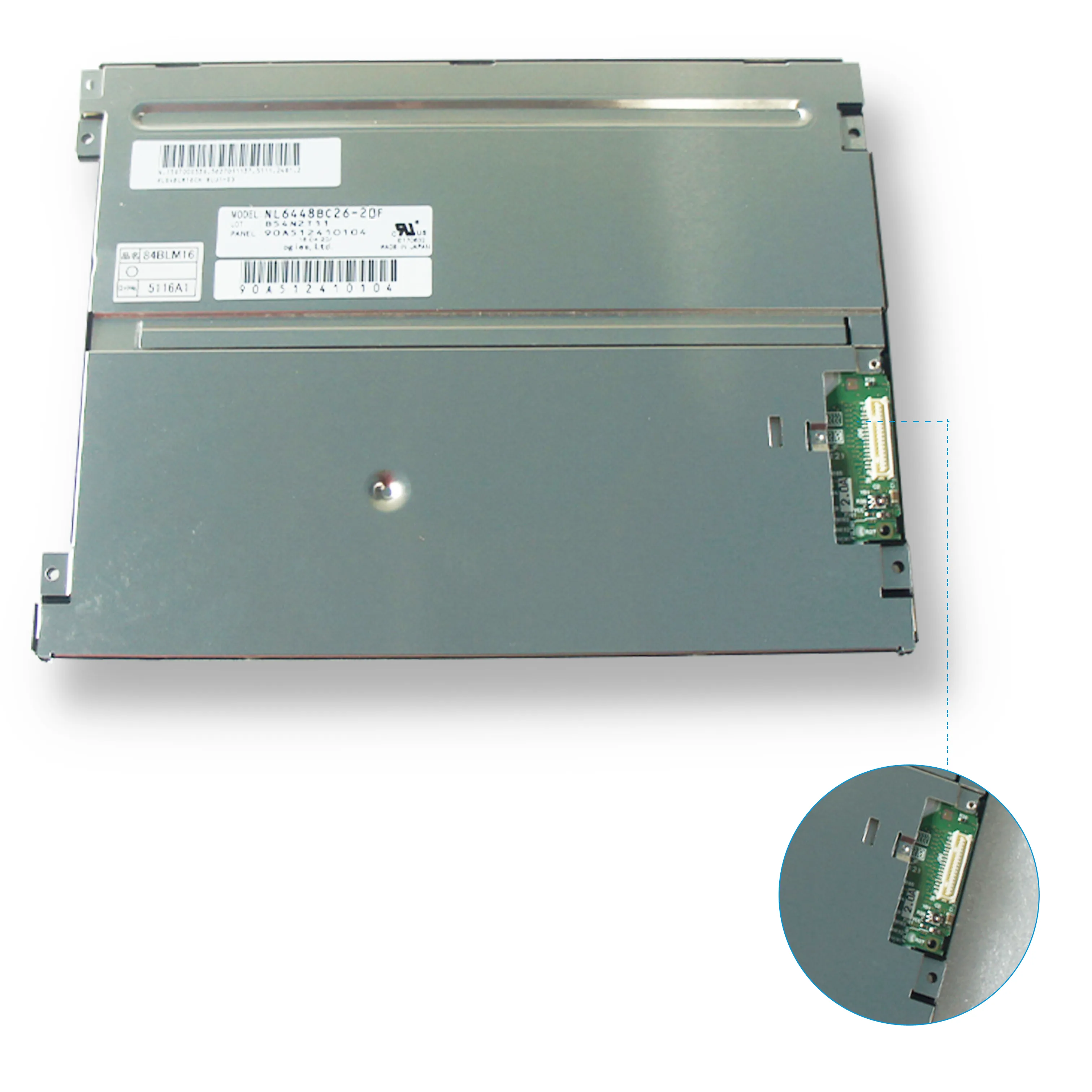
In the intricate world of electronic design, the choice of a display module can define the user experience, system performance, and ultimate success of a product. This article delves into a specialized component that has served as a reliable workhorse in industrial and embedded applications: the DMF682AN, a 5.3-inch TFT-LCD screen manufactured by OPTREX. Characterized by its 256 x 128 pixel resolution, this monochrome display represents a specific class of solutions where clarity, reliability, and straightforward integration take precedence over full-color spectacle. We will embark on a comprehensive exploration of this module, moving beyond basic datasheet parameters. Our analysis will cover its core technical architecture, the unique advantages and inherent trade-offs of its resolution and size, and its typical application ecosystems. Furthermore, we will provide practical guidance on integration, discuss its position in the modern component landscape, and offer key considerations for engineers and procurement specialists. This deep dive aims to furnish you with the nuanced understanding necessary to evaluate whether the DMF682AN is the optimal interface for your next project. Technical Architecture and Core Specifications
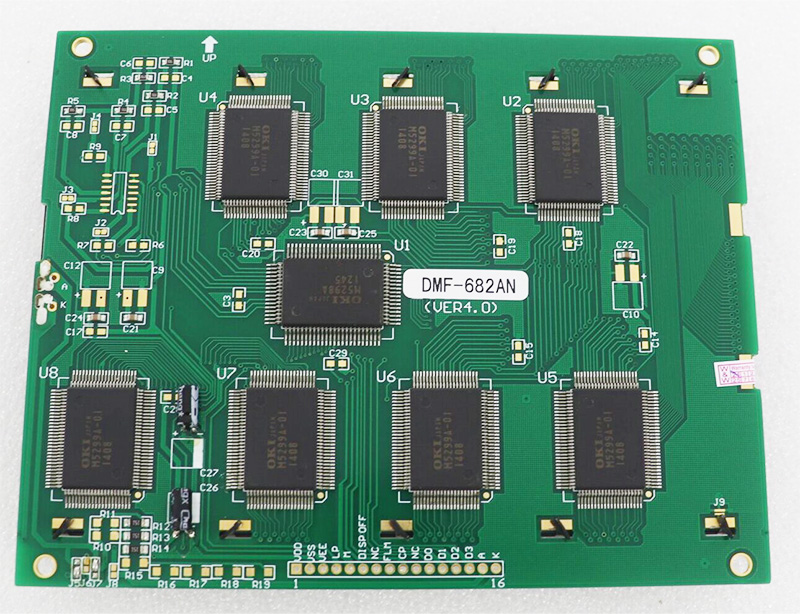
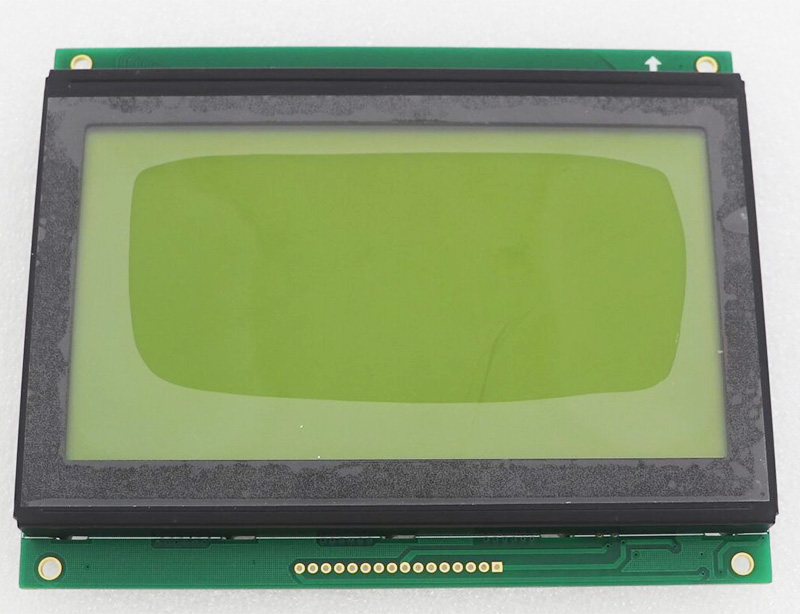
The DMF682AN is built around a Thin-Film Transistor (TFT) liquid crystal display, which provides superior contrast and faster response times compared to passive matrix displays. The "256 x 128" specification denotes a graphical display capable of rendering pixels, lines, and custom characters, unlike simpler character-only LCDs. This resolution on a 5.3-inch diagonal yields a specific pixel density, resulting in large, highly legible elements ideal for machine data or status readouts. Internally, the module integrates the TFT panel, a driver IC, and a CCFL (Cold Cathode Fluorescent Lamp) backlight, all assembled into a single, robust unit. The interface is typically parallel (e.g., 8-bit or 16-bit), a mature and widely supported standard that simplifies microcontroller communication. Understanding this architecture is crucial; it is a self-contained display system requiring precise voltage supplies (for logic, panel, and backlight) and a controller to manage the pixel data stream.
The Rationale Behind Monochrome and Mid-Resolution
In an era dominated by high-definition color, the DMF682AN's monochrome, mid-resolution profile is a deliberate and strategic design choice. Its primary advantage lies in extreme reliability and readability under challenging conditions. Monochrome displays eliminate the complexity and potential failure points of color filters and associated drivers. The high contrast ratio ensures visibility in various lighting environments, from dark control rooms to sunlit factory floors. Furthermore, the 256x128 resolution imposes a significantly lower computational burden on the host system. It requires less memory for frame buffers and demands lower bandwidth for data transfer. This translates to lower power consumption and allows the use of more cost-effective microcontrollers. For applications where the information presented is textual, symbolic, or involves simple graphs—such as medical devices, test equipment, or industrial controllers—this display provides all necessary functionality without the overhead of unnecessary color or pixel density.
Primary Application Ecosystems
The DMF682AN finds its niche in professional and industrial embedded systems where function rigorously dictates form. Its design caters to environments where long-term stability and clarity are non-negotiable. Common application domains include: Industrial Automation: Human-Machine Interface (HMI) panels for PLCs, control system status monitors, and diagnostic readouts on manufacturing equipment.
Medical Instrumentation: Patient monitoring devices, diagnostic equipment displays, and dental or surgical tool interfaces, where clear data presentation is critical.
Test and Measurement: Oscilloscopes, spectrum analyzers, and multimeters, where the display is used for waveforms and numerical data.
Point-of-Sale and Kiosk Systems: Used in transactional terminals or information kiosks requiring durable, always-on displays.
In these fields, the display is valued as a dependable component with a long lifecycle, often outlasting consumer-grade alternatives.
Integration Considerations and Design Challenges
Successfully integrating the DMF682AN requires attention to several electrical and physical design factors. Electrically, designers must provide stable, clean power rails, particularly for the backlight inverter (if CCFL) and the panel's analog voltages. Noise on these lines can manifest as visual artifacts. The parallel interface demands a sufficient number of GPIOs on the host controller and careful timing adherence to the datasheet's write cycles. Physically, the module's dimensions and mounting holes must be accommodated. The CCFL backlight, while bright and even, has a finite lifespan and requires a high-voltage inverter circuit. Modern designs may consider replacing it with an LED backlight solution for longer life and lower power. Furthermore, the designer must implement a software driver or library to manage graphics primitives, which, while less complex than for a high-res display, is still a necessary development task.
The Modern Context: Legacy Component or Lasting Solution?
With the proliferation of low-cost color TFTs, one might question the relevance of a monochrome module like the DMF682AN. It is essential to view it not as obsolete, but as a specialized tool. For new designs, its justification hinges on specific project requirements: extreme environmental tolerance, proven long-term supply chain stability for maintenance contracts, or the need for a drop-in replacement for an older design. However, the landscape is evolving. Newer monochrome or grayscale displays may offer better power efficiency with LED backlights or more modern digital interfaces like SPI or MIPI. The decision to use the DMF682AN today involves a trade-off analysis between its proven reliability, potential obsolescence risks from the manufacturer, and the availability of more modern alternatives that could simplify design or enhance performance. Procurement and Lifecycle Management
For engineers and purchasers, sourcing the DMF682AN involves strategic thinking. As a component that may have been in production for many years, checking its active lifecycle status with OPTREX or authorized distributors is the first critical step. Is it in active production, nearing end-of-life (EOL), or already obsolete? This status directly impacts its suitability for a new product with a multi-year manufacturing horizon. For legacy equipment maintenance, securing a reliable supply, potentially through aftermarket or franchised distributors, is key. It is also prudent to investigate form-fit-function compatible alternatives from other manufacturers as a contingency plan. Understanding the total cost of ownership—including the risk of future redesign—is as important as evaluating the unit price on a bill of materials.
FAQs
Q1: Is the DMF682AN a color or monochrome display?A1: It is a monochrome (typically white/blue or yellow on black) TFT-LCD display.
Q2: What does "256*128" mean?A2: This is the display resolution: 256 pixels horizontally and 128 pixels vertically.
Q3: What is the most common interface for this screen?A3: It typically uses a parallel digital interface (e.g., 8-bit or 16-bit).
Q4: What type of backlight does it use?A4: The standard module commonly uses a CCFL (Cold Cathode Fluorescent Lamp) backlight.
Q5: Is this display suitable for outdoor use?A5: While high-contrast, it is not inherently sunlight-readable or ruggedized unless specified with special optical bonding or high-brightness options.
Q6: Can I use an Arduino to drive the DMF682AN?A6: It is possible but challenging due to the high number of GPIO pins required and memory constraints; a more powerful microcontroller or dedicated graphics controller is recommended.
Q7: What is the main advantage over a common character LCD?A7: It is a pixel-addressable graphical display, allowing for custom graphics, fonts, and shapes, unlike pre-defined character cells.
Q8: Is it still in production?A8: You must check with OPTREX or distributors for the current lifecycle status, as it may be a mature or legacy product.
Q9: Are there direct replacement alternatives from other brands?A9: Yes, several manufacturers produce compatible 5.3" monochrome TFTs, but careful verification of pinout, driver IC, and electrical specs is required.
Q10: What is the typical power consumption?A10: Consumption varies but is dominated by the backlight. The CCFL backlight requires more power than modern LED equivalents.
Conclusion
The OPTREX DMF682AN 5.3" TFT-LCD represents a specific and enduring philosophy in display technology: optimized functionality for professional environments. Its 256x128 monochrome design is not a limitation but a purposeful feature that delivers exceptional reliability, readability, and integration simplicity for a well-defined set of industrial, medical, and instrumentation applications. For engineers, the decision to select this module hinges on a clear-eyed evaluation of project requirements against its technical profile and lifecycle status. While newer technologies offer flashier capabilities, the DMF682AN's value proposition remains strong where performance is measured in decades of fault-free operation rather than millions of colors. Ultimately, it serves as a reminder that in embedded design, the most sophisticated component is often the one that solves the problem with elegant, unwavering efficiency.