






- Industrie-LCD-Display
-
Industrial Products
- DC Servo Drive
- AC Servo Drive
- other
- Heidelberg
- FANUC
- IFM
- Meter
- CCD
- Membrane Keypad
- Film
- YOKOGAWA
- Card
- ABB
- MITSUBISHI
- FANUC
- KEYENCE
- BECKHOFF
- Honeywell
- HOLLYSYS
- FUJI servo drives
- HP
- solenoid valve
- thermostat
- Siemens adapter
- color oscilloscope
- Fujitsu connector
- CHELIC
- SMC
- CISCO
- INTEL
- Key board
- FAIRCHILD
- Der Aufsichtsrat
- Board
- Bearing
- other
- Control Panel
- Contactor
- Circuit
- Omron
- Relais.
- Der controller
- Optoelektronische schalter
- Optoelektronische sensoren
- Original
- Fan
- Motortreiber
- Endschalter
- Verstärker
- power supply
- LENZE
- Cable
- Encoder
- Sensor
- Transformator
- Fiber Optic Sensor
- Schutzrelais
- Temperaturregler
- Näherungsschalter
- Switch Sensor
- Siemens
- PCB
- HMI Touch-Glas
-
HMI-Vollautomat Ganze Einheit
- OMRON HMI Touch Panel
- Siemens HMI Touch Panel
- Mitsubishi HMI Touch Panel
- Allen-Bradley Automatisierung HMI Touch
- DELTA HMI Touch Panel
- EVIEW DELTA HMI Touch Panel
- KINCO DELTA HMI Touch Panel
- HITECH HMI Touch Panel
- WEINTECK HMI Touch Panel
- TECVIEW HMI Touch Panel
- WEINVIEW HMI Touch Panel
- PRO-FACE HMI Touch Panel
- SIMATIC HMI Touch Panel
- AMPIRE HMI Touch Panel
- HEIDELBERG HMI Touch Panel
- PANASONIC HMI Touch Panel
- PATLITE HMI Touch Panel
- KYOCERA HMI Touch Panel
- KEYENCE HMI Touch Panel
- WEINVIEW HMI Touch Panel
- HITECH HMI Touch Panel
- FUJI HMI Touch Panel
- HAKKO HMI Touch Panel
- SCHNEIDER HMI Touch Panel
- SAMKOON touch panel
- andere
- Module
- LCD Wechselrichter
- Membran Tastenfeld Schalter
- Winni Touch Screens
- Frequenzumrichter
- Servo Motor
- PLC


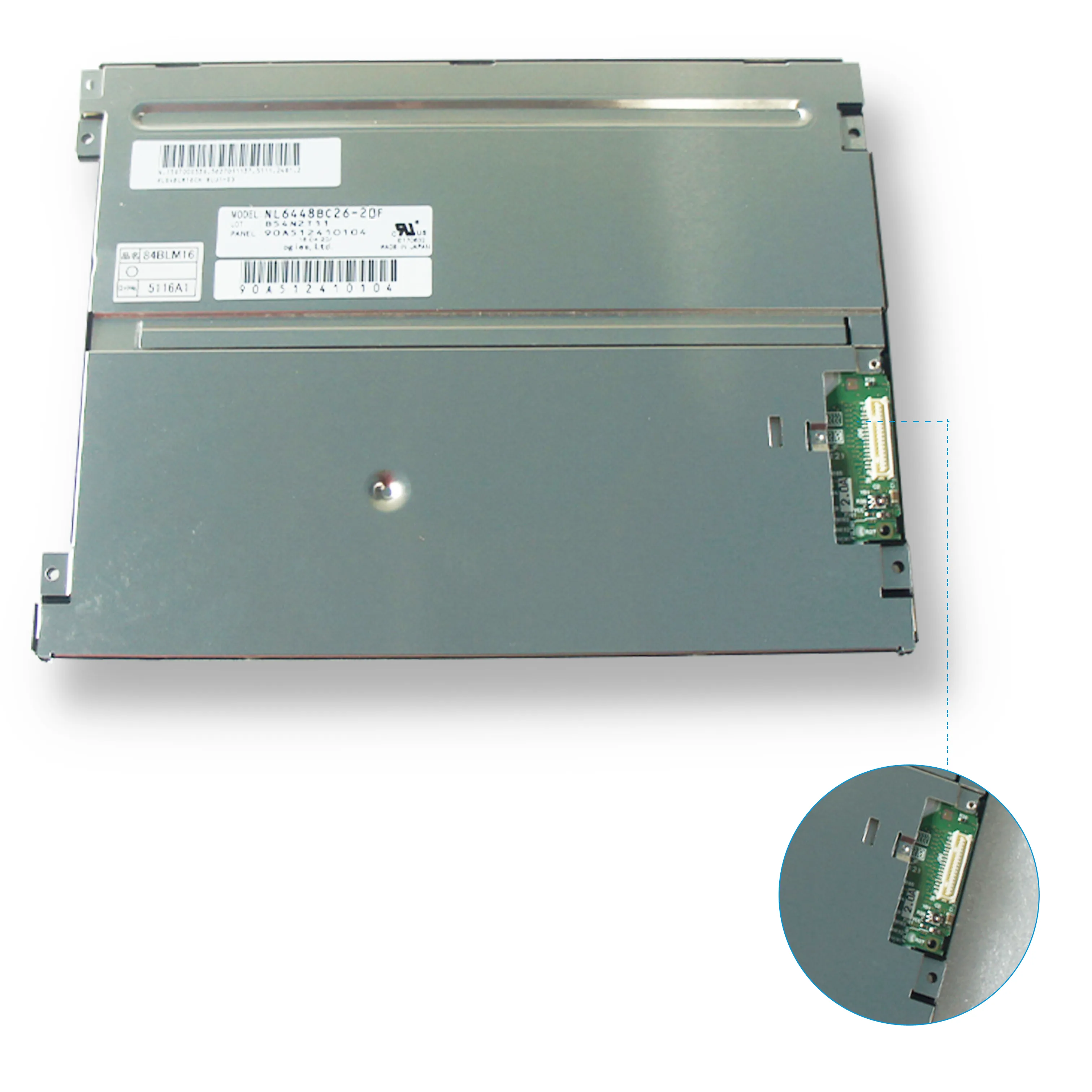


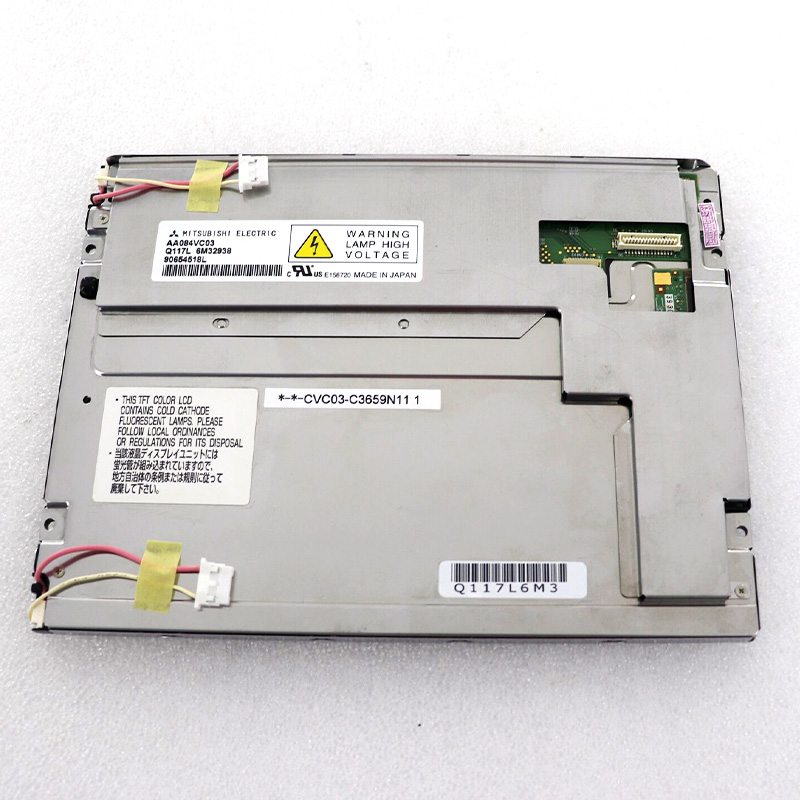
AA084VC03 8.4 inch Mitsubishi lcd display 640*480
In the intricate world of industrial and specialized display technology, the model number AA084VC03 represents more than just a component; it signifies a legacy of reliability and precision engineering. This 8.4-inch LCD display module, manufactured with the hallmark quality of Mitsubishi Electric, stands as a critical solution for applications where clarity, durability, and consistent performance are non-negotiable. With its native resolution of 640 x 480 pixels (VGA), it occupies a unique niche, bridging the gap between legacy systems and modern visual requirements.
This article delves into a comprehensive analysis of the Mitsubishi AA084VC03 display. We will move beyond basic specifications to explore its architectural strengths, the specific market demands it was designed to meet, and its practical integration challenges. Our journey will uncover why this particular module remains a relevant and sought-after component in an era of rapidly advancing display technology, examining its role from the circuit board up to the end-user interface.
Technical Architecture and Core Specifications
The foundation of the AA084VC03's reliability lies in its well-defined technical architecture. At its heart is an 8.4-inch diagonal a-Si TFT-LCD (Amorphous Silicon Thin-Film Transistor Liquid Crystal Display) panel. The 640 x 480 VGA resolution, while considered low by consumer standards, offers a perfect pixel density for many industrial applications, ensuring sharp, legible characters and graphics without excessive processing overhead.
The module employs a CCFL (Cold Cathode Fluorescent Lamp) backlighting system, known for its even illumination and stable color temperature over a long lifespan. It features an LVDS (Low-Voltage Differential Signaling) interface, which minimizes electromagnetic interference—a critical factor in electrically noisy industrial environments. Key specifications include a brightness of typically 400 cd/m², a high contrast ratio, and wide viewing angles, all engineered to ensure readability under various lighting conditions and mounting angles.
Target Applications and Industrial Niche
The AA084VC03 is not designed for consumer televisions or smartphones. Its value is unlocked in harsh, demanding environments where failure is not an option. Its primary applications are a testament to its rugged design. You will find this module at the core of industrial human-machine interfaces (HMIs) for factory automation, controlling machinery and monitoring production lines.
It is equally vital in medical diagnostic equipment, such as patient monitors or ultrasound devices, where accurate color representation and constant reliability are paramount. Furthermore, it serves in transportation systems (train dashboards, aviation displays), test and measurement instruments, and point-of-sale systems. In these roles, the display functions as the critical touchpoint between complex data and human operators.
Comparative Advantages Over Alternative Technologies
When evaluated against newer display technologies, the AA084VC03's advantages are contextual and significant. Compared to modern consumer-grade LCDs, its ruggedized construction and extended operating temperature range make it suitable for environments where commercial panels would quickly fail. While OLED displays offer superior contrast, they can suffer from burn-in under static imagery common in industrial UIs—a non-issue for this TFT-LCD.
Against other industrial VGA panels, the Mitsubishi pedigree ensures a high level of quality control, component longevity, and supply consistency. The choice of CCFL backlighting, though less energy-efficient than LED, provides a proven track record of stability and a specific light spectrum that some critical applications still require. Its value is in being a known, dependable quantity.
Integration Considerations and Design Challenges
Integrating the AA084VC03 into a product is a deliberate engineering task. Designers must account for its power requirements, particularly the high-voltage inverter needed to drive the CCFL backlight, which adds complexity compared to simple LED-driven panels. The physical footprint and mounting mechanism must accommodate the module's bezel and connector orientation.
Electrically, the LVDS interface requires a compatible controller board or system-on-chip (SoC). Furthermore, with CCFL backlights being phased out in many industries due to RoHS and energy directives, sourcing replacement backlights or planning for eventual end-of-life (EOL) management becomes a crucial part of the product lifecycle strategy for any new design incorporating this module.

The Supply Chain and Legacy Component Sourcing
As a module that has been in production for many years, understanding its supply chain is vital for procurement and maintenance. The AA084VC03 is often classified as a legacy or mature product. While Mitsubishi may have ended direct production, authorized distributors and specialized electronic component suppliers often hold stock or offer factory-reconditioned units.
For companies maintaining long-lifecycle equipment, securing a reliable source for these displays is critical. This has given rise to a market for equivalent or drop-in replacements from other manufacturers, though thorough compatibility testing is essential. The sourcing strategy directly impacts the serviceable life of the end product, making it a key business decision.
Future Outlook and Replacement Strategies
The technological landscape is shifting towards LED backlighting, higher resolutions, and more compact interfaces. The future for modules like the AA084VC03 lies in sustained support for legacy systems and careful migration paths. For new designs, engineers are likely to select newer panels that offer similar ruggedness but with LED backlights and modern interfaces like MIPI or eDP.
However, for the vast installed base of equipment, the strategy involves identifying form-fit-function compatible upgrades. This requires meticulous cross-referencing of electrical, optical, and mechanical specifications to ensure a seamless transition without hardware or software redesign. The enduring need for reliable industrial displays ensures that the principles embodied by the AA084VC03 will continue, even as the specific components evolve.
FAQs: Mitsubishi AA084VC03 Display Module
10. What is the biggest challenge when integrating this display today?Managing the CCFL backlight's power requirements and planning for long-term component availability in a supply chain moving towards LED.
Conclusion
The Mitsubishi AA084VC03 8.4-inch display is a quintessential example of industrial-grade engineering, where longevity, reliability, and performance under stress take precedence over sheer pixel count or slim form factors. Its continued relevance in critical sectors underscores a vital truth in technology: that suitability for purpose often outweighs raw novelty.
For engineers, procurement specialists, and product managers, understanding this module means appreciating the complex interplay between technical specifications, application demands, and supply chain realities. As the industry gradually transitions, the principles embodied by the AA084VC03—durability, clarity, and interoperability—will remain the guiding stars for selecting display solutions that truly endure.