






- Industrial LCD display
-
Industrial Products
- DC Servo Drive
- AC Servo Drive
- other
- Heidelberg
- FANUC
- IFM
- Meter
- CCD
- Membrane Keypad
- Film
- YOKOGAWA Module
- Card
- ABB
- MITSUBISHI
- FANUC
- KEYENCE
- BECKHOFF
- Honeywell
- HOLLYSYS
- FUJI servo drives
- HP
- solenoid valve
- thermostat
- Siemens adapter
- color oscilloscope
- Fujitsu connector
- CHELIC
- SMC
- CISCO Module
- INTEL
- Key board
- FAIRCHILD
- Motherboard
- Board
- Bearing
- other
- Control Panel
- Contactor
- Circuit
- OMRON
- Relay
- Controller
- Photoelectric Switch
- Photoelectric Sensor
- Original
- Fan
- Motor Driver
- Limit Switch
- Amplifier
- power supply
- LENZE
- Cable
- Encoder
- Sensor
- Transformer
- Fiber Optic Sensor
- Protection Relay
- Temperature Controller
- Proximity Switch
- Switch Sensor
- Siemens
- Industrial board
- HMI Touch Glass
-
HMI Full Machine Whole unit
- OMRON HMI Touch Panel
- Siemens HMI Touch Panel
- Mitsubishi HMI Touch Panel
- Allen-Bradley automation HMI Touch Panel
- DELTA HMI Touch Panel
- EVIEW DELTA HMI Touch Panel
- KINCO DELTA HMI Touch Panel
- HITECH HMI Touch Panel
- WEINTECK HMI Touch Panel
- TECVIEW HMI Touch Panel
- WEINVIEW HMI Touch Panel
- PRO-FACE HMI Touch Panel
- SIMATIC HMI Touch Panel
- AMPIRE HMI Touch Panel
- HEIDELBERG HMI Touch Panel
- PANASONIC HMI Touch Panel
- PATLITE HMI Touch Panel
- KYOCERA HMI Touch Panel
- KEYENCE HMI Touch Panel
- WEINVIEW HMI Touch Panel
- HITECH HMI Touch Panel
- FUJI HMI Touch Panel
- HAKKO HMI Touch Panel
- SCHNEIDER HMI Touch Panel
- SAMKOON touch panel
- other
- Module
- lcd inverter
- Membrane Keypad Switch
- Winni Touch Screens
- Frequency Inverter
- Servo Motor
- PLC




This article will delve deep into this specific LCD module, moving beyond the surface-level specifications to explore the engineering rationale behind its design. We will dissect the advantages and trade-offs of its FSTN technology, analyze its suitability for various industrial and consumer applications, and consider the critical integration factors engineers must evaluate. Our journey will illuminate why this particular combination of size, resolution, and technology continues to be a reliable workhorse in a market increasingly dominated by high-resolution TFTs and OLEDs.
Decoding the Specification: A Layer-by-Layer Analysis
The most critical technological indicator is FSTN, or Film-compensated Super Twisted Nematic. This is an enhancement over traditional STN (Super Twisted Nematic) panels. STN itself provides better contrast and viewing angle than earlier Twisted Nematic (TN) designs but often exhibits a characteristic color shift (usually yellow-blue). The addition of a retardation film in FSTN compensates for this optical effect, resulting in a significantly improved, near-black-on-white appearance. This makes the display far more readable and aesthetically pleasing for monochrome applications, which is a key reason for its selection in professional and medical equipment.
The FSTN Advantage: Clarity, Readability, and Reliability
Furthermore, FSTN displays are known for their high reliability and stability across a wide temperature range. They are less susceptible to image retention or degradation over time compared to some OLED technologies. This makes the EDMMRG6KAF module an ideal candidate for applications where long-term, continuous operation in challenging environments is paramount, such as in automotive dashboards, test and measurement equipment, or outdoor telemetry units. The clarity of monochrome FSTN is also easier to read in direct sunlight when paired with a suitable backlight.
Typical Applications and Industry Use Cases
Beyond these, it serves in point-of-sale (POS) systems for transaction displays, telecommunications infrastructure for equipment status panels, and various consumer appliances like high-end coffee machines or HVAC control systems. In each case, the module provides a dependable visual output for system status, parameter settings, and alphanumeric data, fulfilling its role as a robust communication conduit between machine and user.
Critical Integration Parameters: Beyond the Screen
Electrical compatibility regarding voltage levels (logic voltage, backlight voltage) is essential. Mechanical integration involves considering the module's outline dimensions, bezel placement, and the operating temperature range (often from -20°C to +70°C or wider for industrial grades). Designers must also account for the viewing direction (6 o'clock, 12 o'clock, etc.) which affects the optimal viewing angle for the end-user.

Comparison with Alternative Display Technologies
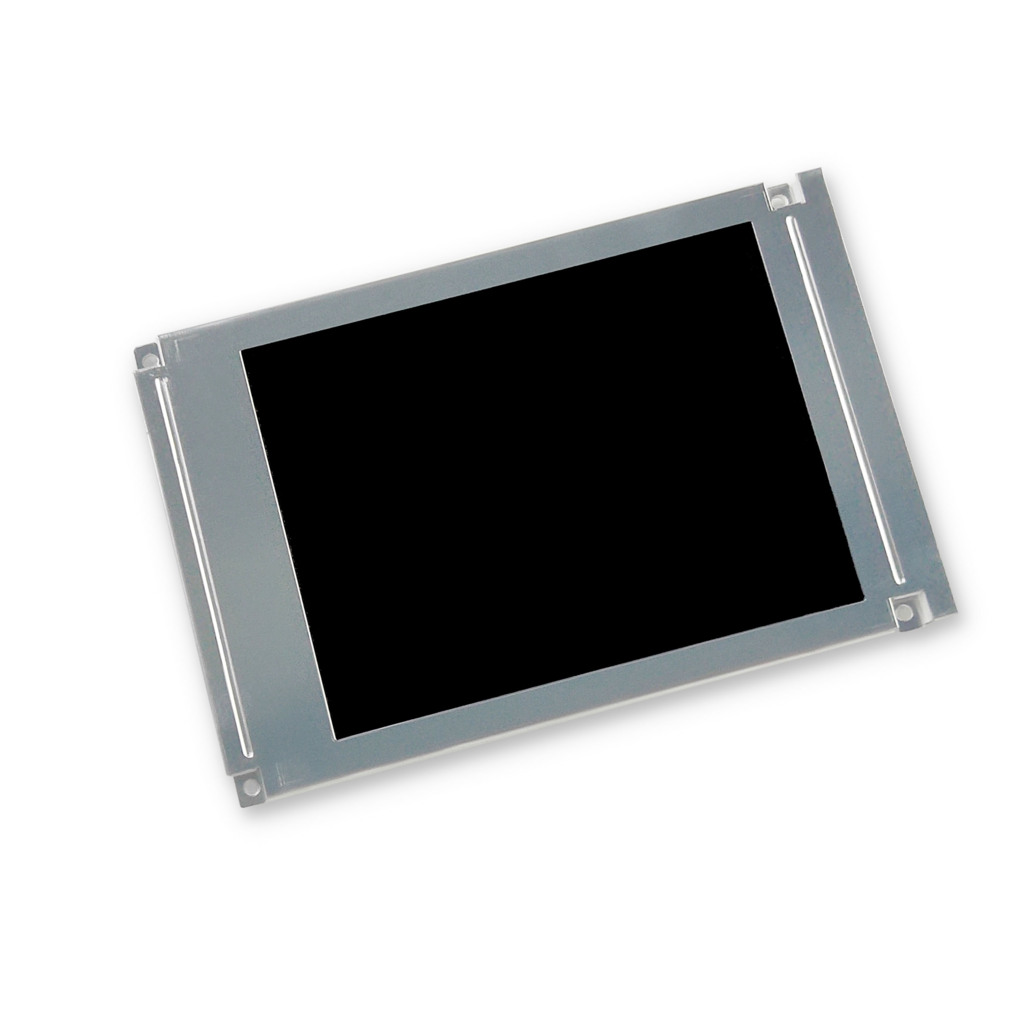
Even against a simpler TN or STN LCD, the FSTN's film compensation provides a decisive advantage in visual quality. This places the 5.8" FSTN display in a strategic sweet spot: it is a significant step up from basic alphanumeric character displays and rudimentary graphics panels, yet it avoids the complexity and cost overhead of full-color, high-refresh-rate systems.
The Supply Chain and Sourcing Considerations
Engaging with suppliers early is crucial to confirm lead times, minimum order quantities, and access to detailed datasheets and CAD models for mechanical design. Given the trend towards display customization, understanding if this is a standard catalog item or a custom variant is vital. For legacy product support, the robustness of the FSTN supply chain often proves more stable than that for cutting-edge, fast-evolving consumer display technologies.
FAQs: 5.8" 320*240 FSTN-LCD EDMMRG6KAF
Q10: Is this display still in production and easy to source?A10: As a standard industrial component, it likely has a long production lifecycle. However, availability should always be confirmed with authorized distributors or the manufacturer directly, as supply chains can shift.