






- Industrial LCD display
-
Industrial Products
- DC Servo Drive
- AC Servo Drive
- other
- Heidelberg
- FANUC
- IFM
- Meter
- CCD
- Membrane Keypad
- Film
- YOKOGAWA Module
- Card
- ABB
- MITSUBISHI
- FANUC
- KEYENCE
- BECKHOFF
- Honeywell
- HOLLYSYS
- FUJI servo drives
- HP
- solenoid valve
- thermostat
- Siemens adapter
- color oscilloscope
- Fujitsu connector
- CHELIC
- SMC
- CISCO Module
- INTEL
- Key board
- FAIRCHILD
- Motherboard
- Board
- Bearing
- other
- Control Panel
- Contactor
- Circuit
- OMRON
- Relay
- Controller
- Photoelectric Switch
- Photoelectric Sensor
- Original
- Fan
- Motor Driver
- Limit Switch
- Amplifier
- power supply
- LENZE
- Cable
- Encoder
- Sensor
- Transformer
- Fiber Optic Sensor
- Protection Relay
- Temperature Controller
- Proximity Switch
- Switch Sensor
- Siemens
- Industrial board
- HMI Touch Glass
-
HMI Full Machine Whole unit
- OMRON HMI Touch Panel
- Siemens HMI Touch Panel
- Mitsubishi HMI Touch Panel
- Allen-Bradley automation HMI Touch Panel
- DELTA HMI Touch Panel
- EVIEW DELTA HMI Touch Panel
- KINCO DELTA HMI Touch Panel
- HITECH HMI Touch Panel
- WEINTECK HMI Touch Panel
- TECVIEW HMI Touch Panel
- WEINVIEW HMI Touch Panel
- PRO-FACE HMI Touch Panel
- SIMATIC HMI Touch Panel
- AMPIRE HMI Touch Panel
- HEIDELBERG HMI Touch Panel
- PANASONIC HMI Touch Panel
- PATLITE HMI Touch Panel
- KYOCERA HMI Touch Panel
- KEYENCE HMI Touch Panel
- WEINVIEW HMI Touch Panel
- HITECH HMI Touch Panel
- FUJI HMI Touch Panel
- HAKKO HMI Touch Panel
- SCHNEIDER HMI Touch Panel
- SAMKOON touch panel
- other
- Module
- lcd inverter
- Membrane Keypad Switch
- Winni Touch Screens
- Frequency Inverter
- Servo Motor
- PLC


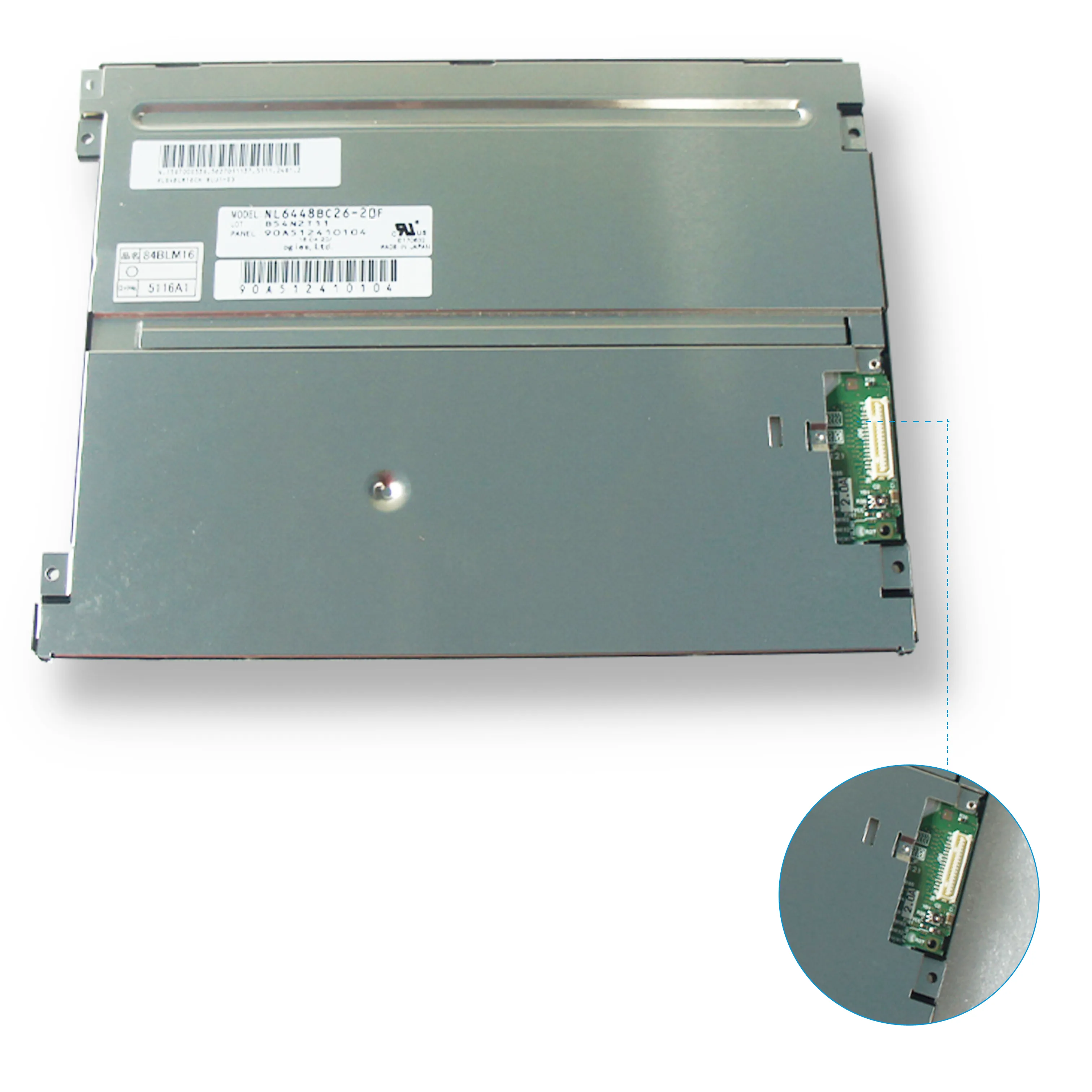

Original AA104VC10 10.4" LCD Panel for Mitsubishi
In the intricate world of industrial and commercial display systems, the integrity of every component is paramount. At the heart of many Mitsubishi operator interfaces and monitoring stations lies a critical piece of technology: the Original AA104VC10 10.4-inch LCD display panel. This isn't merely a generic screen; it is a precision-engineered module designed to meet the rigorous demands of industrial environments, from factory floors to process control rooms. Its significance extends beyond being a simple replacement part—it is the vital visual gateway that ensures operational clarity, system reliability, and long-term performance.
This article delves into the essential role of the Original AA104VC10, exploring its technical specifications, the crucial importance of authenticity, and its application within broader systems. We will navigate the complex landscape of sourcing this specialized component, providing a clear guide for maintenance engineers, procurement specialists, and system integrators tasked with upholding the functionality of critical Mitsubishi equipment. Understanding this component is key to ensuring seamless operations and protecting valuable capital investments.
Decoding the AA104VC10: Technical Specifications and Core Function
The Original AA104VC10 is a 10.4-inch diagonal active matrix TFT LCD panel, engineered as a direct replacement component for specific Mitsubishi Human Machine Interface (HMI) units and industrial monitors. Its core function is to provide a durable, high-contrast visual interface in challenging conditions. Key technical attributes typically include a standard XGA resolution (1024 x 768 pixels), ensuring sharp detail for complex schematics and data readouts. It employs a standard LVDS interface for reliable digital signal transmission and is designed with specific mounting points, connector placements, and backlight systems (often CCFL) to match the original equipment's form and function perfectly.
Beyond basic specs, its design accounts for industrial longevity. The panel is built to withstand extended operational hours, resist vibration, and maintain consistent performance across a range of temperatures. Unlike commercial-grade screens, its construction prioritizes stability over consumer features. Understanding these specifications is the first step in recognizing why a genuine, exact-match panel is non-negotiable for a successful repair or restoration, as even minor deviations can lead to compatibility failures or subpar performance.
The High Cost of Compatibility: Why Authenticity is Non-Negotiable
In the aftermarket for display panels, the temptation of lower-cost alternatives is ever-present. However, for critical industrial components like the AA104VC10, opting for a generic or "compatible" panel carries significant risk. Authenticity guarantees more than just a physical fit. It ensures precise electrical compatibility, correct timing controller (T-Con) behavior, and accurate color calibration as intended by Mitsubishi's original design. A non-original panel may have subtle differences in voltage requirements, signal timing, or connector pinouts that can lead to immediate failure, intermittent issues, or even damage to the host HMI's mainboard.
The true cost of a counterfeit or inferior panel manifests in system downtime, repeated repair labor, and potential safety risks if a display fails during a critical process. An original panel, while potentially higher in initial price, delivers guaranteed performance, preserves the manufacturer's warranty on the broader system, and extends the operational life of the equipment. It is an investment in reliability, safeguarding productivity and protecting against the far greater expenses of unplanned outages.
Typical Applications and Integration in Mitsubishi Systems
The AA104VC10 panel is not a standalone consumer product but a core component integrated into sophisticated Mitsubishi systems. Its primary application is within Mitsubishi's GOT series Graphic Operation Terminals, such as certain models of the GOT1000 series. These HMIs are the nerve centers for controlling and monitoring automated machinery, PLCs, and robotic systems across manufacturing, packaging, and automotive industries. The display serves as the interactive window for operators to input commands, view real-time process data, acknowledge alarms, and visualize production flows.
It may also be found in specialized industrial monitors used for surveillance or data presentation in control rooms. In these contexts, the panel's reliability is directly tied to operational efficiency. A failure means operators are blind to the process state. Therefore, the integration is both physical and digital; the panel must perfectly align with the HMI's casing and firmware, ensuring touch functionality (if applicable) and on-screen display menus work flawlessly. This deep integration underscores why a drop-in replacement is essential.
Identifying Failure: Symptoms of a Failing Display Panel
Recognizing the signs of a deteriorating AA104VC10 panel is crucial for proactive maintenance. Failure symptoms are often visual and progressive. Common indicators include the appearance of horizontal or vertical lines, either static or flickering, which suggest a failing connection to the driver IC or internal tab bonds. A complete lack of image (backlight works but no picture) often points to a fault in the LCD matrix or T-Con board. A dim, uneven, or flickering backlight typically signifies aging CCFL tubes or inverter issues.
Other symptoms include permanent discoloration (yellowing or burnt-in images), areas of dead pixels, or a subtle "ghosting" effect where previous images remain faintly visible. Intermittent display cutting out can be related to loose internal connections exacerbated by vibration. It is important to conduct basic troubleshooting—checking cables and power supply to the main unit—to isolate the fault to the panel itself. Identifying these symptoms early allows for planned replacement, avoiding a catastrophic failure during critical operations.
The Procurement Puzzle: Sourcing Genuine Mitsubishi Components
Sourcing an authentic AA104VC10 is a critical step that requires diligence. The recommended and most reliable channel is through authorized Mitsubishi Electric distributors or certified industrial parts suppliers. These vendors provide traceability, warranty, and technical support. When evaluating a supplier, request detailed product photographs, original part number markings, and documentation. Be wary of prices that seem too good to be true, vague product descriptions, or sellers who cannot verify the source of their components.
For older or discontinued systems, the search may extend to reputable specialized industrial electronic component brokers who deal in new old stock (NOS) or tested pulls from decommissioned equipment. In such cases, verifying the seller's reputation, requesting test reports, and understanding the return policy is paramount. The procurement process is not just about purchasing a part; it's about securing a guarantee of performance and system integrity.
Installation Considerations and Best Practices
Successful replacement of the AA104VC10 hinges on careful installation. This is a sensitive electronic component that requires an ESD-safe (Electrostatic Discharge) work environment to prevent damage from static electricity. Before starting, power down and isolate the HMI unit completely. Document the disassembly process, perhaps with photos, noting cable routing and connector types. Handle the panel only by its edges, avoiding pressure on the screen surface or flexing the PCB.
During installation, ensure all connectors are seated firmly and evenly, and that no cables are pinched. Pay close attention to the interface cables (LVDS and backlight inverter); their connectors are often delicate. Once installed, power up the system and thoroughly test all functions—display uniformity, color, touch response (if applicable), and viewing angles—before reassembling the outer casing. Following these best practices minimizes installation risks and ensures the new panel performs to its full potential, restoring the HMI to like-new condition.


FAQs: Your Questions on the AA104VC10 Panel Answered
Conclusion
The Original AA104VC10 10.4" LCD display panel is far more than a simple screen; it is a critical, precision-engineered component that upholds the functionality and reliability of vital Mitsubishi industrial interfaces. Its role in ensuring clear communication between human operators and complex machinery cannot be overstated. Through understanding its technical specifics, recognizing the imperative of authenticity, and navigating the sourcing and installation process with care, technicians and operators can make informed decisions that protect their investments and maintain operational continuity.
In the demanding landscape of industrial automation, cutting corners on core components is a risk with exponential costs. Investing in a genuine AA104VC10, installed with precision, is ultimately an investment in minimizing downtime, ensuring safety, and extending the productive lifespan of critical equipment. It reaffirms the principle that in industrial systems, quality and compatibility are the true drivers of long-term value and performance.