






- Industrial LCD display
-
Industrial Products
- DC Servo Drive
- AC Servo Drive
- other
- Heidelberg
- FANUC
- IFM
- Meter
- CCD
- Membrane Keypad
- Film
- YOKOGAWA Module
- Card
- ABB
- MITSUBISHI
- FANUC
- KEYENCE
- BECKHOFF
- Honeywell
- HOLLYSYS
- FUJI servo drives
- HP
- solenoid valve
- thermostat
- Siemens adapter
- color oscilloscope
- Fujitsu connector
- CHELIC
- SMC
- CISCO Module
- INTEL
- Key board
- FAIRCHILD
- Motherboard
- Board
- Bearing
- other
- Control Panel
- Contactor
- Circuit
- OMRON
- Relay
- Controller
- Photoelectric Switch
- Photoelectric Sensor
- Original
- Fan
- Motor Driver
- Limit Switch
- Amplifier
- power supply
- LENZE
- Cable
- Encoder
- Sensor
- Transformer
- Fiber Optic Sensor
- Protection Relay
- Temperature Controller
- Proximity Switch
- Switch Sensor
- Siemens
- Industrial board
- HMI Touch Glass
-
HMI Full Machine Whole unit
- OMRON HMI Touch Panel
- Siemens HMI Touch Panel
- Mitsubishi HMI Touch Panel
- Allen-Bradley automation HMI Touch Panel
- DELTA HMI Touch Panel
- EVIEW DELTA HMI Touch Panel
- KINCO DELTA HMI Touch Panel
- HITECH HMI Touch Panel
- WEINTECK HMI Touch Panel
- TECVIEW HMI Touch Panel
- WEINVIEW HMI Touch Panel
- PRO-FACE HMI Touch Panel
- SIMATIC HMI Touch Panel
- AMPIRE HMI Touch Panel
- HEIDELBERG HMI Touch Panel
- PANASONIC HMI Touch Panel
- PATLITE HMI Touch Panel
- KYOCERA HMI Touch Panel
- KEYENCE HMI Touch Panel
- WEINVIEW HMI Touch Panel
- HITECH HMI Touch Panel
- FUJI HMI Touch Panel
- HAKKO HMI Touch Panel
- SCHNEIDER HMI Touch Panel
- SAMKOON touch panel
- other
- Module
- lcd inverter
- Membrane Keypad Switch
- Winni Touch Screens
- Frequency Inverter
- Servo Motor
- PLC



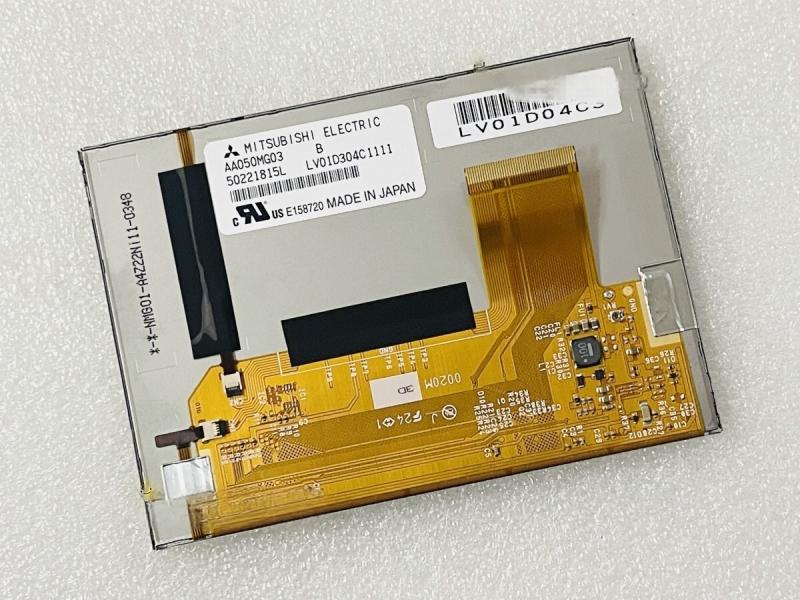
In the intricate world of industrial and embedded display solutions, the specifications of a single component can define the capabilities of an entire system. The 5.0-inch Mitsubishi AA050MG03 LCD panel stands as a prime example of engineering tailored for reliability and performance in demanding environments. With its 800 x 480 pixel resolution (WVGA), this compact display offers a clear window into complex machinery, user interfaces, and specialized equipment.
This article delves deep into the Mitsubishi AA050MG03, moving beyond basic datasheet parameters to explore its real-world significance. We will dissect its core technological features, analyze its ideal application landscapes, and contrast it with alternative display options. Our goal is to provide engineers, procurement specialists, and technology integrators with a comprehensive understanding of where this specific panel excels, the challenges it solves, and the key considerations for its successful implementation. This is not just about a screen; it's about enabling clearer interaction between humans and machines.
Core Technology and Specifications Deep Dive
The foundation of the AA050MG03's performance lies in its a-Si TFT LCD (Amorphous Silicon Thin-Film Transistor) technology. This mature and robust process delivers stable performance and good production yields. The 800 x 480 WVGA resolution provides a balanced pixel density for a 5-inch diagonal, ensuring legible text and adequate detail for most industrial HMI graphics without overwhelming the system's graphical processing unit.
Key specifications that define its operational envelope include a standard RGB 24-bit parallel interface, which ensures broad compatibility with common microprocessors and display controllers. Its 450 cd/m² typical brightness allows for readability in well-lit indoor settings. Furthermore, the panel features a transmissive design with a built-in LED backlight, requiring careful consideration for ambient lighting conditions. Understanding these technical pillars is crucial for assessing its fit within a system's electrical and optical architecture.
Target Applications and Industry Fit
The Mitsubishi AA050MG03 is not designed for consumer smartphones or tablets. Its value proposition is firmly rooted in the B2B and industrial sectors. Its primary application is in Human-Machine Interfaces (HMIs) for factory automation, process control systems, and test/measurement equipment. Here, reliability and clarity are paramount.
Beyond industrial automation, this panel finds a home in point-of-sale (POS) terminals, transportation infotainment systems, medical diagnostic devices, and building automation controllers. These environments share common needs: continuous operation, resistance to temperature fluctuations, and a requirement for a dependable, standardized display component that can be sourced for long product lifecycles. The panel's specifications are a direct response to these stringent, non-negotiable demands.
Advantages in Harsh and Demanding Environments
What separates industrial-grade displays from their consumer counterparts is resilience. The AA050MG03 is engineered for this challenge. It operates reliably across an extended temperature range, typically from -30°C to +80°C for the storage environment and a robust operational range. This ensures functionality in unheated warehouses or near hot machinery.
Its design also accounts for long-term durability. The use of high-grade materials and a rigid construction mitigates risks from constant vibration or minor physical shocks common in industrial settings. Additionally, the panel offers a long backlight lifetime, often rated for tens of thousands of hours, minimizing maintenance and downtime. This focus on endurance over flashy consumer features is its core strength.
Integration Considerations and Design Challenges
Successfully integrating the AA050MG03 requires careful planning. The parallel RGB interface, while compatible, demands a significant number of GPIO pins from the host controller, influencing PCB layout and complexity. Designers must also manage the power sequencing for the LCD and its backlight to prevent potential damage and ensure a clean startup.
Optically, the transmissive nature means its visibility is highly dependent on the backlight. In very bright ambient light (e.g., direct sunlight), a high-brightness version or an optical bonding service might be necessary to combat washout. Furthermore, mechanical integration involves designing a secure bezel or frame, managing heat dissipation from the backlight, and selecting a compatible touch panel overlay if required.
Comparison with Alternative Display Technologies
Placing the AA050MG03 in context clarifies its niche. Compared to modern IPS (In-Plane Switching) panels, it may offer slightly narrower viewing angles and color gamut, but it often wins on cost-effectiveness, availability, and proven reliability for monochrome or simple GUI applications. Against OLED displays, it lacks perfect blacks and ultra-high contrast but provides far superior longevity and avoids risks like burn-in, which is critical for static industrial graphics.
Even within the TFT category, alternatives might offer higher resolutions (1024x600) or MIPI interfaces for space-constrained designs. The choice for the AA050MG03 is a conscious decision favoring a balanced, robust, and industry-proven solution over cutting-edge specs that may introduce cost or supply chain complexity.
Supply Chain and Long-Term Availability Strategy
For industrial product manufacturers, a component's lifecycle is as important as its specs. Mitsubishi, as a established player, has traditionally supported long-term availability for such industrial lines. However, with the dynamic nature of the display industry, proactive planning is essential.
Strategies include engaging with authorized distributors for guaranteed authentic parts, considering last-time-buy (LTB) agreements as the product matures, and evaluating pin-compatible alternative panels from other manufacturers as a risk mitigation plan. Building a relationship with a specialist display distributor or integrator can provide crucial insights into lifecycle forecasting and potential successor models.
Frequently Asked Questions (FAQs)
Q10: What is a key alternative to consider?A10: Panels with similar specs but MIPI DSI interfaces could be considered for designs where PCB space and pin count are major constraints.
Conclusion
The Mitsubishi AA050MG03 5.0-inch LCD panel exemplifies the principle of right-fit engineering. It may not boast the highest resolution or most vibrant colors, but it delivers precisely what industrial and embedded systems demand: robustness, reliability, and long-term availability. Its WVGA resolution, parallel interface, and industrial-grade construction make it a dependable workhorse for HMIs, POS systems, and a myriad of other specialized applications.
Selecting this panel is a strategic decision that prioritizes system stability and lifecycle management over fleeting technological trends. For designers and engineers building equipment that must perform day-in and day-out in challenging conditions, understanding and leveraging the strengths of components like the AA050MG03 is fundamental to creating products that endure. In the world of industrial displays, proven performance often outweighs pure specification.