






- Industrial LCD display
-
Industrial Products
- DC Servo Drive
- AC Servo Drive
- other
- Heidelberg
- FANUC
- IFM
- Meter
- CCD
- Membrane Keypad
- Film
- YOKOGAWA Module
- Card
- ABB
- MITSUBISHI
- FANUC
- KEYENCE
- BECKHOFF
- Honeywell
- HOLLYSYS
- FUJI servo drives
- HP
- solenoid valve
- thermostat
- Siemens adapter
- color oscilloscope
- Fujitsu connector
- CHELIC
- SMC
- CISCO Module
- INTEL
- Key board
- FAIRCHILD
- Motherboard
- Board
- Bearing
- other
- Control Panel
- Contactor
- Circuit
- OMRON
- Relay
- Controller
- Photoelectric Switch
- Photoelectric Sensor
- Original
- Fan
- Motor Driver
- Limit Switch
- Amplifier
- power supply
- LENZE
- Cable
- Encoder
- Sensor
- Transformer
- Fiber Optic Sensor
- Protection Relay
- Temperature Controller
- Proximity Switch
- Switch Sensor
- Siemens
- Industrial board
- HMI Touch Glass
-
HMI Full Machine Whole unit
- OMRON HMI Touch Panel
- Siemens HMI Touch Panel
- Mitsubishi HMI Touch Panel
- Allen-Bradley automation HMI Touch Panel
- DELTA HMI Touch Panel
- EVIEW DELTA HMI Touch Panel
- KINCO DELTA HMI Touch Panel
- HITECH HMI Touch Panel
- WEINTECK HMI Touch Panel
- TECVIEW HMI Touch Panel
- WEINVIEW HMI Touch Panel
- PRO-FACE HMI Touch Panel
- SIMATIC HMI Touch Panel
- AMPIRE HMI Touch Panel
- HEIDELBERG HMI Touch Panel
- PANASONIC HMI Touch Panel
- PATLITE HMI Touch Panel
- KYOCERA HMI Touch Panel
- KEYENCE HMI Touch Panel
- WEINVIEW HMI Touch Panel
- HITECH HMI Touch Panel
- FUJI HMI Touch Panel
- HAKKO HMI Touch Panel
- SCHNEIDER HMI Touch Panel
- SAMKOON touch panel
- other
- Module
- lcd inverter
- Membrane Keypad Switch
- Winni Touch Screens
- Frequency Inverter
- Servo Motor
- PLC


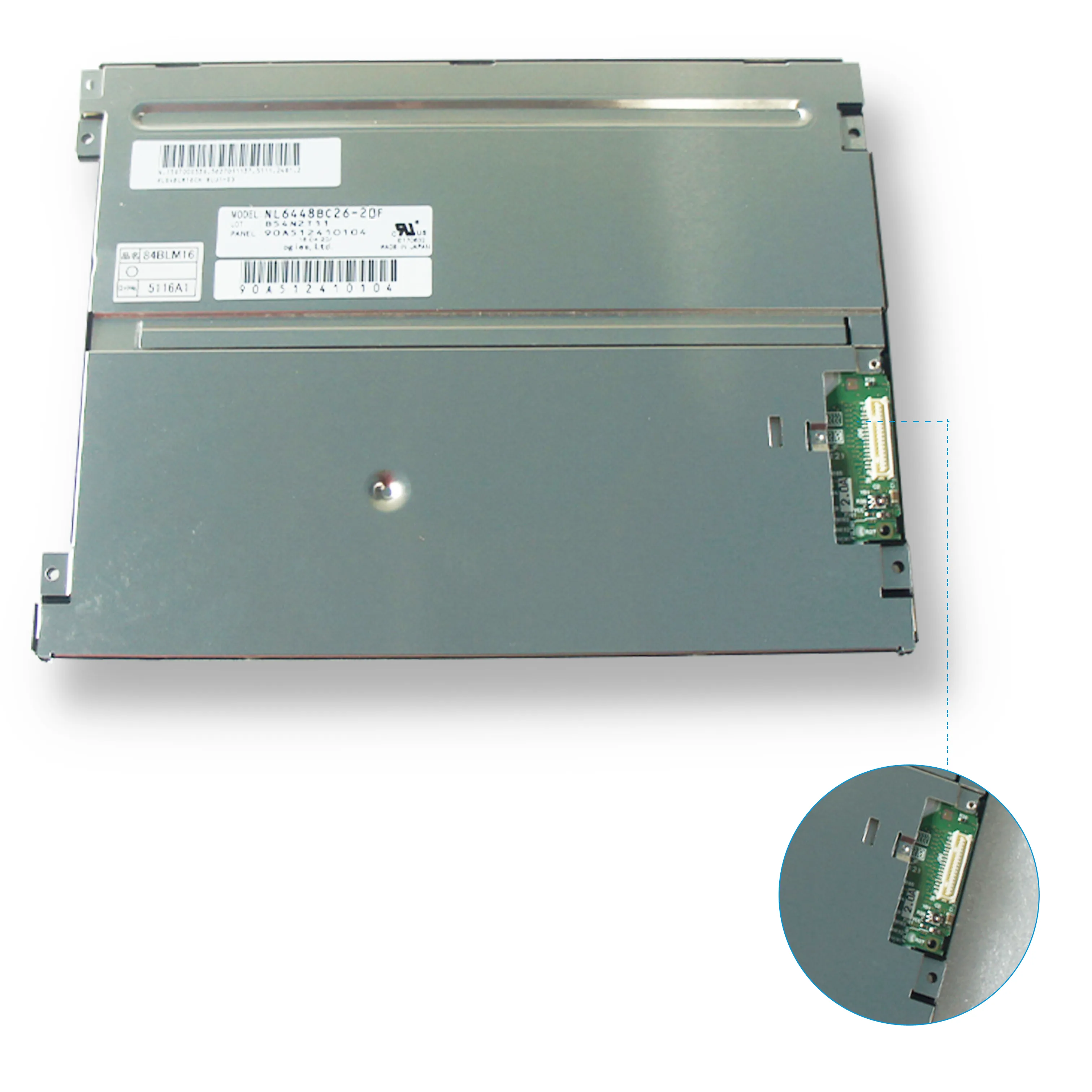

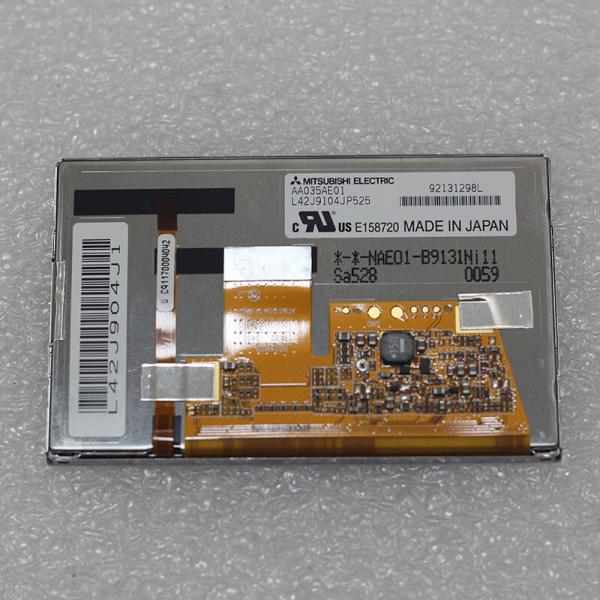
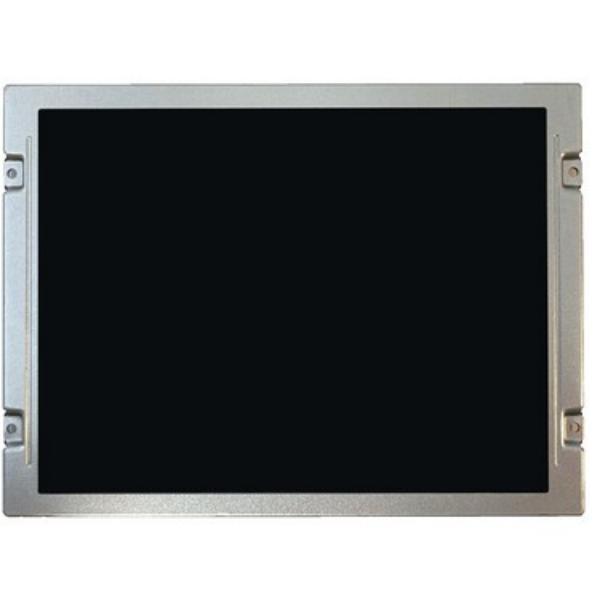
In the intricate world of industrial and embedded display solutions, the Mitsubishi AA035AE01 3.5-inch TFT-LCD panel stands as a testament to precision engineering tailored for demanding applications. This specific model, with its 960 x 540 pixel resolution, occupies a unique niche, offering a balance of clarity, compactness, and reliability that generic consumer displays cannot match. Beyond its basic specifications lies a product designed for integration into systems where performance under stress, longevity, and consistent visual output are non-negotiable.
The Significance of qHD Resolution in a Compact Form Factor
The AA035AE01's 960 x 540 pixel configuration, commonly termed qHD (quarter Full HD), is a deliberate and strategic choice. In a compact 3.5-inch diagonal screen, this resolution yields a pixel density of approximately 315 PPI (Pixels Per Inch). This high density is crucial for rendering sharp text, detailed graphics, and intricate user interface elements without visible pixelation. For industrial HMIs, portable medical devices, or advanced instrumentation, this clarity directly translates to improved readability and reduced operator error.
Decoding the Interface: LVDS and System Integration
At the heart of the AA035AE01's functionality is its LVDS (Low-Voltage Differential Signaling) interface. This is a critical differentiator from consumer panels that often use parallel RGB or modern interfaces like MIPI-DSI. LVDS is a robust, noise-resistant serial communication standard ideal for environments with electromagnetic interference. It transmits data as a difference between two voltages, making it highly immune to common-mode noise, which is paramount in industrial or automotive settings.
Illumination and Longevity: The CCFL Backlight Advantage
Unlike modern consumer displays universally lit by LEDs, the Mitsubishi AA035AE01 utilizes a CCFL (Cold Cathode Fluorescent Lamp) backlight system. This choice is not an anachronism but a calculated decision for specific use cases. CCFL backlights provide exceptionally uniform and stable white light across the entire display area, a characteristic sometimes challenging to achieve with LED arrays in small panels without hot-spotting.
Built for Rugged Environments: Durability and Operating Specs
The true value of the AA035AE01 is realized in its environmental specifications. This panel is engineered to perform reliably beyond the benign conditions of an office. Its operating temperature range, typically spanning from -30°C to +80°C, allows deployment in unheated outdoor enclosures, automotive under-dash applications, or factory floors with wide thermal swings. This resilience is a product of carefully selected materials, stable liquid crystal formulations, and robust bonding processes.
Comparative Analysis: AA035AE01 vs. Modern Alternatives
When selecting a display, it is instructive to contrast the AA035AE01 with contemporary alternatives. Modern consumer-grade 3.5-inch LCDs often feature MIPI interfaces, LED backlights, and may offer similar resolutions. However, they are typically rated for commercial temperature ranges (0-50°C) and lack the design validation for continuous 24/7 operation or high-vibration environments. Their lifespan and brightness consistency may degrade rapidly under industrial stresses.
Other industrial panels may match the ruggedness but perhaps not the specific qHD resolution or the color performance of the Mitsubishi CCFL system. The AA035AE01 occupies a specific intersection in the Venn diagram of high density, robust interface, superior optical uniformity, and extreme environmental tolerance. Its value proposition is clear: it is a premium, application-specific component where total cost of ownership, defined by reliability and minimal downtime, outweighs the initial unit cost.
Integration Essentials and Sourcing Considerations
Successfully integrating the AA035AE01 requires attention to several key factors. Electrically, designers must ensure the host LVDS transmitter matches the panel's voltage swing, color depth (typically 6-bit or 8-bit per channel), and timing requirements. Mechanically, the module's exact dimensions, mounting hole patterns, and connector location must be accommodated in the product housing.
FAQs
Conclusion
The Mitsubishi AA035AE01 3.5-inch TFT-LCD panel is far more than a simple screen; it is a meticulously engineered component designed for mission-critical visibility. Its combination of qHD resolution, robust LVDS interface, uniform CCFL backlighting, and exceptional environmental tolerance defines it as a solution for applications where failure is not an option. It represents a philosophy of design that prioritizes long-term reliability, signal integrity, and consistent performance over the fleeting trends of the consumer market.
For engineers and designers, selecting a display like the AA035AE01 is a strategic decision that impacts the core reliability and usability of the final product. It serves as a reminder that in the world of industrial technology, the best component is not always the one with the highest specifications, but the one whose specifications are perfectly aligned with the demands of the task, ensuring clarity and resilience for years to come.