






- Industrie-LCD-Display
-
Industrial Products
- DC Servo Drive
- AC Servo Drive
- other
- Heidelberg
- FANUC
- IFM
- Meter
- CCD
- Membrane Keypad
- Film
- YOKOGAWA
- Card
- ABB
- MITSUBISHI
- FANUC
- KEYENCE
- BECKHOFF
- Honeywell
- HOLLYSYS
- FUJI servo drives
- HP
- solenoid valve
- thermostat
- Siemens adapter
- color oscilloscope
- Fujitsu connector
- CHELIC
- SMC
- CISCO
- INTEL
- Key board
- FAIRCHILD
- Der Aufsichtsrat
- Board
- Bearing
- other
- Control Panel
- Contactor
- Circuit
- Omron
- Relais.
- Der controller
- Optoelektronische schalter
- Optoelektronische sensoren
- Original
- Fan
- Motortreiber
- Endschalter
- Verstärker
- power supply
- LENZE
- Cable
- Encoder
- Sensor
- Transformator
- Fiber Optic Sensor
- Schutzrelais
- Temperaturregler
- Näherungsschalter
- Switch Sensor
- Siemens
- PCB
- HMI Touch-Glas
-
HMI-Vollautomat Ganze Einheit
- OMRON HMI Touch Panel
- Siemens HMI Touch Panel
- Mitsubishi HMI Touch Panel
- Allen-Bradley Automatisierung HMI Touch
- DELTA HMI Touch Panel
- EVIEW DELTA HMI Touch Panel
- KINCO DELTA HMI Touch Panel
- HITECH HMI Touch Panel
- WEINTECK HMI Touch Panel
- TECVIEW HMI Touch Panel
- WEINVIEW HMI Touch Panel
- PRO-FACE HMI Touch Panel
- SIMATIC HMI Touch Panel
- AMPIRE HMI Touch Panel
- HEIDELBERG HMI Touch Panel
- PANASONIC HMI Touch Panel
- PATLITE HMI Touch Panel
- KYOCERA HMI Touch Panel
- KEYENCE HMI Touch Panel
- WEINVIEW HMI Touch Panel
- HITECH HMI Touch Panel
- FUJI HMI Touch Panel
- HAKKO HMI Touch Panel
- SCHNEIDER HMI Touch Panel
- SAMKOON touch panel
- andere
- Module
- LCD Wechselrichter
- Membran Tastenfeld Schalter
- Winni Touch Screens
- Frequenzumrichter
- Servo Motor
- PLC


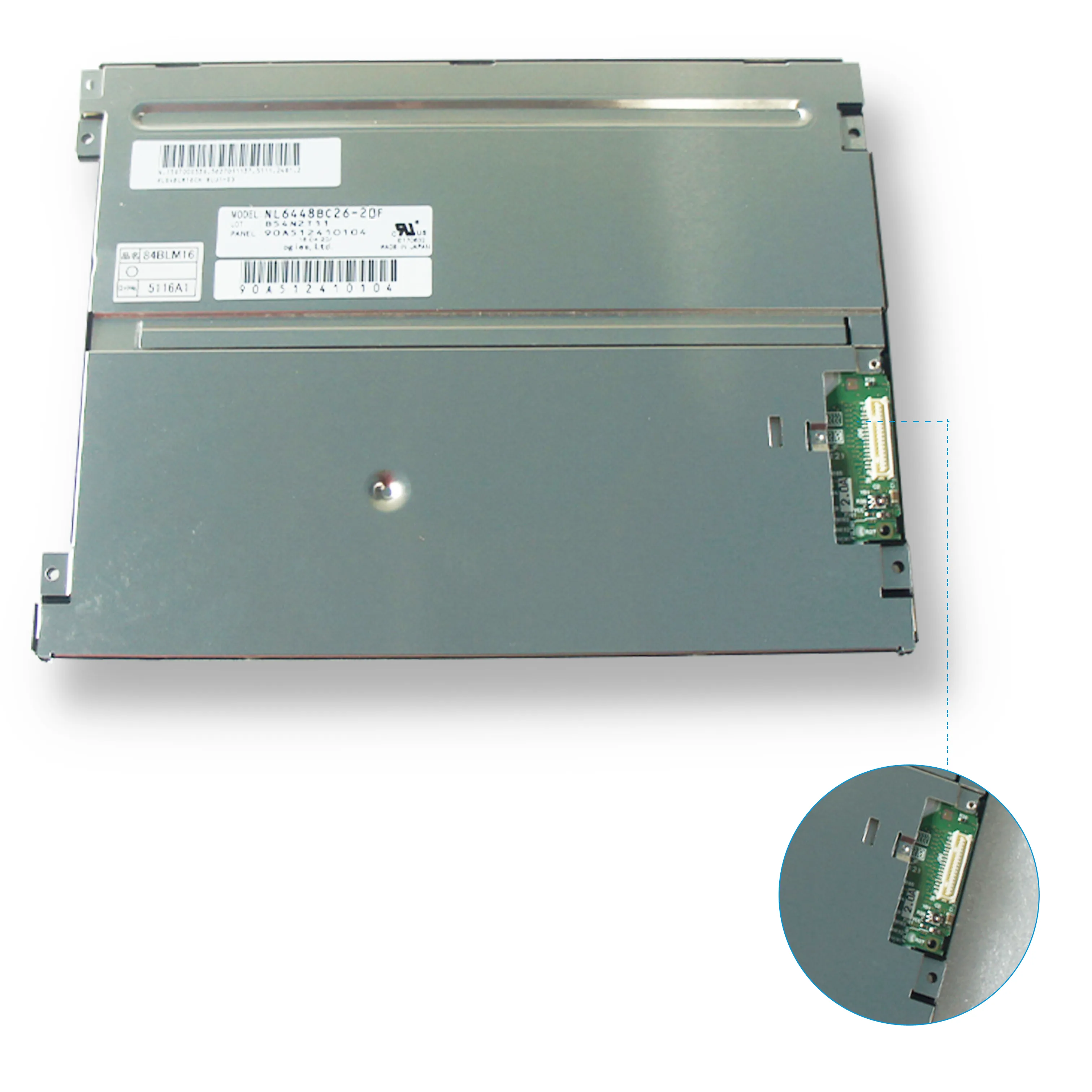

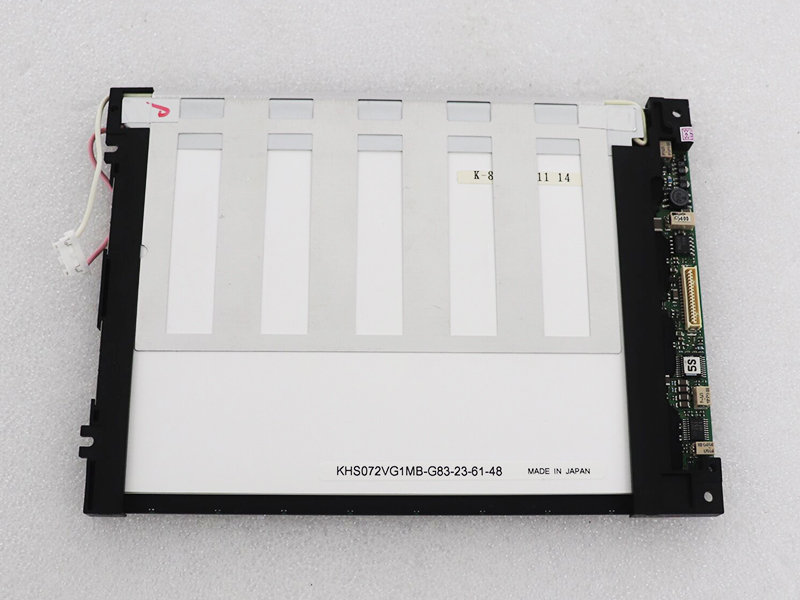
LCD KYOCERA KHS072VG1MB-G83 7.2inch LCD PANEL
The industrial display market is a demanding arena where reliability, clarity, and longevity are not merely features but absolute necessities. Among the components that define this high-stakes environment, the LCD KYOCERA KHS072VG1MB-G83 stands out as a specialized solution designed for rigorous applications. This article explores this specific 7.2-inch panel, moving beyond basic specifications to dissect its architecture, target applications, and operational philosophy. We will examine why this particular model, produced by Kyocera—a manufacturer renowned for its industrial-grade components—occupies a unique niche between standard consumer displays and highly specialized military-grade equipment.
The KHS072VG1MB-G83 is not a generic screen; it is a precision optical assembly built for environments where a failure is not an option. Throughout this analysis, we will cover its technical specifications, including its unusual 7.2-inch form factor and VGA resolution. More importantly, we will delve into the engineering choices—from interface selection to backlight technology—that make this panel a preferred component in medical, marine, and heavy machinery interfaces. The goal is to provide a comprehensive understanding of how a specific LCD panel can be the critical differentiator in product reliability and performance.
In a market increasingly dominated by widescreen, high-definition panels, the decision to utilize a 7.2-inch diagonal with a standard VGA (640x480) resolution might seem anachronistic. However, this specific form factor represents a legacy standard that is deeply entrenched in industrial control systems, medical imaging carts, and diagnostic equipment. The 4:3 aspect ratio is not a limitation but a design choice, perfectly matching older analog video systems and embedded control software that were engineered before the wide-screen revolution.
The 640x480 resolution, while low by modern smartphone standards, is highly practical for the panel’s intended use. It provides sufficient pixel density for displaying critical data, such as numerical readouts, simple graphs, and control menus, without the unnecessary processing overhead required for high-definition images. This resolution allows system designers to use lower-cost processors and older, proven hardware architectures. Furthermore, the pixel pitch on a 7.2-inch diagonal is larger than on a comparable HD panel, which makes the characters and symbols easier to read in dimly lit control rooms or on a ship's bridge. The KHS072VG1MB-G83 thus represents a masterclass in functional specificity over consumer-grade visual excess.
Industrial panels live and die by their optical performance in uncontrolled environments. The KYOCERA KHS072VG1MB-G83 is engineered with a focus on high contrast ratio and wide viewing angles, typically utilizing TN (Twisted Nematic) or Super-TN technology. While TN panels are often criticized for poor viewing angles in consumer monitors, this industrial variant is often optimized with compensation films to achieve stable grayscale inversion and color shift performance across a wide horizontal and vertical plane.
More critical than sheer resolution is the panel's luminance and reflectivity management. Many variants of this model feature a high-brightness backlight, often exceeding 400-500 cd/m², and are sometimes paired with optical bonding. This process involves laminating the cover glass directly to the LCD module, eliminating the air gap. The result is a drastic reduction in internal reflections, significantly boosting perceived contrast in bright ambient light, such as in a sunlit cockpit or outdoor machinery cab. This makes the display "daylight readable" without requiring the viewer to shade the screen. The optical engineering here prioritizes information accessibility under glare—a non-negotiable requirement for safety-critical interfaces.
The backbone of connectivity for the KHS072VG1MB-G83 is the LVDS (Low-Voltage Differential Signaling) interface. This is a deliberate and strategic choice. LVDS is the de facto standard for embedded displays in industrial, medical, and automotive applications. Unlike newer interfaces like eDP or MIPI, LVDS is a mature, robust standard with a well-documented signal path that is resilient to electrical noise—a common hazard near heavy motors, pumps, or RF emitters.
The panel typically uses a single-channel 6-bit LVDS interface, which is perfectly adequate for 262K colors (18-bit color depth). This simplicity translates directly to lower system cost and easier integration. A design engineer can source a standard LVDS controller from any number of chip manufacturers and connect it to the panel with minimal impedance matching issues. This interface also allows for relatively long cable runs (up to several meters) without signal degradation, a necessity when the display must be located remotely from the main processing unit in a cabinet or a swivel arm mount. The KHS072VG1MB-G83's reliance on LVDS is a testament to the industrial design principle of "use the simplest standard that meets all requirements."
One of the most significant differentiators of the KYOCERA KHS072VG1MB-G83 is its operational temperature range and thermal design. While consumer panels typically operate between 0°C and 50°C, this industrial panel is designed for a much wider window, often from -20°C to +70°C (or even more extreme ranges for the storage temperature). This is achieved through several key engineering decisions.
First, the use of a CCFL (Cold Cathode Fluorescent Lamp) or high-end LED backlight that is specified to perform in cold temperatures without flicker or failure. Second, the liquid crystal fluid itself is formulated to have a faster response time at low temperatures, preventing image ghosting. The materials used in the polarizers and laminations are selected for their low outgassing and lack of brittleness in cold weather. Third, the panel is designed to dissipate heat efficiently. In high-temperature environments, the driving electronics are rated accordingly. This level of thermal engineering ensures that a piece of construction equipment in a Canadian winter or a medical cart in a tropical operating room will display the same crisp, reliable information. The panel is built to ignore its environment, not to rely on it for cooling.
Installing a standard commercial LCD into an industrial enclosure is a recipe for failure due to vibration, shock, and dust ingress. The KHS072VG1MB-G83 is designed with mechanical integration in mind. It typically features mounting ears or specific screw holes on the frame, allowing for rigid attachment to a chassis. Furthermore, the panel's thickness and bezel design are standardized to fit into common cutouts for 7.2-inch industrial monitors.
A critical aspect of the mechanical design is the allowance for optical bonding and the integration of a touch screen. Many end-users will order this panel with an overlay of a resistive or capacitive touch sensor bonded directly to it. The mechanical structure of the KHS072VG1MB-G83 is robust enough to withstand the pressure of a resistive touch screen without causing pressure spots (mura) on the LCD. The frame is also often made of a rigid metal material that resists bending and twist, preventing the glass substrate from cracking if the unit is dropped or vibrated. This panel is not a "drop-in" part; it is a precision component designed to become a structural element of the final product, contributing to the overall shock and vibration rating of the equipment.

What is the exact diagonal size of the KHS072VG1MB-G83?
It is precisely 7.2 inches (measured diagonally), not the more common 7.0 or 8.0 inches.
What resolution does the panel support?
It supports a standard VGA resolution of 640x480 pixels.
What connector type does it use for the video signal?
It uses a standard LVDS (Low-Voltage Differential Signaling) connector, typically 20-pin or 30-pin specific to the manufacturer's design.
Is this panel suitable for outdoor use?
Yes, particularly if it includes an optical bonding treatment and a high-brightness backlight, making it readable in direct sunlight.
What is the typical operating temperature range?
It is designed for a wide range, often from -20°C to +70°C.
Can I attach a touch screen to this panel?
Yes, it is commonly used with both resistive and capacitive touch screens, which are often optically bonded to the surface.
Is this panel still in production?
Kyocera often supports industrial displays for long periods, but it is best to check with distributors regarding current lifecycle status.
What is the typical backlight type and lifespan?
It uses either LED or CCFL. LED backlights have a longer lifespan (50,000+ hours) and are more common in newer revisions.
Why is this panel preferred over a modern tablet screen?
It offers superior reliability, a wider temperature range, better sunlight readability, and a 4:3 aspect ratio for legacy industrial software.
What is a typical replacement part number compatibility?
While specific, it is often a direct replacement for other Kyocera 7.2" LVDS panels, but always verify pinouts and timing specifications from the datasheet.
Conclusion
The KYOCERA KHS072VG1MB-G83 is more than just a 7.2-inch LCD panel; it is a testament to the philosophy of industrial design specificity. In a world obsessed with higher pixel counts and thinner profiles, this component stands firm on its values: reliability, readability, and ruggedness. We have seen that its 640x480 VGA resolution is not a weakness but a strategic match for embedded control systems. Its LVDS interface ensures noise immunity, its thermal design guarantees operation in extreme conditions, and its mechanical structure allows for secure, vibration-resistant integration.
For engineers and product managers designing critical human-machine interfaces, this panel offers a path of least resistance. It eliminates the uncertainties associated with adapting consumer-grade parts. By choosing this Kyocera panel, you are selecting a component that has been purpose-built for the job. The final takeaway is that in many professional fields, functionality must triumph over form. The KHS072VG1MB-G83 delivers exactly that—a clear, stable, and durable window into the data that matters most, making it a cornerstone of many mission-critical systems worldwide.