






- Industrie-LCD-Display
-
Industrial Products
- DC Servo Drive
- AC Servo Drive
- other
- Heidelberg
- FANUC
- IFM
- Meter
- CCD
- Membrane Keypad
- Film
- YOKOGAWA
- Card
- ABB
- MITSUBISHI
- FANUC
- KEYENCE
- BECKHOFF
- Honeywell
- HOLLYSYS
- FUJI servo drives
- HP
- solenoid valve
- thermostat
- Siemens adapter
- color oscilloscope
- Fujitsu connector
- CHELIC
- SMC
- CISCO
- INTEL
- Key board
- FAIRCHILD
- Der Aufsichtsrat
- Board
- Bearing
- other
- Control Panel
- Contactor
- Circuit
- Omron
- Relais.
- Der controller
- Optoelektronische schalter
- Optoelektronische sensoren
- Original
- Fan
- Motortreiber
- Endschalter
- Verstärker
- power supply
- LENZE
- Cable
- Encoder
- Sensor
- Transformator
- Fiber Optic Sensor
- Schutzrelais
- Temperaturregler
- Näherungsschalter
- Switch Sensor
- Siemens
- PCB
- HMI Touch-Glas
-
HMI-Vollautomat Ganze Einheit
- OMRON HMI Touch Panel
- Siemens HMI Touch Panel
- Mitsubishi HMI Touch Panel
- Allen-Bradley Automatisierung HMI Touch
- DELTA HMI Touch Panel
- EVIEW DELTA HMI Touch Panel
- KINCO DELTA HMI Touch Panel
- HITECH HMI Touch Panel
- WEINTECK HMI Touch Panel
- TECVIEW HMI Touch Panel
- WEINVIEW HMI Touch Panel
- PRO-FACE HMI Touch Panel
- SIMATIC HMI Touch Panel
- AMPIRE HMI Touch Panel
- HEIDELBERG HMI Touch Panel
- PANASONIC HMI Touch Panel
- PATLITE HMI Touch Panel
- KYOCERA HMI Touch Panel
- KEYENCE HMI Touch Panel
- WEINVIEW HMI Touch Panel
- HITECH HMI Touch Panel
- FUJI HMI Touch Panel
- HAKKO HMI Touch Panel
- SCHNEIDER HMI Touch Panel
- SAMKOON touch panel
- andere
- Module
- LCD Wechselrichter
- Membran Tastenfeld Schalter
- Winni Touch Screens
- Frequenzumrichter
- Servo Motor
- PLC


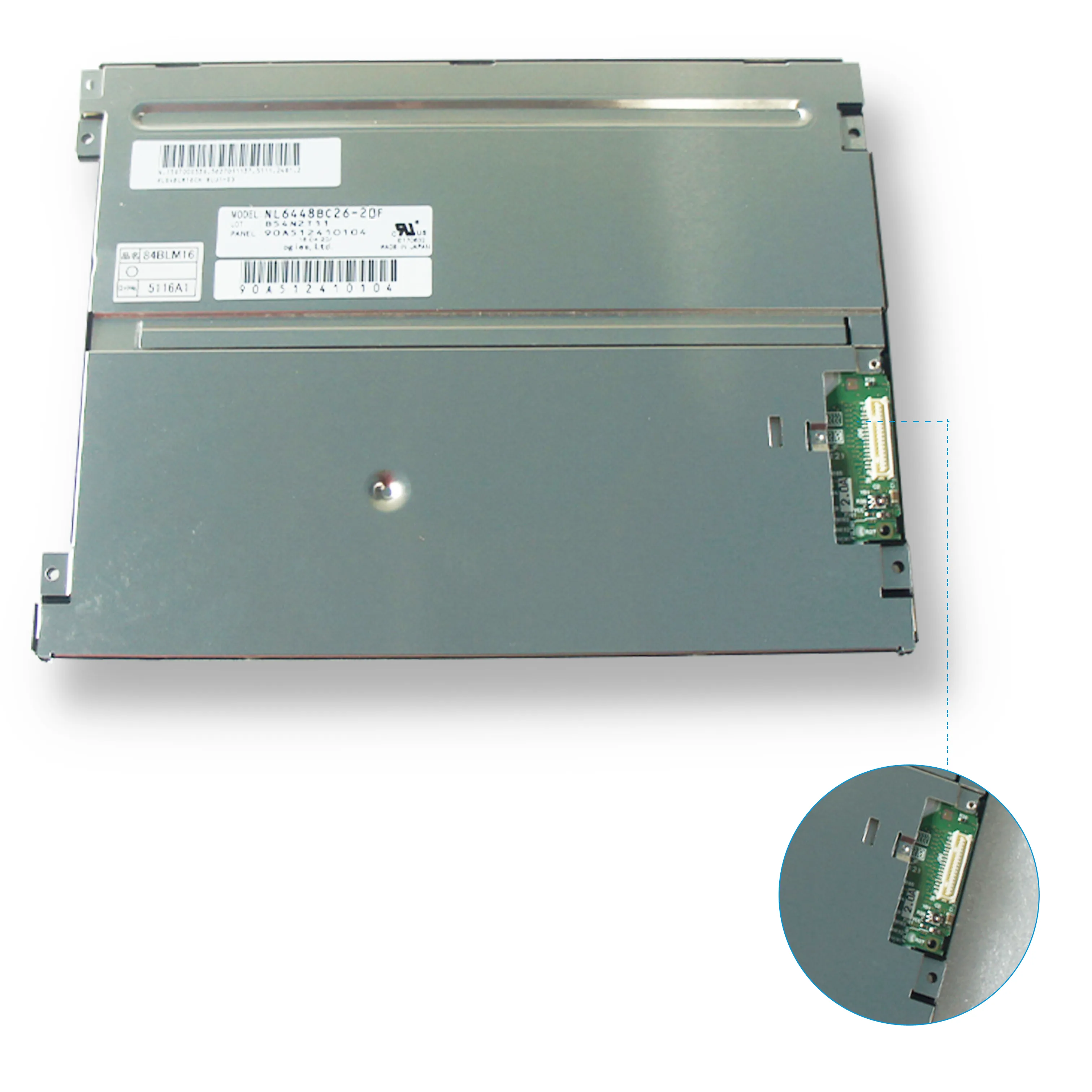

LB070WV6-TD08 LG 7" TFT-LCD screen 800*480 Display
In the realm of industrial and embedded display solutions, the LG LB070WV6-TD08 stands as a benchmark for reliability and visual performance. This 7.0-inch TFT-LCD module, featuring an 800x480 pixel resolution (WVGA), is engineered to meet the rigorous demands of human-machine interface applications. While the consumer market often obsesses over high-resolution mobile displays, the LB070WV6-TD08 represents a different philosophy: one of durability, consistent optical performance, and specific utility in challenging environments. This article explores the technical architecture, operational nuances, and application ecosystem surrounding this specific LG display. We will dissect its mechanical design, interface logic, and environmental ratings to provide a comprehensive understanding for engineers and procurement specialists. By moving beyond superficial specifications, we aim to evaluate why this panel remains a viable choice in medical, navigation, and instrumentation sectors, and how its characteristics influence system-level design decisions.
The LB070WV6-TD08 employs a vertical alignment (VA) technology, often mischaracterized as standard TN. Unlike twisted nematic panels, VA mode provides superior contrast ratios, typically exceeding 1000:1. For a 7.0-inch panel operating at 800x480, this creates deep blacks, which are critical for displaying medical waveforms or nautical charts where legibility in dim lighting is paramount. The viewing angle is another distinguishing factor. This LG panel offers a symmetrical 80/80/80/80 (CR≥10) specification across all quadrants. This uniformity is not trivial; it prevents color inversion and gamma shift when operators view the screen from off-axis positions, a common failure point in cheaper TN alternatives.
Furthermore, the panel's luminance rating of 400 cd/m² (typical) strikes a deliberate balance. It is bright enough for indoor industrial use with moderate ambient light, yet not so intense as to cause premature LED backlight degradation. The color gamut, approximately 60% NTSC, is intentionally constrained. For medical-grade grayscale imaging or industrial text rendering, a wider gamut can introduce calibration drift. LG’s choice ensures consistent color reproduction across production batches, which is vital for OEMs requiring uniform branding across multiple units.
This model utilizes a LVDS (Low-Voltage Differential Signaling) interface, specifically a single-channel 6-bit configuration. This is a deliberate design choice that prioritizes signal stability over bandwidth frivolity. The interface supports data rates necessary for 60Hz refresh at 800x480, requiring less stringent PCB layout constraints compared to modern MIPI or eDP interfaces. The pinout is standardized, but careful attention must be paid to the timing controller (TCON) setup. The LB070WV6-TD08 requires specific initialization sequences during power-up, specifically in the VDD and Backlight sequencing.
A common oversight is the DE/VSYNC/HSYNC mode configuration. This panel operates optimally in DE (Data Enable) mode only. Forcing blanking intervals through sync signals without proper deassertion can induce horizontal line artifacts. The clock frequency typically operates around 33.3 MHz. When interfacing with embedded controllers (e.g., NXP i.MX6 or STM32MP1), designers must ensure the pixel clock jitter is kept below 500 ps peak-to-peak. Exceeding this threshold can cause intermittent pixel flicker, a notoriously difficult issue to debug post-production. Signal routing over twisted-pair traces with 100-ohm differential impedance is non-negotiable for field reliability.
The backlight unit of the LB070WV6-TD08 consists of an array of white LEDs arranged in a single-edge configuration. Notably, LG specifies a LED life expectancy of 50,000 hours (at a brightness reducing rate of 50%). This is measured under a backlight current of 20 mA per string. The absolute maximum rating for current is 25 mA, but operating at or near this limit accelerates chromaticity shift towards blue. The system integrator must implement constant-current regulation, not simple voltage limiting. The forward voltage of the LED strings is typically 19.2V to 24.0V.
The panel also supports PWM dimming for brightness control. However, the effective frequency range is critical. Using PWM frequencies below 200 Hz can introduce perceptible flicker, leading to operator eye fatigue in industrial environments. LG recommends a frequency of 1 kHz to 10 kHz for seamless dimming. At higher duty cycles (above 90%), the efficiency curve flattens, and thermal management becomes a concern. The backlight housing is designed to dissipate heat through the metal frame, meaning the panel should not be thermally insulated in the system chassis. Thermal runaway is a primary failure mode; maintaining ambient air flow around the driver board is essential for achieving the rated lifespan.
The physical dimensions of the LB070WV6-TD08 are exacting: the active area is 152.4 mm x 91.44 mm, with an overall module thickness of approximately 8.6 mm. The bezel width is 3.6 mm on the sides, requiring a precise cutout in the system housing. The mounting holes are M2 type, and the recommended torque is 0.04 N·m. Over-torquing is a frequent cause of cell gap distortion, which manifests as Newton's rings or localized color shift. The storage temperature range spans -20°C to +70°C, while the operating range is -10°C to +60°C. These limits define a non-condensing humidity of 90% RH.
The LCD cell itself is sensitive to pressure. Point force loading (e.g., from a protruding screw) can cause permanent mura. System designers must use a gasket-style bezel to distribute clamping force evenly. The interface connector is a 40-pin FPC with 0.5mm pitch. The pull-out force rating is 3 N minimum for 10 seconds. In high-vibration environments, a securing bar over the FPC connector is advisable. The weight of the module (approx. 205g) also impacts mounting bracket design; cantilevered mounting without a support plate can induce flex in the PCB driver board, leading to cold solder joints over time.
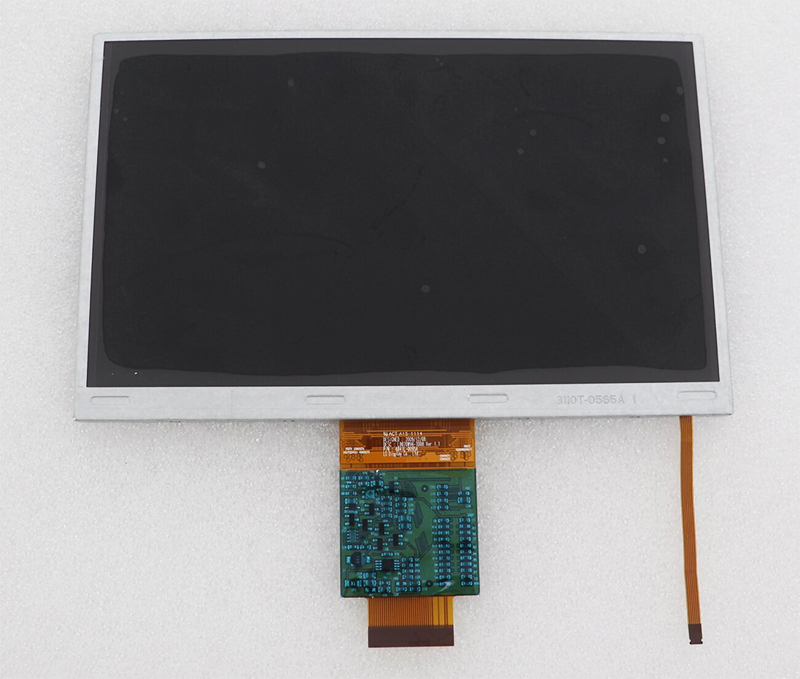
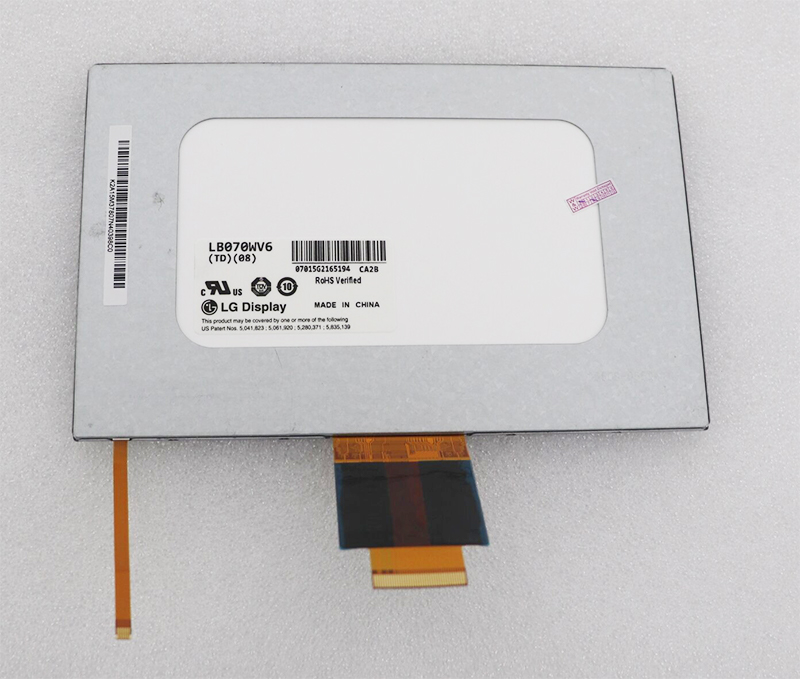
The LB070WV6-TD08 is optimized for human-machine interface (HMI) panels in medical equipment (patient monitors, infusion pumps), marine navigation, and industrial automation. Its 800x480 resolution is adequate for displaying line graphs, bar charts, and 4:3 legacy interfaces. For GUI design, the pixel density (133 PPI) means small fonts (below 10pt) will appear chunky. Modern UI frameworks like Qt or TouchGFX should use anti-aliasing and vector graphics to compensate. The touch panel integration is external; LG does not provide a bonded touch sensor, so the air gap between the display and touch overlay must be minimized (ideally <1mm) to reduce parallax.
The supply voltage for logic is 3.3V, drawing roughly 300 mA. A dedicated LDO regulator with low noise ( < 30 µVrms) is recommended to avoid ripple interference in the LVDS data lines. The backlight driver IC should have soft-start capability to prevent inrush currents. For medical applications, adherence to IEC 60601-1 electrical isolation standards is required; the LVDS lines must be galvanically isolated from the main processing board. The panel's ESD rating (contact 8 kV) is robust, but external TVS diodes on the signal lines are still recommended for field returns. Ultimately, this panel excels where lifespan and readability under controlled lighting outweigh pixel-density wars.
Does the LB070WV6-TD08 support 24-bit color depth?
No, it is a 6-bit panel using spatial dithering for 16.2M colors, not native 24-bit.
Can I directly replace a LB070WV6-TD07 with a TD08?
Generally yes, but verify the backlight forward voltage variance; TD08 may have a slightly higher Vf.
What is the typical power consumption?
Approximately 3.5W total, based on 0.9W for LCD logic and 2.6W for the backlight at full brightness.
Is the panel RoHS compliant?
Yes, it is fully RoHS and REACH compliant for medical equipment manufacturing.
Why does my display show vertical lines after 100 hours?
Check for LVDS cable shielding degradation; flux contamination on the connector is a common cause.
Can I use this panel in outdoor direct sunlight?
Not recommended without a high-brightness backlight upgrade and polarizer modification (specular reflection is high).
What is the exact response time?
Defined as 10 ms (Tr+Tf) typically at 25°C.
Does LG supply a 3D CAD model for the panel?
Yes, a step file is available from LG's standard display part distribution channel.
How do I clean the polarizer surface?
Use only a clean microfiber cloth with isopropyl alcohol. Harsh solvents cause film crazing.
Is the display suitable for glove-touch applications?
Only if a resistive touch panel is integrated; the LCD does not have integrated touch.
Conclusion
The LG LB070WV6-TD08 is a testament to engineering for a specific mission profile. It does not chase the highest resolution or widest color gamut, but rather delivers robust optical performance, predictable thermal behavior, and an interface that simplifies embedded system design. Its LVDS single-channel connection and precise mechanical tolerances make it a reliable foundation for products that must operate for years in industrial or clinical settings. For the system architect, the key to success lies not just in selecting this panel, but in adhering to its operational boundaries: managing PWM dimming frequencies, ensuring proper thermal dissipation, and respecting the signal integrity of the LVDS lines. When these conditions are met, this 7.0-inch display offers a cost-effective and durable window into machine data. It remains a strong candidate for any project where the reliability of the visual interface directly impacts the safety and efficiency of the operator.