






- Industrial LCD display
-
Industrial Products
- DC Servo Drive
- AC Servo Drive
- other
- Heidelberg
- FANUC
- IFM
- Meter
- CCD
- Membrane Keypad
- Film
- YOKOGAWA Module
- Card
- ABB
- MITSUBISHI
- FANUC
- KEYENCE
- BECKHOFF
- Honeywell
- HOLLYSYS
- FUJI servo drives
- HP
- solenoid valve
- thermostat
- Siemens adapter
- color oscilloscope
- Fujitsu connector
- CHELIC
- SMC
- CISCO Module
- INTEL
- Key board
- FAIRCHILD
- Motherboard
- Board
- Bearing
- other
- Control Panel
- Contactor
- Circuit
- OMRON
- Relay
- Controller
- Photoelectric Switch
- Photoelectric Sensor
- Original
- Fan
- Motor Driver
- Limit Switch
- Amplifier
- power supply
- LENZE
- Cable
- Encoder
- Sensor
- Transformer
- Fiber Optic Sensor
- Protection Relay
- Temperature Controller
- Proximity Switch
- Switch Sensor
- Siemens
- Industrial board
- HMI Touch Glass
-
HMI Full Machine Whole unit
- OMRON HMI Touch Panel
- Siemens HMI Touch Panel
- Mitsubishi HMI Touch Panel
- Allen-Bradley automation HMI Touch Panel
- DELTA HMI Touch Panel
- EVIEW DELTA HMI Touch Panel
- KINCO DELTA HMI Touch Panel
- HITECH HMI Touch Panel
- WEINTECK HMI Touch Panel
- TECVIEW HMI Touch Panel
- WEINVIEW HMI Touch Panel
- PRO-FACE HMI Touch Panel
- SIMATIC HMI Touch Panel
- AMPIRE HMI Touch Panel
- HEIDELBERG HMI Touch Panel
- PANASONIC HMI Touch Panel
- PATLITE HMI Touch Panel
- KYOCERA HMI Touch Panel
- KEYENCE HMI Touch Panel
- WEINVIEW HMI Touch Panel
- HITECH HMI Touch Panel
- FUJI HMI Touch Panel
- HAKKO HMI Touch Panel
- SCHNEIDER HMI Touch Panel
- SAMKOON touch panel
- other
- Module
- lcd inverter
- Membrane Keypad Switch
- Winni Touch Screens
- Frequency Inverter
- Servo Motor
- PLC


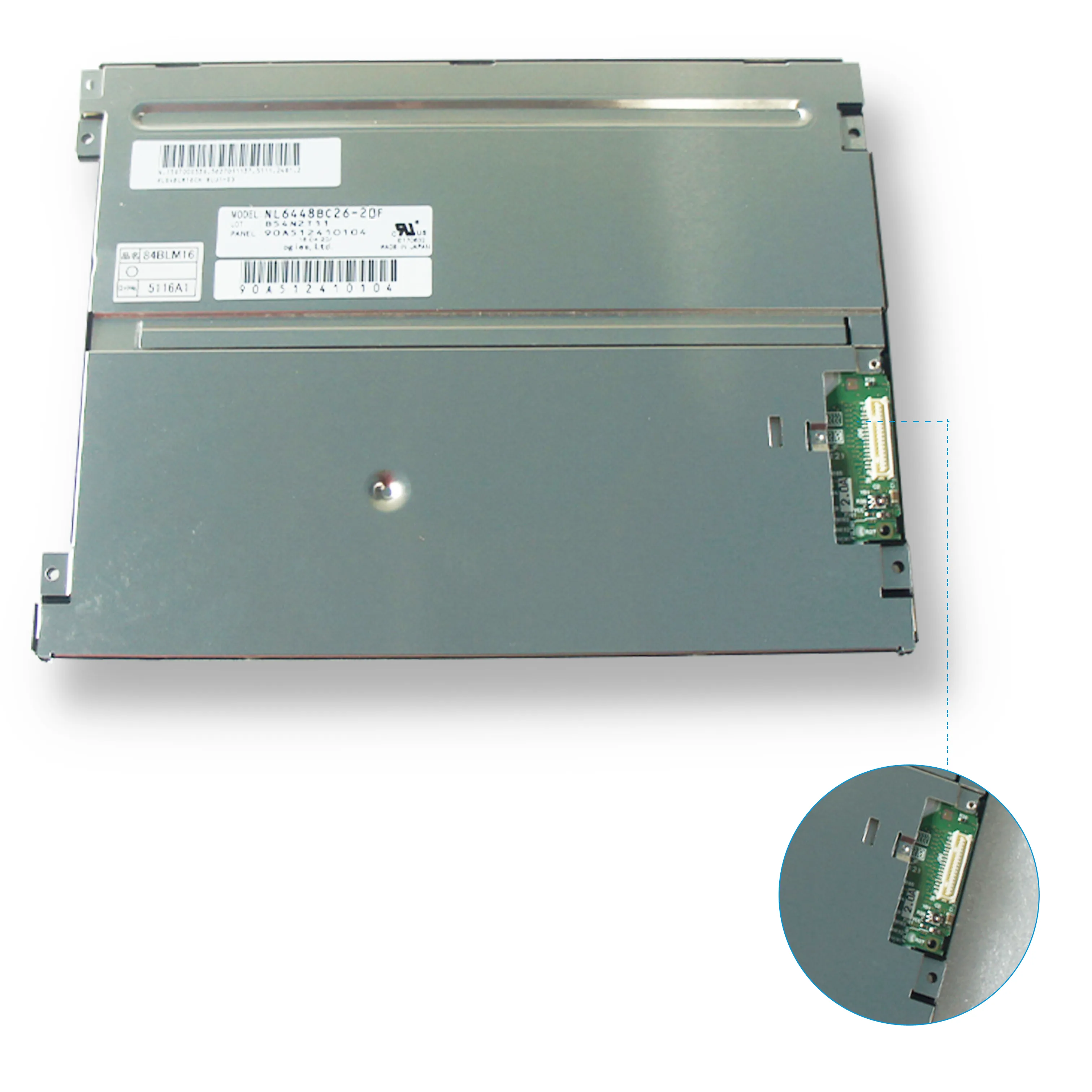

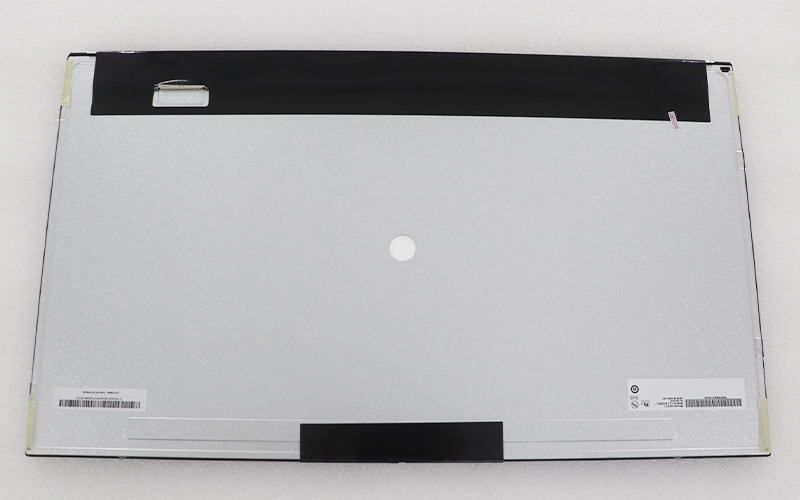
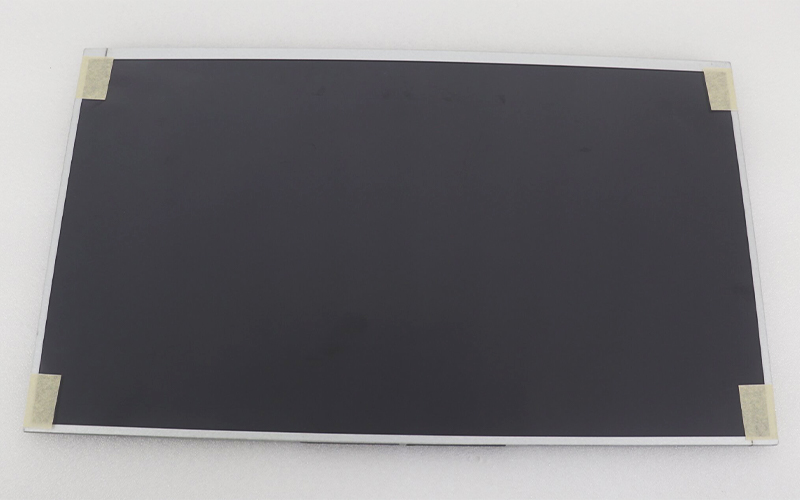
G238HAN01.1 AUO 23.8" TFT-LCD screen 1920*1080 Display
The modern display market is a battlefield of specifications, where resolutions, refresh rates, and panel technologies compete for the attention of engineers and procurement specialists. Yet, amidst the clamor for 4K and OLED, a specific segment of industrial-grade TFT-LCD screens continues to power mission-critical applications with quiet reliability. The G238HAN01.1, a 23.8-inch TFT-LCD panel manufactured by AU Optronics (AUO), represents a distinct class of display engineering. It is not merely a standard monitor; it is a high-performance solution designed for environments where color accuracy, wide viewing angles, and consistent brightness are non-negotiable. Featuring a 1920x1080 Full HD resolution and leveraging AHVA (Advanced Hyper-Viewing Angle) technology, this panel sits at the intersection of medical imaging, industrial control systems, and commercial signage. This article deconstructs the technical architecture, comparative advantages, and application-specific suitability of the G238HAN01.1, offering a granular analysis that goes beyond a simple datasheet summary to reveal why this specific model remains a relevant choice in a rapidly evolving display landscape.
To understand the G238HAN01.1, one must first understand its underlying technology. AUO markets this panel as AHVA, which is their proprietary variation of the In-Plane Switching (IPS) technology. Unlike budget TN (Twisted Nematic) panels that suffer from color shift and narrow viewing angles, or VA (Vertical Alignment) panels that struggle with off-axis contrast consistency, AHVA delivers what the industry calls "superior wide viewing angles." Specifically, the G238HAN01.1 boasts an 89-degree viewing angle in all four directions (CR≥10:1). This means that operators viewing the screen from extreme positions—common in multi-monitor medical workstations or control room walls—will not experience significant gamma shift or color inversion. Furthermore, the technology allows for a native contrast ratio of typically 1000:1, which is standard for high-end IPS-class panels. This contrast floor ensures that blacks appear deep enough for reading radiology scans or monitoring dark-themed UI elements, while whites remain bright and clean. The panel also employs a 6-bit + Hi-FRC (Frame Rate Control) driver, enabling a palette of 16.7 million colors. While not true 10-bit, the Hi-FRC dithering mechanism is key—it smooths gradient transitions in complex data visualizations or photographic content, preventing the visible banding that plagues lower-quality displays.
One of the most critical yet often overlooked specifications of the G238HAN01.1 is its luminance level. Standard commercial monitors often hover around 250 cd/m² (nits), which is sufficient for an office environment. However, the G238HAN01.1 is typically specified with a brightness of 400 cd/m², and sometimes up to 500 cd/m² in certain variants. This higher luminosity is not arbitrary; it is a deliberate engineering choice for specific environments. In medical imaging, DICOM calibration requires a certain baseline luminance to ensure contrast detail in the darkest shadows. In industrial settings, screens are often placed near windows or under bright overhead lighting. A 400-nit panel can maintain readability without needing to run at 100% backlight power, thereby extending the lifespan of the WLED (White Light Emitting Diode) backlight unit, which is rated for 30,000 to 50,000 hours. Furthermore, the panel utilizes an anti-glare surface treatment (typically 3H hardness). This diffuses ambient light reflections, reducing eye strain during long shifts. The color gamut, while not covering the full Adobe RGB, generally reaches 72% NTSC (equivalent to roughly 99% sRGB), making it a capable display for standard color-critical tasks without the premium cost of a true wide-gamut panel.
The connectivity of the G238HAN01.1 reveals its industrial DNA. Instead of the consumer-oriented HDMI or DisplayPort connectors found on retail monitors, this panel utilizes an LVDS (Low-Voltage Differential Signaling) interface. Specifically, it employs a 30-pin, 2-channel LVDS connector. This is a crucial distinction. LVDS is a mature, robust signaling standard that excels in electrically noisy environments—such as factory floors or MRI suites—where high-speed digital signals like HDMI copper lines might suffer from interference. The dual-channel design is also significant. With a resolution of 1920x1080 at 60 Hz, a single-channel LVDS link would struggle to maintain the pixel clock rate. Dual-channel splits the data load, ensuring stable signal integrity and preventing flickering or missing lines of resolution. For system integrators, this means the panel is plug-and-play with a wide array of industrial motherboards and embedded controllers that still rely on LVDS output. The power consumption is also managed carefully; the panel typically draws around 15-20 watts depending on backlight current, which is efficient for a 23.8-inch panel and allows for passive cooling in sealed enclosures.
Physically, the G238HAN01.1 is designed for integration, not for retail display. It is a module, meaning it ships without a metal bezel, power supply, or OSD (On-Screen Display) buttons. For OEMs (Original Equipment Manufacturers), this is ideal. The panel's outline dimensions are standardized; it fits into the standard 23.8-inch cutout for industrial enclosures. The mounting holes are arranged in a specific pattern compatible with common VESA-style mounting brackets used in kiosks and medical carts. The thickness of the module is also tightly controlled to allow for slim-profile designs. Crucially, the operating temperature range is rated from 0°C to 60°C, which is wider than typical consumer monitors (0°C to 40°C). This allows the panel to be used in semi-outdoor kiosks or near machinery that generates ambient heat. Storage temperature extends to -20°C, covering logistical shipping requirements. The panel also features an active area (523.96 mm x 295.39 mm) that is perfectly suited for landscape or portrait orientations, a flexibility often required in different industrial applications.
Why choose an industrial panel like the G238HAN01.1 over a cheaper consumer monitor? The answer lies in longevity and reliability specifications. A standard consumer monitor might be rated for 8-hours-a-day, 5-days-a-week use. In contrast, the AUO panel is designed for 24/7 continuous operation. The components—capacitors, resistors, and especially the backlight driver IC—are selected for a higher Mean Time Between Failures (MTBF). The LVDS interface, as mentioned, is more robust against electrostatic discharge (ESD) than consumer interfaces. Also, consider repairability. When a consumer monitor fails, the whole unit is typically replaced. In an industrial setting, if the backlight of a G238HAN01.1 fails after 5 years, a technician can replace just the panel module, keeping the expensive computer chassis and touch-screen overlay intact. This modularity reduces total cost of ownership (TCO) significantly over 10 years. Furthermore, the panel's color consistency from unit to unit is tighter due to stricter binning of LEDs at the factory—a critical factor when building a medical video wall of 4x4 panels where color mismatch is visually unacceptable.
The G238HAN01.1 is not a gaming monitor or a home entertainment screen. Its primary domains are niche but essential. Medical: In PACS (Picture Archiving and Communication System) workstations, the 1920x1080 resolution, high brightness, and stable color scaling make it suitable for viewing CT scans, X-rays, and MRI data alongside patient records. Industrial Automation: In Human-Machine Interfaces (HMIs), the anti-glare surface and wide viewing angle allow a factory worker to monitor a production line from a non-orthogonal position without misinterpretation of data. Digital Signage: For informational kiosks in airports or train stations, the high brightness ensures readability in ambient light, while the robust construction allows for 24/7 operation. Gaming (Specialized): While not a high-refresh-rate panel, it is sometimes used in high-end slot machines where image quality and reliability are paramount. The common thread among all these applications is the requirement for predictable performance over time, not maximum peak performance.
Q: What is the exact resolution of the G238HAN01.1?
A: It is 1920 x 1080 pixels in a standard 16:9 aspect ratio.
Q: Is this a touch screen panel?
A: No, it is a bare LCD module. A touch overlay must be added separately by the integrator.
Q: What type of backlight does it use?
A: It uses a WLED (White Light Emitting Diode) backlight, which is mercury-free and RoHS compliant.
Q: Can I use a standard monitor cable with this panel?
A: No. It uses an LVDS connector (30-pin, 2-channel). You need an LVDS controller board or driver board to convert HDMI/VGA signal to LVDS.
Q: Is this panel suitable for outdoor use?
A: Only in shaded, semi-outdoor applications. It is not rated for direct sunlight or high humidity without enclosure protection.
Q: What is the typical power consumption of the G238HAN01.1?
A: It typically consumes between 15W and 20W (excluding the driver board), depending on backlight brightness settings.
Q: What is the difference between AHVA and IPS?
A: AHVA is AUO's proprietary brand of IPS technology. It offers the same wide viewing angles and color performance as traditional IPS.
Q: Does it support 3D display?
A: No. It is a standard 2D TFT-LCD panel and does not support 3D rendering.
Q: Can it be rotated for portrait mode?
A: Yes, the physical design supports portrait orientation, but the driver board must support signal rotation.
Q: What is the lifespan of the backlight?
A: The WLED backlight is typically rated for 30,000 to 50,000 hours of operation (time to half brightness).
Conclusion