






- Industrial LCD display
-
Industrial Products
- DC Servo Drive
- AC Servo Drive
- other
- Heidelberg
- FANUC
- IFM
- Meter
- CCD
- Membrane Keypad
- Film
- YOKOGAWA Module
- Card
- ABB
- MITSUBISHI
- FANUC
- KEYENCE
- BECKHOFF
- Honeywell
- HOLLYSYS
- FUJI servo drives
- HP
- solenoid valve
- thermostat
- Siemens adapter
- color oscilloscope
- Fujitsu connector
- CHELIC
- SMC
- CISCO Module
- INTEL
- Key board
- FAIRCHILD
- Motherboard
- Board
- Bearing
- other
- Control Panel
- Contactor
- Circuit
- OMRON
- Relay
- Controller
- Photoelectric Switch
- Photoelectric Sensor
- Original
- Fan
- Motor Driver
- Limit Switch
- Amplifier
- power supply
- LENZE
- Cable
- Encoder
- Sensor
- Transformer
- Fiber Optic Sensor
- Protection Relay
- Temperature Controller
- Proximity Switch
- Switch Sensor
- Siemens
- Industrial board
- HMI Touch Glass
-
HMI Full Machine Whole unit
- OMRON HMI Touch Panel
- Siemens HMI Touch Panel
- Mitsubishi HMI Touch Panel
- Allen-Bradley automation HMI Touch Panel
- DELTA HMI Touch Panel
- EVIEW DELTA HMI Touch Panel
- KINCO DELTA HMI Touch Panel
- HITECH HMI Touch Panel
- WEINTECK HMI Touch Panel
- TECVIEW HMI Touch Panel
- WEINVIEW HMI Touch Panel
- PRO-FACE HMI Touch Panel
- SIMATIC HMI Touch Panel
- AMPIRE HMI Touch Panel
- HEIDELBERG HMI Touch Panel
- PANASONIC HMI Touch Panel
- PATLITE HMI Touch Panel
- KYOCERA HMI Touch Panel
- KEYENCE HMI Touch Panel
- WEINVIEW HMI Touch Panel
- HITECH HMI Touch Panel
- FUJI HMI Touch Panel
- HAKKO HMI Touch Panel
- SCHNEIDER HMI Touch Panel
- SAMKOON touch panel
- other
- Module
- lcd inverter
- Membrane Keypad Switch
- Winni Touch Screens
- Frequency Inverter
- Servo Motor
- PLC


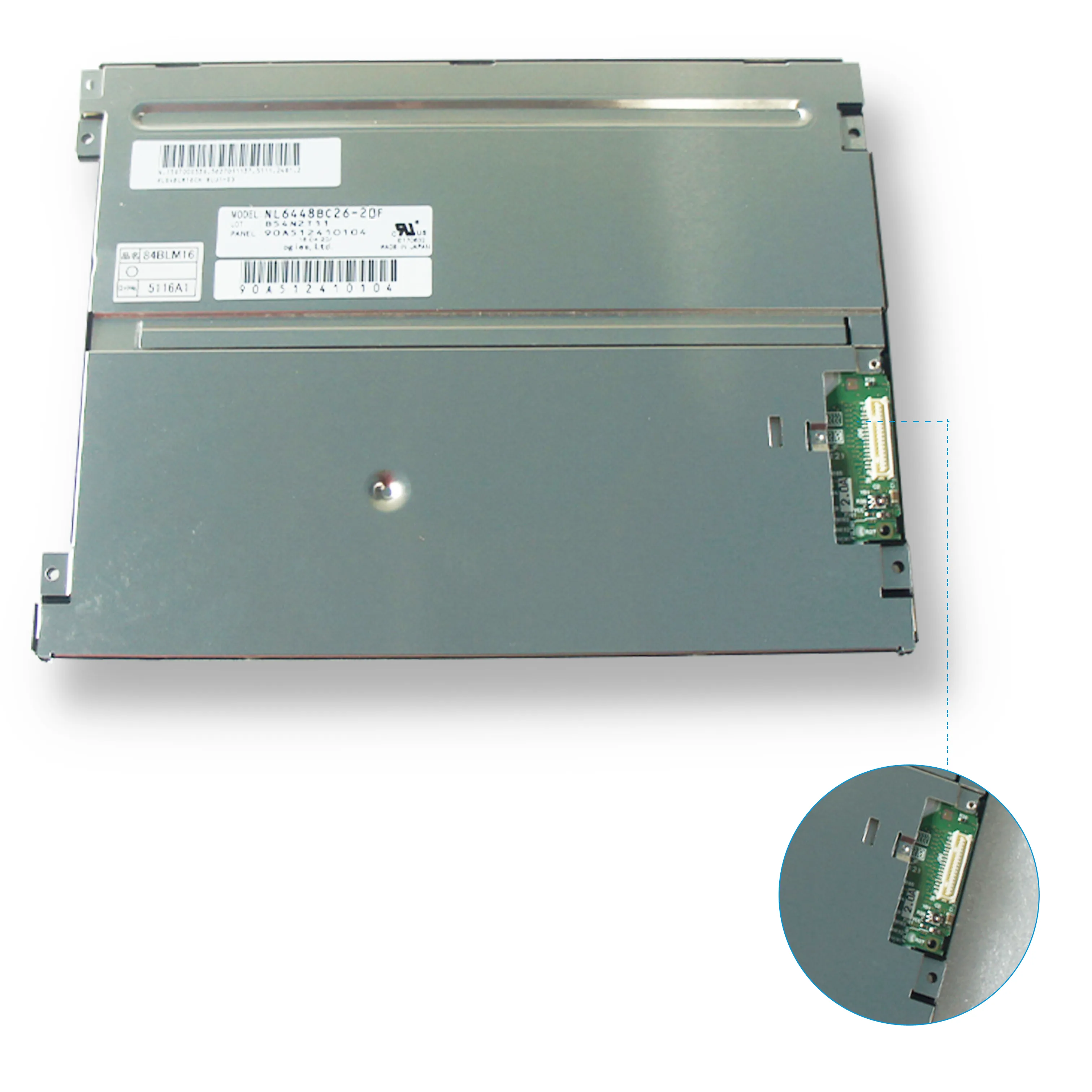

G230HAN01.0 FOR 23.0-INCH 1920*1080 LCD display PANEL
In the vast and ever-evolving landscape of display technology, most attention is lavished upon the dazzling OLED panels of flagship smartphones or the bleeding-edge mini-LED backlighting of premium televisions. Yet, the industrial and commercial sectors rely on a different breed of screen—one defined not by vibrant color extremes, but by unwavering reliability, precise signal interpretation, and steadfast performance over years of continuous operation. The G230HAN01.0, a 23.0-inch LCD panel with a native resolution of 1920x1080, represents this critical engineering class. Produced by a leading display manufacturer, this specific model is not a consumer product you buy off a retail shelf; it is a component designed for integration into durable systems. This article delves deep into the architecture, performance characteristics, and strategic market placement of the G230HAN01.0. We will move beyond simple specification sheets to explore how its electrical interface timing, thermal design, and optical consistency make it a preferred choice for applications where failure is not an option. Understanding this panel is to understand the backbone of visual interface technology in critical environments.
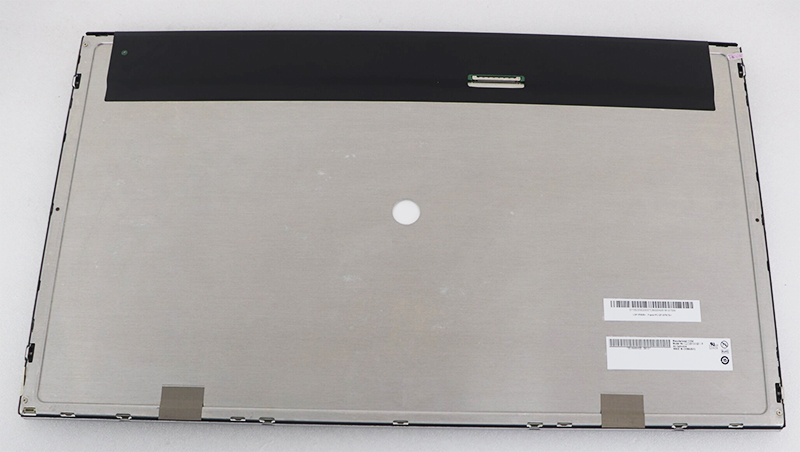
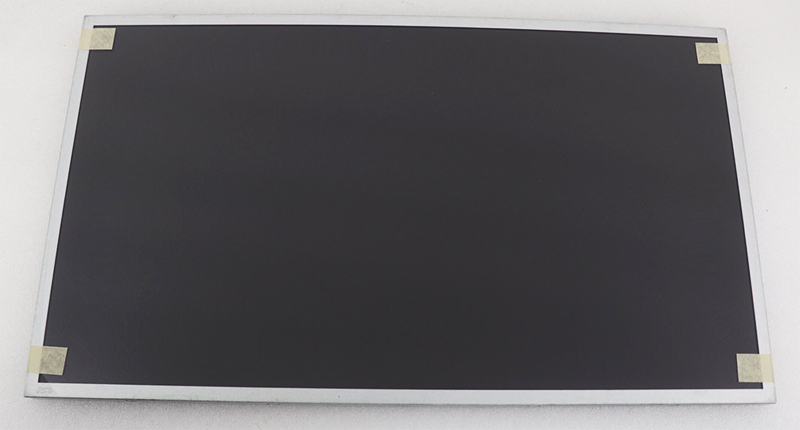
The G230HAN01.0 adheres to the Full HD (FHD) standard at 1920x1080 pixels. In a consumer market pushing toward 4K and 8K, this choice is deeply deliberate. For a 23.0-inch diagonal, this resolution yields a pixel density of approximately 96 pixels per inch (PPI). While this figure does not match the retina-class sharpness of a smartphone, it is optimal for its intended use case: readability at a standard arm's length viewing distance in a control room or medical bay.
The advantage here lies in simplicity and reliability. Higher resolutions demand more complex timing controllers, higher bandwidth interfaces, and more powerful Graphics Processing Units (GPUs) to drive them. In an industrial context, every component added is a potential point of failure. By sticking with a 1920x1080 resolution, the G230HAN01.0 can utilize a robust, well-tested LVDS (Low-Voltage Differential Signaling) interface. This interface is inherently resistant to electrical noise—a common hazard in factory environments with heavy machinery. Furthermore, standardizing on FHD allows for seamless software scaling. A legacy SCADA system (Supervisory Control and Data Acquisition) designed a decade ago will render perfectly on this panel without the distortion or small-text issues that plague high-PPI displays in non-retina operating environments. The resolution is not older technology; it is proven technology.
Moving past the pixel count, the optical performance of the G230HAN01.0 is where its engineering excellence becomes apparent. This is not a TN (Twisted Nematic) panel of the past. It typically employs an IPS (In-Plane Switching) or a similar wide-angle technology, such as ADSDS (Advanced Super Dimension Switch). This is a critical distinction. In a hospital, if a doctor glances at a patient monitor from an extreme angle, the data must remain legible and the colors must not invert. The G230HAN01.0 promises minimum 178-degree viewing angles in both horizontal and vertical axes.
Beyond geometry, we examine color gamut and uniformity. Where a consumer monitor might prioritize a high Dynamic Contrast Ratio for flashy gaming, this panel focuses on grayscale stability and color temperature consistency across the entire screen. The backlight system is carefully designed to minimize "backlight bleeding" or "mura" (uneven brightness). For a security operator analyzing a dull, grey surveillance feed, a panel with poor uniformity could mask a crucial shadow or movement. The G230HAN01.0's backlight is engineered to provide a consistent luminance (often around 250-300 cd/m²), which is bright enough for a well-lit room but not so aggressive as to cause eyestrain over a 12-hour shift. The color accuracy, often measured against the sRGB or NTSC standard, is calibrated at the factory to ensure that a red alarm icon looks the same on the left edge of the screen as it does in the center.
Perhaps the most defining characteristic of the G230HAN01.0 is its design for extended operational life. While a consumer monitor might be rated for 30,000 hours of operation (roughly 10 years at 8 hours a day), this panel is often engineered for 50,000 to 70,000 hours of continuous use. This is achieved through superior thermal management. Heat is the primary enemy of the LCD's liquid crystals and the backlight's LEDs.
The chassis and bezel of the G230HAN01.0 are typically made of a sturdy metal, which acts as a heat sink, drawing thermal energy away from the critical components. The selection of LEDs for the backlight is also crucial; they are "bin-sorted" for high efficiency and low degradation over time. This ensures that the brightness level remains stable for years, rather than dimming significantly after a few years of 24/7 operation. Furthermore, the panel uses industrial-grade components on the timing control board, rated for a wider temperature range (often -20°C to 70°C). This means it can function in a partially heated warehouse just as reliably as in a climate-controlled server room. The Mean Time Between Failures (MTBF) is the key metric here, and the G230HAN01.0 scores exceptionally high, reducing the total cost of ownership for businesses that cannot afford screen downtime.
The communication highway between a computer and the G230HAN01.0 is just as important as the panel itself. This panel almost exclusively utilizes an 8-bit LVDS interface. LVDS is a differential signaling technology. In simple terms, it sends data over two lines—one carrying the original signal, the other carrying its inverse. The receiver chip on the panel subtracts the two signals, effectively canceling out any external electrical noise that might have coupled onto the cable. This is a massive advantage over older single-ended (TTL) interfaces or even modern, high-speed interfaces like eDP (embedded DisplayPort) when used over longer distances in noisy environments.
For a system integrator building a machine interface, this means the 2-channel, 8-bit LVDS connector (often a 30-pin or 20-pin JAE or Hirose connector) can run a cable up to 5-10 meters with high signal integrity. In a factory, this allows the user to place the actual computer in a sealed, temperature-controlled cabinet, while the display sits at the operator station, exposed to the factory floor. The interface also supports a standard 60Hz refresh rate, which is perfectly adequate for data display and industrial video playback, avoiding the unnecessary heat and bandwidth overhead of faster refresh rates. The signal-to-noise ratio (SNR) of this interface is what ensures a flicker-free, stable image, preventing data corruption on the screen.
Understanding where the G230HAN01.0 is deployed gives context to its design priorities. It is not a panel meant for a living room or a gaming den. Its primary markets are Medical Imaging (patient monitors, diagnostic workstations), Industrial Automation (Human-Machine Interfaces or HMIs on production lines), Transportation (Digital Signage for train stations or in-flight entertainment systems), and Security & Surveillance (multi-monitor control room wall setups).
In the medical field, its consistent grayscale performance is vital for differentiating between subtle tissue densities on an X-ray. In a control room (like for a power grid or a city's traffic), a dozen of these panels may run for years without a pixel defect, thanks to rigorous manufacturing quality control. The 23.0-inch form factor is also a "sweet spot" for ergonomics. It fits standard VESA mounts (100x100mm or 75x75mm), allowing for easy integration into articulating arms or rack-mounted consoles. The panel may also support an anti-glare surface treatment, diffusing reflections from overhead lighting in a bright control room. This specific model occupies a niche of reliability over newness. It does not need to be the latest model; it needs to be the most dependable. For a product to be successful in this role, it must be able to be purchased and supported for 3-5 years without a major revision, ensuring the OEM's product lifecycle remains stable. The G230HAN01.0 fulfills this requirement perfectly.
Q: Is the G230HAN01.0 a touch screen panel?
A: No, this is a standard TFT-LCD panel. It requires a separate touch overlay (e.g., resistive or capacitive) to be added by the system integrator if touch functionality is needed.
Q: What is the typical brightness of this panel?
A: The standard brightness is typically around 250 cd/m² to 300 cd/m², which is suitable for indoor commercial and industrial use.
Q: Does this panel support 4K resolution?
A: No. Its native and fixed resolution is 1920x1080 (Full HD). It cannot accept or display a higher resolution signal.
Q: What type of backlight does it use?
A: It uses a WLED (White Light Emitting Diode) backlight. This provides high efficiency, long life, and consistent white balance compared to older CCFL backlights.
Q: Can I use this panel outside in direct sunlight?
A: Generally, no. Standard brightness (250-300 nits) is not sufficient to overcome sunlight glare. A specialized high-brightness version (often >1000 nits) would be needed for direct sunlight, which this specific model is not.
Q: What is the contrast ratio of the G230HAN01.0?
A: It typically offers a static contrast ratio of 1000:1, which is excellent for an IPS/ADSDS panel, providing deep blacks and clear whites.
Q: What connector is used to interface with the panel?
A: It uses an LVDS (Low-Voltage Differential Signaling) connector, usually a 30-pin or 20-pin model, such as those made by JAE or Hirose.
Q: Is the panel compatible with a Raspberry Pi?
A: Directly, no. A Raspberry Pi outputs HDMI or DSI signals. You would need a specialized LVDS-to-HDMI controller board specifically designed to drive this panel.
Q: What is the operating temperature range for this display?
A: It is designed for industrial use, typically operating effectively in a range of -20°C to +70°C (storage) and 0°C to +60°C (operating).
Q: How does this compare to a standard desktop monitor?
A: A desktop monitor is a finished consumer product. The G230HAN01.0 is a raw LCD panel. It requires a controller board, a power supply, and a chassis to function. Its advantage is in durability, long life, and robustness for specific integrated applications.
Conclusion: The Unseen Standard of Reliability
The G230HAN01.0 23.0-inch LCD panel stands as a testament to the principle that in many professional sectors, stability is more valuable than novelty. It is not a display that seeks to dazzle with high dynamic range or ultra-high frame rates; instead, it is engineered for the subtle but crucial task of consistent, accurate, and reliable visual data presentation over a prolonged lifespan. Its 1920x1080 resolution is a calculated choice for noise immunity and software compatibility, while its IPS technology ensures clarity from every angle. The rigorous thermal management and robust LVDS interface make it a cornerstone of mission-critical environments, from hospital operating rooms and factory floors to traffic control centers. For system integrators and OEMs, this panel represents a trusted component. It is the unsung workhorse that ensures an operator's data is always visible, a doctor's image is always accurate, and a machine's interface is always responsive. By understanding the deliberate engineering of the G230HAN01.0, we appreciate that the true value of a display is not just in what you see, but in its unwavering ability to show you the truth, day in and day out, for years on end.