






- Industrial LCD display
-
Industrial Products
- DC Servo Drive
- AC Servo Drive
- other
- Heidelberg
- FANUC
- IFM
- Meter
- CCD
- Membrane Keypad
- Film
- YOKOGAWA Module
- Card
- ABB
- MITSUBISHI
- FANUC
- KEYENCE
- BECKHOFF
- Honeywell
- HOLLYSYS
- FUJI servo drives
- HP
- solenoid valve
- thermostat
- Siemens adapter
- color oscilloscope
- Fujitsu connector
- CHELIC
- SMC
- CISCO Module
- INTEL
- Key board
- FAIRCHILD
- Motherboard
- Board
- Bearing
- other
- Control Panel
- Contactor
- Circuit
- OMRON
- Relay
- Controller
- Photoelectric Switch
- Photoelectric Sensor
- Original
- Fan
- Motor Driver
- Limit Switch
- Amplifier
- power supply
- LENZE
- Cable
- Encoder
- Sensor
- Transformer
- Fiber Optic Sensor
- Protection Relay
- Temperature Controller
- Proximity Switch
- Switch Sensor
- Siemens
- Industrial board
- HMI Touch Glass
-
HMI Full Machine Whole unit
- OMRON HMI Touch Panel
- Siemens HMI Touch Panel
- Mitsubishi HMI Touch Panel
- Allen-Bradley automation HMI Touch Panel
- DELTA HMI Touch Panel
- EVIEW DELTA HMI Touch Panel
- KINCO DELTA HMI Touch Panel
- HITECH HMI Touch Panel
- WEINTECK HMI Touch Panel
- TECVIEW HMI Touch Panel
- WEINVIEW HMI Touch Panel
- PRO-FACE HMI Touch Panel
- SIMATIC HMI Touch Panel
- AMPIRE HMI Touch Panel
- HEIDELBERG HMI Touch Panel
- PANASONIC HMI Touch Panel
- PATLITE HMI Touch Panel
- KYOCERA HMI Touch Panel
- KEYENCE HMI Touch Panel
- WEINVIEW HMI Touch Panel
- HITECH HMI Touch Panel
- FUJI HMI Touch Panel
- HAKKO HMI Touch Panel
- SCHNEIDER HMI Touch Panel
- SAMKOON touch panel
- other
- Module
- lcd inverter
- Membrane Keypad Switch
- Winni Touch Screens
- Frequency Inverter
- Servo Motor
- PLC


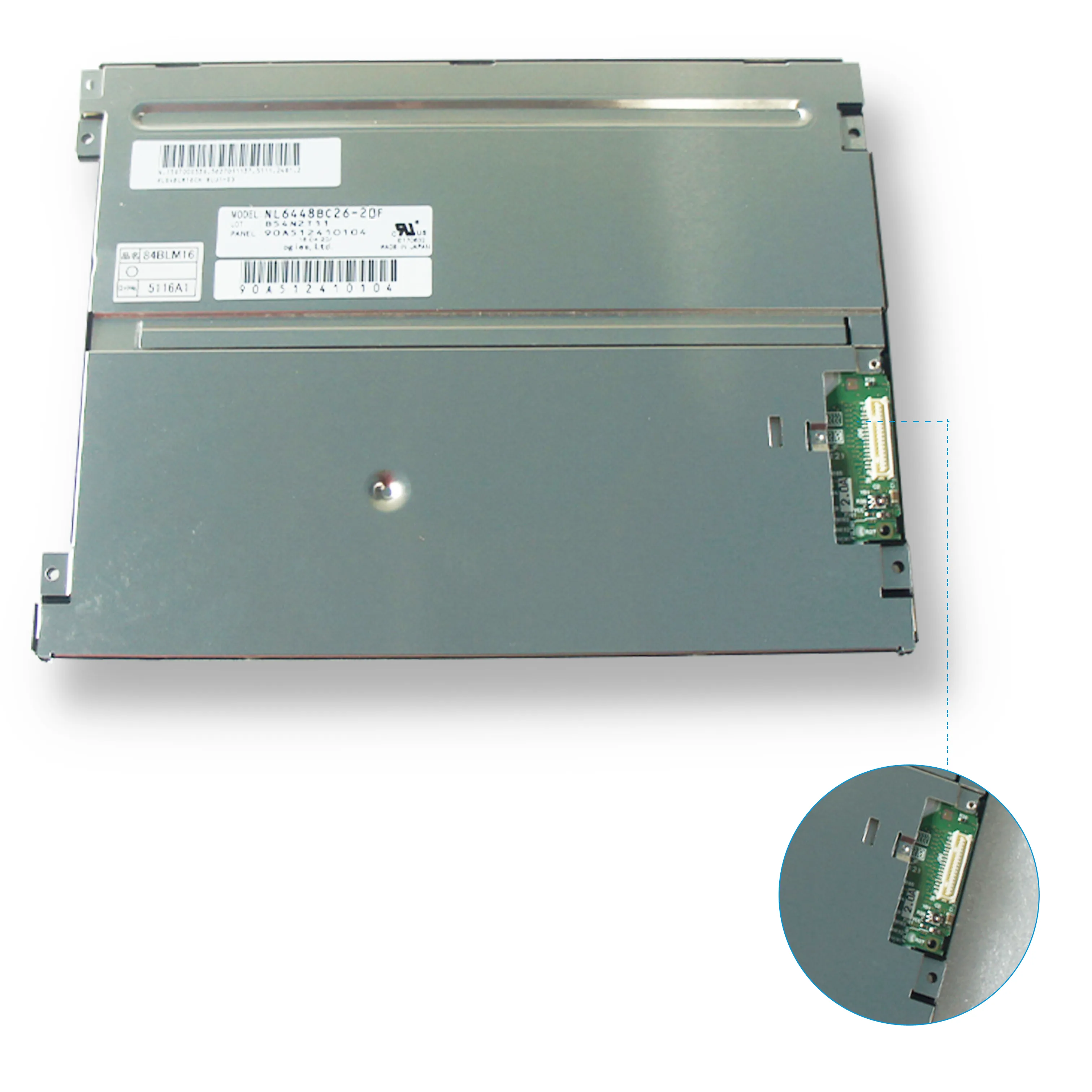

G170ETN01.0 AUO 17inch lcd display New
In the intricate world of industrial and commercial display solutions, the choice of a panel is rarely about the latest consumer-grade specs. It hinges on reliability, compatibility, and performance under demanding conditions. Enter the G170ETN01.0, a 17-inch LCD display module manufactured by AU Optronics (AUO), a leader in display technology. This panel isn't designed for your next gaming monitor; it's the workhorse behind critical applications where failure is not an option.
This article delves deep into the G170ETN01.0, moving beyond basic datasheet parameters to explore its true value proposition. We will dissect its core technological features, understand its ideal application environments, and compare its position within the industrial display landscape. For engineers, procurement specialists, and system integrators, understanding the nuances of this specific module can mean the difference between a seamless integration and a costly project delay. Join us as we unpack what makes this "new" AUO display a persistent and reliable choice in a rapidly evolving market.
Unpacking the Core Specifications and Technology
The G170ETN01.0 is built on a Twisted Nematic (TN) panel technology, a choice that defines its performance characteristics. With a resolution of 1280 x 1024 (SXGA), it offers a 5:4 aspect ratio, a format still prevalent in many industrial machines and legacy systems. The panel delivers a brightness of 300 nits and a contrast ratio of 500:1, specifications tailored for controlled indoor environments rather than high-ambient light settings.
Its interface is a critical feature: a single-channel LVDS (Low-Voltage Differential Signaling) interface. This robust and widely adopted standard ensures stable signal transmission with reduced electromagnetic interference, which is paramount in electrically noisy industrial settings. The inclusion of a CCFL (Cold Cathode Fluorescent Lamp) backlight system further marks it as a module designed for longevity and serviceability within known operational parameters, rather than pursuing ultra-thin form factors.
Primary Applications and Target Industries
The design philosophy of the G170ETN01.0 directly informs its application landscape. It excels as an embedded component in systems where human-machine interaction (HMI) is critical but environmental conditions are stable. You will predominantly find this panel in industrial automation consoles, controlling CNC machinery, assembly lines, and test equipment.
Beyond the factory floor, it serves reliably in point-of-sale (POS) systems, kiosks, and medical monitoring devices where color accuracy is secondary to consistent readability and uptime. Its 5:4 aspect ratio makes it a perfect fit for legacy applications that display multiple data points or traditional software interfaces designed for that screen shape, avoiding costly software redesigns. It is the unseen digital face of durable equipment.
The "New" Designation: Understanding Supply Chain Dynamics
In the context of industrial components, "New" often carries a specific meaning distinct from consumer electronics. For the G170ETN01.0, it primarily signifies that the module is sourced from AUO's production or authorized channels, is unused, and comes with original specifications. It does not imply a recent design release; this model has been a proven staple for years.
This designation is crucial because the display market is rife with refurbished, reclaimed, or compatible panels. A "New" G170ETN01.0 guarantees a full lifecycle from the outset, which is essential for projects with long deployment schedules and expected service lives of a decade or more. It assures engineers of consistency in performance and avoids the risks associated with aged backlights or worn components that can plague secondary market parts.
Comparative Analysis: TN vs. Modern Alternatives
To appreciate the G170ETN01.0's role, one must contrast it with modern options. Compared to IPS (In-Plane Switching) panels, its TN technology offers faster response times (a benefit for some industrial scanning applications) and typically lower power consumption. However, it concedes in viewing angles and color reproduction. For an operator stationed directly in front of a machine, this is an acceptable trade-off.
Against newer LED-backlit modules, the CCFL backlight may seem outdated. Yet, CCFL offers excellent brightness uniformity and a spectrum of light that some find less fatiguing over long periods. The decision often boils down to system compatibility, thermal design (CCFL generates more heat), and the cost of redesigning power supplies and inverters in existing equipment to accommodate a newer panel.
Integration Considerations and Technical Challenges
Successfully integrating the G170ETN01.0 requires careful planning. The LVDS interface necessitates a compatible controller board or connection to a system's embedded graphics output. Engineers must account for the inverter circuit required to power the CCFL backlight, which adds complexity compared to direct LED power.
Mechanical integration is another key factor. The module's dimensions, bezel size, and mounting hole patterns must align with the host device's chassis. Furthermore, understanding the panel's operating temperature range (typically 0°C to 50°C) and storage temperature is vital to ensure reliability in the target environment. Failure to address these integration details can lead to premature failure or performance issues.


Sourcing and Long-Term Viability for Projects
For project-based procurement, securing a reliable supply of the G170ETN01.0 is paramount. Working with authorized distributors or specialized industrial display suppliers mitigates the risk of counterfeit or substandard components. It's also essential to consider the product lifecycle.
While AUO may classify such a panel as "mature," its long-term availability is often sustained due to ongoing demand in key industrial sectors. However, wise project managers engage in lifecycle buy strategies or work with suppliers who can forecast end-of-life notices and suggest validated migration paths or compatible alternatives, ensuring future repair and maintenance capabilities.
Frequently Asked Questions (FAQs)
Q1: What does the "G170ETN01.0" model number signify?
A: "G" likely denotes a panel series, "170" is the 17-inch screen size, "ETN" indicates the panel type (TN) and technology features, and "01.0" is the revision code.
Q2: Is this panel suitable for outdoor use?
A: No. With 300 nits brightness and no specified weatherproofing, it is designed for indoor, controlled environments.
Q3: Can I directly replace an old CCFL panel with a new LED panel using this model?
A: Not directly. It requires hardware changes (removing the inverter, adjusting power supply) and potentially a different interface board.
Q4: What is the typical lifespan of this display?
A: With CCFL backlight, the backlight is often the limiting factor, typically rated for 30,000 to 50,000 hours of operation.
Q5: Does it support touch functionality?
A: No, the G170ETN01.0 is a display-only module. Touch screens require an additional resistive or capacitive overlay.
Q6: Why choose a 5:4 aspect ratio in a widescreen world?
A: For vertical data display, legacy software compatibility, and direct replacement in existing 5:4 equipment without software modification.
Q7: What is the single-channel LVDS interface?
A: It's a standard digital video interface using differential signaling for noise resistance, common in industrial and embedded systems.
Q8: How do I know if this panel is compatible with my controller board?
A: You must match the LVDS pin assignment (JEIDA/VESA standards), voltage, and signal timing between the panel and controller.
Q9: Are there direct equivalent panels from other manufacturers?
A: Yes, but they are "compatible" models, not direct equivalents. Electrical, mechanical, and optical specs must be meticulously compared.
Q10: What does "New" mean when purchasing this panel?
A: It signifies a factory-fresh, unused unit from original production, not refurbished, reclaimed, or from used equipment.
Conclusion
The AUO G170ETN01.0 17-inch LCD display stands as a testament to the principle that in industrial design, appropriateness trumps novelty. Its value lies not in cutting-edge specs, but in its proven reliability, specific format compatibility, and predictable performance within a well-defined operational envelope. For system integrators and engineers, it represents a safe, dependable choice that minimizes integration risk for a wide array of specialized applications.
Ultimately, selecting this display is a strategic decision rooted in understanding the total cost of ownership, long-term supply chain stability, and the technical realities of the host system. In a landscape chasing thinner, brighter, and faster, the G170ETN01.0 reminds us that durability and precise suitability are the ultimate benchmarks of quality for critical embedded display solutions.