






- Industrial LCD display
-
Industrial Products
- DC Servo Drive
- AC Servo Drive
- other
- Heidelberg
- FANUC
- IFM
- Meter
- CCD
- Membrane Keypad
- Film
- YOKOGAWA Module
- Card
- ABB
- MITSUBISHI
- FANUC
- KEYENCE
- BECKHOFF
- Honeywell
- HOLLYSYS
- FUJI servo drives
- HP
- solenoid valve
- thermostat
- Siemens adapter
- color oscilloscope
- Fujitsu connector
- CHELIC
- SMC
- CISCO Module
- INTEL
- Key board
- FAIRCHILD
- Motherboard
- Board
- Bearing
- other
- Control Panel
- Contactor
- Circuit
- OMRON
- Relay
- Controller
- Photoelectric Switch
- Photoelectric Sensor
- Original
- Fan
- Motor Driver
- Limit Switch
- Amplifier
- power supply
- LENZE
- Cable
- Encoder
- Sensor
- Transformer
- Fiber Optic Sensor
- Protection Relay
- Temperature Controller
- Proximity Switch
- Switch Sensor
- Siemens
- Industrial board
- HMI Touch Glass
-
HMI Full Machine Whole unit
- OMRON HMI Touch Panel
- Siemens HMI Touch Panel
- Mitsubishi HMI Touch Panel
- Allen-Bradley automation HMI Touch Panel
- DELTA HMI Touch Panel
- EVIEW DELTA HMI Touch Panel
- KINCO DELTA HMI Touch Panel
- HITECH HMI Touch Panel
- WEINTECK HMI Touch Panel
- TECVIEW HMI Touch Panel
- WEINVIEW HMI Touch Panel
- PRO-FACE HMI Touch Panel
- SIMATIC HMI Touch Panel
- AMPIRE HMI Touch Panel
- HEIDELBERG HMI Touch Panel
- PANASONIC HMI Touch Panel
- PATLITE HMI Touch Panel
- KYOCERA HMI Touch Panel
- KEYENCE HMI Touch Panel
- WEINVIEW HMI Touch Panel
- HITECH HMI Touch Panel
- FUJI HMI Touch Panel
- HAKKO HMI Touch Panel
- SCHNEIDER HMI Touch Panel
- SAMKOON touch panel
- other
- Module
- lcd inverter
- Membrane Keypad Switch
- Winni Touch Screens
- Frequency Inverter
- Servo Motor
- PLC


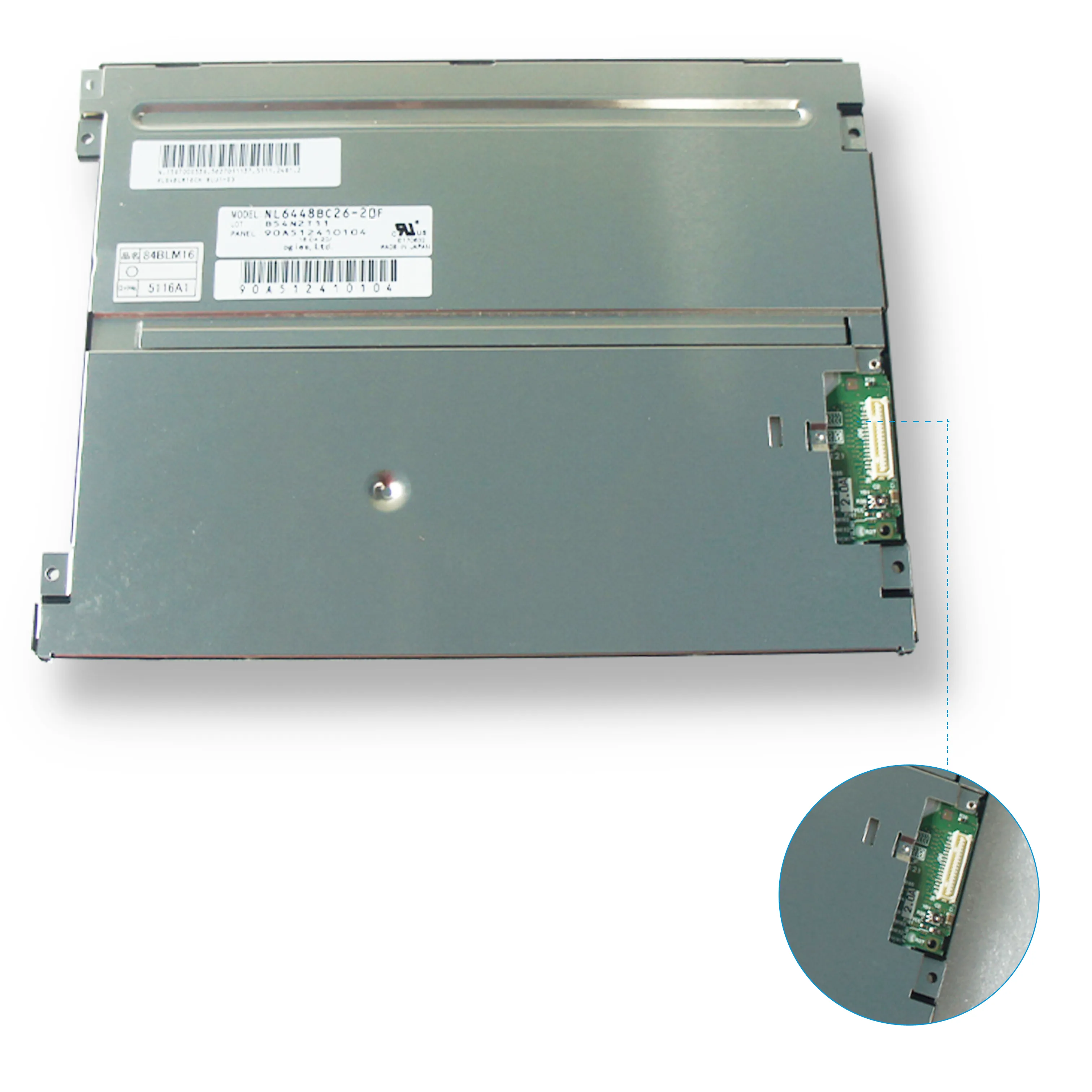

G150XAN02.1 15.0inch 1024*768 TFT-LCD DISPLAY
In the intricate world of industrial and embedded systems, the display interface is far more than a simple window for information; it is the critical nexus of human-machine interaction. At the heart of countless specialized applications, from medical devices and industrial control panels to point-of-sale systems and transportation consoles, lies a component engineered for reliability and clarity under demanding conditions. This article delves into the G150XAN02.1, a 15.0-inch TFT-LCD display module that exemplifies this category of purpose-built technology.
Moving beyond basic specifications, we will explore the unique value proposition of this 1024x768 (XGA) resolution panel. Why does this seemingly legacy resolution persist in modern applications? What design features make it suitable for 24/7 operation in harsh environments? We will dissect its optical performance, mechanical robustness, and interface compatibility, providing a comprehensive analysis for engineers, procurement specialists, and system integrators who require not just a display, but a dependable and long-term visual solution for mission-critical equipment.
Decoding the Core Specification: XGA in a Modern Context
The 1024 x 768 pixel resolution, known as XGA (Extended Graphics Array), is a defining characteristic of the G150XAN02.1. While consumer electronics have raced towards 4K and beyond, this resolution remains a stalwart in industrial and professional sectors. The reason is rooted in practicality and compatibility. Many legacy control systems, diagnostic software, and embedded operating systems are designed around XGA, ensuring seamless integration without costly software overhaul.
Furthermore, the 15.0-inch diagonal with XGA yields a pixel pitch that offers excellent legibility for data-dense interfaces—text, numerical readouts, and schematic diagrams are rendered with sharp clarity without requiring excessive UI scaling. This resolution strikes an optimal balance between information density, system performance (requiring less processing and bandwidth than higher resolutions), and cost-effectiveness, making it a strategically sound choice for upgrading or maintaining specialized equipment.


Optical Performance and Readability Under Pressure
The utility of a display is measured by its optical performance in real-world conditions. The G150XAN02.1 is engineered with a high-brightness backlight, typically reaching 400 nits or more, which is essential for combating ambient glare in brightly lit factories, medical operating rooms, or outdoor kiosks. This ensures the screen content remains vivid and readable under challenging lighting.
Complementing this is a robust contrast ratio and wide viewing angles. Consistent color and image stability across horizontal and vertical viewpoints are crucial when multiple operators need to view a control panel from different positions. The panel often employs advanced technologies like In-Plane Switching (IPS) or similar wide-view variants to achieve this, minimizing color shift and contrast degradation. This combination of high brightness and wide viewing angles guarantees that critical information is communicated accurately and without ambiguity, regardless of the environment.
Mechanical and Electrical Interface Design
Integration is paramount, and the G150XAN02.1 is designed as a drop-in solution for system builders. Mechanically, it adheres to precise outline dimensions and features standard mounting hole patterns, allowing it to replace older panels or fit into new designs with minimal mechanical redesign. The LVDS (Low-Voltage Differential Signaling) interface is the most common electrical connection, providing a robust, noise-resistant digital link between the display controller and the system's mainboard.
This interface choice ensures high-speed data transmission with low electromagnetic interference, a critical factor in electrically noisy industrial environments. The module typically includes a comprehensive connector for power, LVDS signals, and backlight control (often using an inverter for the CCFL backlight). Understanding this pinout and the required power sequence is essential for engineers to ensure stable and long-term operation, preventing issues like image retention or backlight failure.
Durability and Reliability for Demanding Applications
Unlike consumer monitors, the G150XAN02.1 is built for endurance. Its operational temperature range is significantly wider, often spanning from -20°C to 70°C, allowing it to function reliably in unheated warehouses or near hot machinery. The construction utilizes high-grade components and materials resistant to vibration, shock, and potential moisture ingress, which are common in transportation and factory floor settings.
Longevity is another key metric. The backlight system is rated for a long lifespan, often exceeding 30,000 to 50,000 hours, which translates to years of continuous operation. This reliability reduces total cost of ownership by minimizing downtime and maintenance needs. For industries where equipment failure can lead to significant safety or financial consequences, this ruggedized design philosophy is not a luxury but a fundamental requirement.
Typical Application Scenarios and Use Cases
The specific attributes of the G150XAN02.1 make it the display of choice for a diverse array of specialized fields. In medical technology, it is found in patient monitors, diagnostic ultrasound machines, and surgical equipment, where consistent color reproduction and high reliability are non-negotiable. The industrial automation sector employs it in Human-Machine Interface (HMI) panels for programmable logic controllers (PLCs), process control stations, and robotics interfaces.
Furthermore, it serves in point-of-sale (POS) systems, kiosks, and digital signage, where its wide viewing angle and brightness ensure customer-facing content is always clear. The transportation sector utilizes it in vehicle dashboards, fleet management systems, and maritime navigation consoles. In each case, the display acts as a dependable and long-life component within a larger, mission-critical system.
Sourcing, Compatibility, and Lifecycle Considerations
For system maintainers and designers, sourcing a reliable supply of such specialized components is crucial. The G150XAN02.1 follows a standardized mechanical and electrical footprint, but it is vital to verify exact compatibility with the existing system's controller board (timing, voltage) and mechanical housing. Working with reputable suppliers or direct manufacturers ensures access to genuine, high-quality modules and accurate technical support.
Given the long lifecycle of industrial equipment (often 10+ years), planning for the display's lifecycle is essential. Understanding the manufacturer's roadmap, availability of future stock, and potential pin-compatible upgrade paths (e.g., to LED-backlit versions for lower power consumption) is a strategic part of system design and maintenance. This foresight protects against obsolescence and ensures the long-term serviceability of the end product.
FAQs: G150XAN02.1 Display Module
Conclusion
The G150XAN02.1 15.0-inch XGA TFT-LCD display is a testament to the principle that in specialized technology, optimal performance is defined by suitability for the task, not merely by the highest specifications. Its enduring relevance stems from a deliberate design philosophy prioritizing reliability, readability, and seamless integration within demanding operational environments. From the factory floor to the surgical suite, it provides a stable and clear visual interface where failure is not an option.
For engineers and decision-makers, selecting this module represents a choice for proven technology, long-term system compatibility, and reduced total cost of ownership through durability. In a landscape of rapid technological churn, the G150XAN02.1 stands as a reliable workhorse, demonstrating that depth of engineering and focused application often outweigh the allure of mere novelty.