






- Industrial LCD display
-
Industrial Products
- DC Servo Drive
- AC Servo Drive
- other
- Heidelberg
- FANUC
- IFM
- Meter
- CCD
- Membrane Keypad
- Film
- YOKOGAWA Module
- Card
- ABB
- MITSUBISHI
- FANUC
- KEYENCE
- BECKHOFF
- Honeywell
- HOLLYSYS
- FUJI servo drives
- HP
- solenoid valve
- thermostat
- Siemens adapter
- color oscilloscope
- Fujitsu connector
- CHELIC
- SMC
- CISCO Module
- INTEL
- Key board
- FAIRCHILD
- Motherboard
- Board
- Bearing
- other
- Control Panel
- Contactor
- Circuit
- OMRON
- Relay
- Controller
- Photoelectric Switch
- Photoelectric Sensor
- Original
- Fan
- Motor Driver
- Limit Switch
- Amplifier
- power supply
- LENZE
- Cable
- Encoder
- Sensor
- Transformer
- Fiber Optic Sensor
- Protection Relay
- Temperature Controller
- Proximity Switch
- Switch Sensor
- Siemens
- Industrial board
- HMI Touch Glass
-
HMI Full Machine Whole unit
- OMRON HMI Touch Panel
- Siemens HMI Touch Panel
- Mitsubishi HMI Touch Panel
- Allen-Bradley automation HMI Touch Panel
- DELTA HMI Touch Panel
- EVIEW DELTA HMI Touch Panel
- KINCO DELTA HMI Touch Panel
- HITECH HMI Touch Panel
- WEINTECK HMI Touch Panel
- TECVIEW HMI Touch Panel
- WEINVIEW HMI Touch Panel
- PRO-FACE HMI Touch Panel
- SIMATIC HMI Touch Panel
- AMPIRE HMI Touch Panel
- HEIDELBERG HMI Touch Panel
- PANASONIC HMI Touch Panel
- PATLITE HMI Touch Panel
- KYOCERA HMI Touch Panel
- KEYENCE HMI Touch Panel
- WEINVIEW HMI Touch Panel
- HITECH HMI Touch Panel
- FUJI HMI Touch Panel
- HAKKO HMI Touch Panel
- SCHNEIDER HMI Touch Panel
- SAMKOON touch panel
- other
- Module
- lcd inverter
- Membrane Keypad Switch
- Winni Touch Screens
- Frequency Inverter
- Servo Motor
- PLC


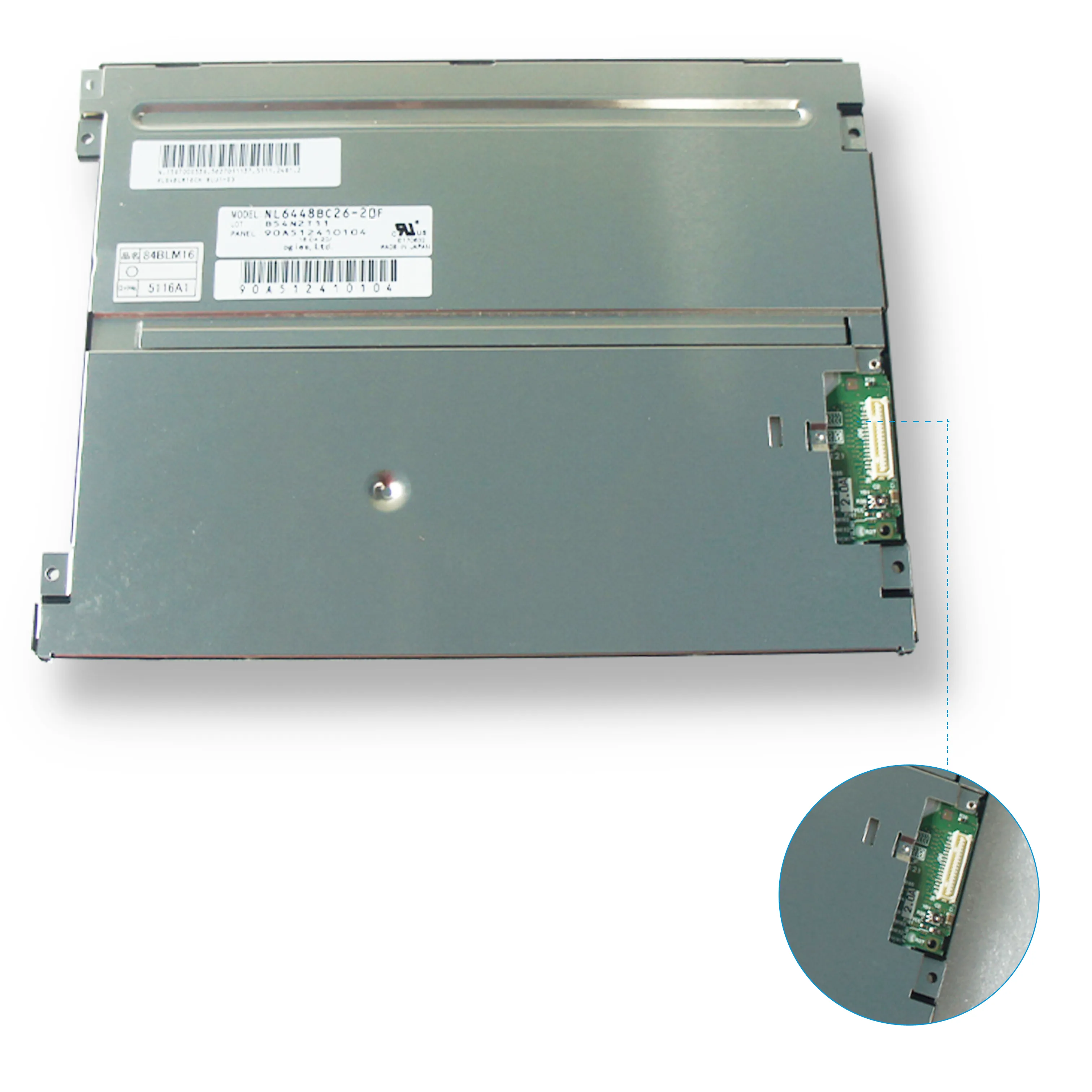

G104V1-T01 CMO 640*480 10.4 inch LCD Screen
In the intricate ecosystem of industrial and embedded systems, the display interface often serves as the critical bridge between complex machine data and human operators. Selecting the right component is not merely a matter of specification sheets; it's a strategic decision impacting usability, reliability, and total cost of ownership. This article delves deep into the G104V1-T01, a specific 10.4-inch LCD screen module with a CMO (Chi Mei Optoelectronics, now Innolux) panel at its core, boasting a resolution of 640 x 480 pixels.
We will move beyond basic datasheet parameters to explore what this display truly represents in practical application. From decoding its model number to understanding the enduring relevance of its VGA-standard resolution, we will examine its technical architecture, the specific environments it is engineered for, and how it compares to modern alternatives. This analysis aims to provide engineers, procurement specialists, and system integrators with the insights needed to determine if the G104V1-T01 is the optimal visual interface for their demanding projects.
Decoding the G104V1-T01: More Than Just a Part Number
The alphanumeric string G104V1-T01 is a concise technical descriptor. Typically, "G104" denotes a 10.4-inch diagonal screen size. The "V1" often references a specific revision or version of the module's design, encompassing the driver board, backlight unit, and mechanical frame. The "T01" suffix usually indicates a particular variant, potentially differing in interface type, brightness, or operating temperature range. The core component is the CMO 640*480 panel, identifying the liquid crystal cell manufacturer and its native resolution.
This resolution, known as VGA (640x480), is a foundational standard in display technology. While considered low by consumer smartphone standards, it remains highly significant in industrial contexts. It represents a sweet spot between sufficient information density for text and basic graphics, and lower processing power requirements for embedded CPUs. Understanding this nomenclature is the first step in recognizing that this module is not a commodity consumer item, but a purpose-built industrial component with a defined lineage and specific intended use cases.
The Industrial Logic Behind 640 x 480 (VGA) Resolution
In an era of 4K and 8K displays, the persistence of VGA resolution in industrial panels like the G104V1-T01 is a deliberate engineering choice, not an oversight. This resolution offers several critical advantages in harsh or specialized environments. Firstly, it demands significantly less computational bandwidth and graphical memory from the host controller, allowing the use of simpler, more robust, and lower-power single-board computers or microcontrollers.
Secondly, the larger pixel pitch (the size of each individual pixel) inherent in a 10.4-inch VGA screen enhances readability from a distance or in vibratory conditions, reducing operator eye strain. Finally, the simplicity of the VGA signal (often supported via RGB or LVDS interfaces on these modules) ensures high compatibility and reduces electromagnetic interference (EMI) concerns. For displaying static machine parameters, schematic diagrams, control buttons, and terminal text, VGA resolution is frequently not just adequate, but optimal.
Anatomy of an Industrial Display Module
The G104V1-T01 is a complete LCD module, not just a bare panel. Its architecture is a carefully integrated system. The heart is the CMO-produced TFT LCD glass, responsible for image formation. Bonded to this is the driver circuitry, which translates incoming video signals into precise voltages for each pixel. A critical, often underappreciated component is the CCFL or LED backlight unit. Industrial modules may use CCFL for wide-temperature performance or LED for longevity and lower power consumption.
The module includes a robust metal or plastic frame that provides structural integrity, protects the glass edges, and offers standardized mounting points. Importantly, it features a defined interface connector (e.g., 20-pin or 30-pin LVDS, or an analog RGB interface). This holistic design ensures the display can withstand the mechanical stress, temperature fluctuations, and extended operational hours expected in factory automation, medical devices, or point-of-sale systems.
Prime Application Environments and Use Cases
The G104V1-T01 finds its home in environments where reliability trumps pixel count. A primary domain is Industrial Human-Machine Interfaces (HMIs) for PLCs, CNC machines, and process control systems. Here, it displays control menus, real-time sensor data, and alarm status with unwavering clarity. It is equally vital in transportation and logistics, serving as the display for vehicle telematics, forklift control panels, and baggage handling systems, where it must resist shock and wide temperature ranges.
Other key applications include medical monitoring equipment (where consistent performance is critical), point-of-sale terminals and kiosks, and embedded test and measurement devices. In each case, the module's value is proven by its ability to deliver a stable, readable image 24/7, often in conditions of high ambient light, dust, moisture, or electrical noise that would cause consumer-grade displays to fail.
Critical Technical Specifications for System Integration
Successfully integrating the G104V1-T01 requires careful attention to its key specifications. The interface type (e.g., LVDS 1-ch, 6-bit) must match the output of your host controller; an adapter board may be necessary. Operating temperature range (commonly -20°C to 70°C or wider for industrial grade) is non-negotiable for environmental resilience. Brightness, measured in nits (cd/m²), determines visibility in brightly lit factories or outdoors (300-500 nits is common, with higher available).
Viewing angle (typically 140/120 degrees or better) ensures the screen remains legible from various positions. Power supply requirements (e.g., 3.3V or 5V for logic, 12V/20V for backlight) must be precisely met. Finally, mechanical dimensions, including active area, overall footprint, and mounting hole patterns, are essential for enclosure design. Ignoring any of these parameters can lead to integration failure.


Comparison with Modern Alternatives and Longevity Considerations
When compared to newer high-resolution IPS panels, the G104V1-T01's strengths are in robustness and simplicity, not pixel density or color gamut. Modern alternatives offer wider viewing angles, better color, and touchscreen integration as standard. However, they may also demand more power, generate more heat, and require complex processors with high-speed display interfaces (like MIPI).
A pivotal advantage of established industrial modules like the G104V1-T01 is long-term supply stability. Products designed for industrial automation have lifecycle expectations of 10+ years, unlike consumer displays which are obsoleted rapidly. Manufacturers often guarantee the availability of such modules for extended periods, which is crucial for companies that must support and repair fielded equipment for decades. Choosing this module is often a decision for long-term system stability over cutting-edge visual specs.
FAQs: G104V1-T01 10.4-inch LCD Screen
10. Where can I find the detailed datasheet?Datasheets are available from specialized electronic component distributors, display module suppliers, or by contacting Innolux directly.
Conclusion
The G104V1-T01 10.4-inch LCD module exemplifies the principle that in industrial design, appropriateness is more critical than absolute technological novelty. Its 640x480 resolution, built around a reliable CMO/Innolux panel, represents a carefully balanced solution for a vast array of embedded and control systems. Its value lies not in dazzling graphics, but in predictable performance, environmental resilience, and long-term supply continuity.
For engineers and integrators, selecting this module is a strategic choice that prioritizes system stability, ease of integration, and total lifecycle cost over raw pixel count. It serves as a robust and trustworthy visual conduit in machines where failure is not an option, proving that in the industrial world, the right tool for the job is often the one that does its job reliably, day in and day out, for years on end.