






- Industrial LCD display
-
Industrial Products
- DC Servo Drive
- AC Servo Drive
- other
- Heidelberg
- FANUC
- IFM
- Meter
- CCD
- Membrane Keypad
- Film
- YOKOGAWA Module
- Card
- ABB
- MITSUBISHI
- FANUC
- KEYENCE
- BECKHOFF
- Honeywell
- HOLLYSYS
- FUJI servo drives
- HP
- solenoid valve
- thermostat
- Siemens adapter
- color oscilloscope
- Fujitsu connector
- CHELIC
- SMC
- CISCO Module
- INTEL
- Key board
- FAIRCHILD
- Motherboard
- Board
- Bearing
- other
- Control Panel
- Contactor
- Circuit
- OMRON
- Relay
- Controller
- Photoelectric Switch
- Photoelectric Sensor
- Original
- Fan
- Motor Driver
- Limit Switch
- Amplifier
- power supply
- LENZE
- Cable
- Encoder
- Sensor
- Transformer
- Fiber Optic Sensor
- Protection Relay
- Temperature Controller
- Proximity Switch
- Switch Sensor
- Siemens
- Industrial board
- HMI Touch Glass
-
HMI Full Machine Whole unit
- OMRON HMI Touch Panel
- Siemens HMI Touch Panel
- Mitsubishi HMI Touch Panel
- Allen-Bradley automation HMI Touch Panel
- DELTA HMI Touch Panel
- EVIEW DELTA HMI Touch Panel
- KINCO DELTA HMI Touch Panel
- HITECH HMI Touch Panel
- WEINTECK HMI Touch Panel
- TECVIEW HMI Touch Panel
- WEINVIEW HMI Touch Panel
- PRO-FACE HMI Touch Panel
- SIMATIC HMI Touch Panel
- AMPIRE HMI Touch Panel
- HEIDELBERG HMI Touch Panel
- PANASONIC HMI Touch Panel
- PATLITE HMI Touch Panel
- KYOCERA HMI Touch Panel
- KEYENCE HMI Touch Panel
- WEINVIEW HMI Touch Panel
- HITECH HMI Touch Panel
- FUJI HMI Touch Panel
- HAKKO HMI Touch Panel
- SCHNEIDER HMI Touch Panel
- SAMKOON touch panel
- other
- Module
- lcd inverter
- Membrane Keypad Switch
- Winni Touch Screens
- Frequency Inverter
- Servo Motor
- PLC


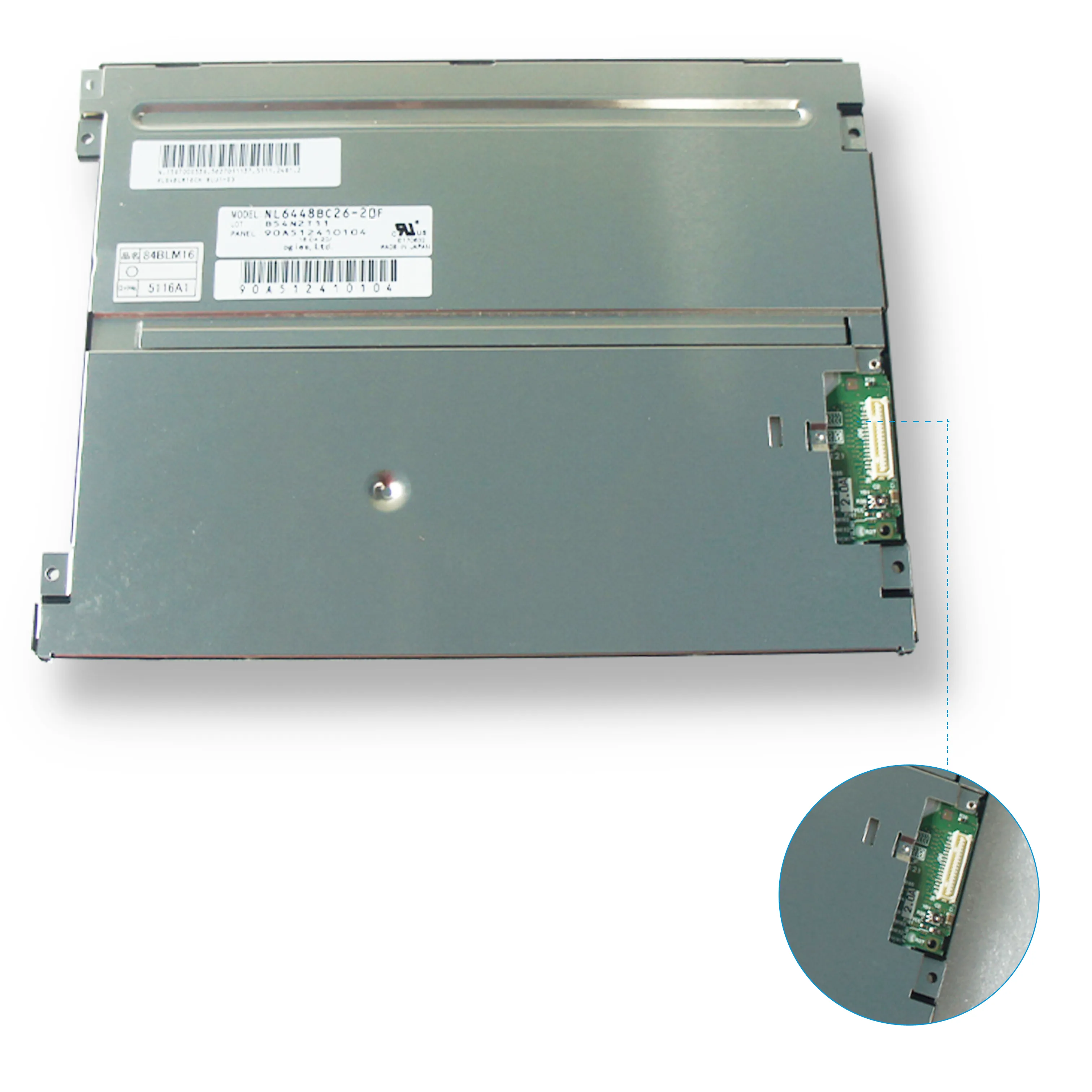

G070VAN01.0 AUO 7inch 800*480 lcd display
In the intricate world of electronic components, where specifications dictate performance and compatibility determines success, the G070VAN01.0 emerges as a pivotal solution for a specific class of applications. This 7-inch display module, manufactured by AUO (AU Optronics), is not merely a generic screen but a carefully engineered component designed to meet the rigorous demands of industrial, automotive, and embedded systems. With its 800 x 480 pixel resolution (WVGA format), this TFT-LCD panel represents a balance between clarity, power efficiency, and robust physical construction.
This article delves deep into the G070VAN01.0, moving beyond basic datasheet parameters to explore its defining characteristics, optimal use cases, and the critical integration considerations that design engineers must address. We will unpack its technological underpinnings, compare its position in the market landscape, and provide practical insights for implementation. Understanding this display is key to unlocking reliable and effective visual interfaces in challenging environments.
Core Technical Specifications and Architecture
The foundation of the G070VAN01.0's utility lies in its precise technical architecture. As a 7.0-inch diagonal TFT-LCD, it employs an a-Si (amorphous Silicon) thin-film transistor process for active matrix driving. The native resolution of 800 horizontal by 480 vertical pixels defines its WVGA aspect ratio, suitable for a wide range of instrument clusters and human-machine interfaces (HMIs).
A key feature is its transmissive display type with a built-in LED backlight system, ensuring uniform brightness and longevity. Typical brightness levels range from 300 to 500 nits, allowing for readability in moderately lit environments. The module supports a standard RGB 24-bit parallel interface, a common and reliable protocol for embedded systems. Furthermore, its outline dimensions, mounting hole patterns, and connector type (typically a pin-type FPC) are standardized, yet require careful mechanical planning during integration.


Defining Characteristics: Beyond Basic Resolution
While resolution and size are headline figures, the G070VAN01.0's true value is defined by characteristics tailored for stability and durability. Its operating temperature range is a critical differentiator, often spanning from -20°C to 70°C or wider, enabling functionality in non-climate-controlled settings. The contrast ratio, viewing angles (both horizontal and vertical), and response time are engineered for clarity without motion blur, essential for displaying dynamic data.
The optical bonding option, available for such modules, is a significant upgrade. This process fills the air gap between the LCD panel and the cover glass with a clear resin, dramatically reducing internal reflection, enhancing sunlight readability, improving mechanical strength, and mitigating condensation. This makes the display far more resilient in automotive or outdoor industrial applications where environmental stress is a constant factor.
Ideal Application Scenarios and Use Cases
The specific combination of size, resolution, and ruggedness directs the G070VAN01.0 towards well-defined market segments. In the industrial automation sector, it is a prime candidate for PLC operator panels, handheld test equipment, and control units for machinery, where reliability trumps ultra-high resolution.
Within automotive electronics, it finds roles in secondary displays for rear-seat entertainment, climate control systems, or as a central display for light commercial vehicles. Its form factor is also a match for portable navigation devices and specialized medical monitoring equipment where compact size and clear data presentation are paramount. These applications leverage its balance of performance and cost-effectiveness, avoiding the over-engineering associated with consumer-grade high-resolution panels.
Critical Integration and Interface Considerations
Successfully deploying this display requires meticulous attention to integration. The electrical interface necessitates a compatible timing controller (T-Con) or a system-on-chip (SoC) with a matching parallel RGB LCD driver. Power sequencing for the LCD panel and its backlight must adhere to strict specifications to prevent permanent damage.
Mechanically, designers must account for the bezel size, mounting points, and the need for electromagnetic compatibility (EMC) shielding. The choice of a resistive or projected capacitive touch panel, often layered atop the display, adds another dimension of complexity involving separate controller integration and calibration. Neglecting these aspects can lead to image artifacts, reduced lifespan, or system failures.
Comparative Market Position and Alternatives
Placing the G070VAN01.0 within the broader display ecosystem clarifies its strategic niche. It sits between smaller, lower-resolution character displays and larger, high-definition panels. Direct alternatives might include similar 7-inch WVGA modules from manufacturers like Innolux or HannStar, which may offer slight variations in brightness, contrast, or interface type.
The primary competitive pressure comes from the gradual shift towards higher resolutions like 1024x600 (WSVGA) and the proliferation of MIPI DSI interfaces in modern SoCs. However, for legacy systems, cost-sensitive projects, or applications where driver complexity is a concern, the mature and widely supported parallel RGB interface of the G070VAN01.0 remains a substantial advantage, ensuring stability and easier firmware development.
Optimization for Reliability and Longevity
To maximize the operational life and performance of the G070VAN01.0 in the field, several design-for-reliability practices are essential. Managing thermal dissipation is crucial, especially when the backlight is driven at high brightness for extended periods; adequate heat sinking or ventilation should be considered.
Implementing robust power supply filtering minimizes noise that can introduce visual flicker. From a software standpoint, implementing pixel shifting or screen blanking routines can mitigate the risk of image retention or burn-in on static UI elements. Selecting the appropriate dimming method (PWM or DC) for the backlight based on the application's environment also contributes to overall system efficiency and display longevity.
Frequently Asked Questions (FAQs)
Conclusion
The AUO G070VAN01.0 7-inch display is far more than a simple screen; it is a testament to engineered suitability. Its value proposition is not rooted in cutting-edge pixel density, but in its proven reliability, broad compatibility, and rugged design tailored for demanding environments. For engineers and product developers in industrial, automotive, and embedded fields, it represents a mature, low-risk component choice that balances performance with practical integration requirements.
Mastering its characteristics—from interface protocols and environmental hardening to thermal management—is key to leveraging its full potential. In a landscape increasingly dominated by high-resolution consumer panels, the G070VAN01.0 stands as a robust, purpose-built solution, reminding us that in specialized applications, optimized stability often outweighs raw specification metrics. Choosing the right display is about matching the component's inherent strengths to the challenges of the final application, a task for which this module remains exceptionally well-qualified.