






- Industrie-LCD-Display
-
Industrial Products
- DC Servo Drive
- AC Servo Drive
- other
- Heidelberg
- FANUC
- IFM
- Meter
- CCD
- Membrane Keypad
- Film
- YOKOGAWA
- Card
- ABB
- MITSUBISHI
- FANUC
- KEYENCE
- BECKHOFF
- Honeywell
- HOLLYSYS
- FUJI servo drives
- HP
- solenoid valve
- thermostat
- Siemens adapter
- color oscilloscope
- Fujitsu connector
- CHELIC
- SMC
- CISCO
- INTEL
- Key board
- FAIRCHILD
- Der Aufsichtsrat
- Board
- Bearing
- other
- Control Panel
- Contactor
- Circuit
- Omron
- Relais.
- Der controller
- Optoelektronische schalter
- Optoelektronische sensoren
- Original
- Fan
- Motortreiber
- Endschalter
- Verstärker
- power supply
- LENZE
- Cable
- Encoder
- Sensor
- Transformator
- Fiber Optic Sensor
- Schutzrelais
- Temperaturregler
- Näherungsschalter
- Switch Sensor
- Siemens
- PCB
- HMI Touch-Glas
-
HMI-Vollautomat Ganze Einheit
- OMRON HMI Touch Panel
- Siemens HMI Touch Panel
- Mitsubishi HMI Touch Panel
- Allen-Bradley Automatisierung HMI Touch
- DELTA HMI Touch Panel
- EVIEW DELTA HMI Touch Panel
- KINCO DELTA HMI Touch Panel
- HITECH HMI Touch Panel
- WEINTECK HMI Touch Panel
- TECVIEW HMI Touch Panel
- WEINVIEW HMI Touch Panel
- PRO-FACE HMI Touch Panel
- SIMATIC HMI Touch Panel
- AMPIRE HMI Touch Panel
- HEIDELBERG HMI Touch Panel
- PANASONIC HMI Touch Panel
- PATLITE HMI Touch Panel
- KYOCERA HMI Touch Panel
- KEYENCE HMI Touch Panel
- WEINVIEW HMI Touch Panel
- HITECH HMI Touch Panel
- FUJI HMI Touch Panel
- HAKKO HMI Touch Panel
- SCHNEIDER HMI Touch Panel
- SAMKOON touch panel
- andere
- Module
- LCD Wechselrichter
- Membran Tastenfeld Schalter
- Winni Touch Screens
- Frequenzumrichter
- Servo Motor
- PLC


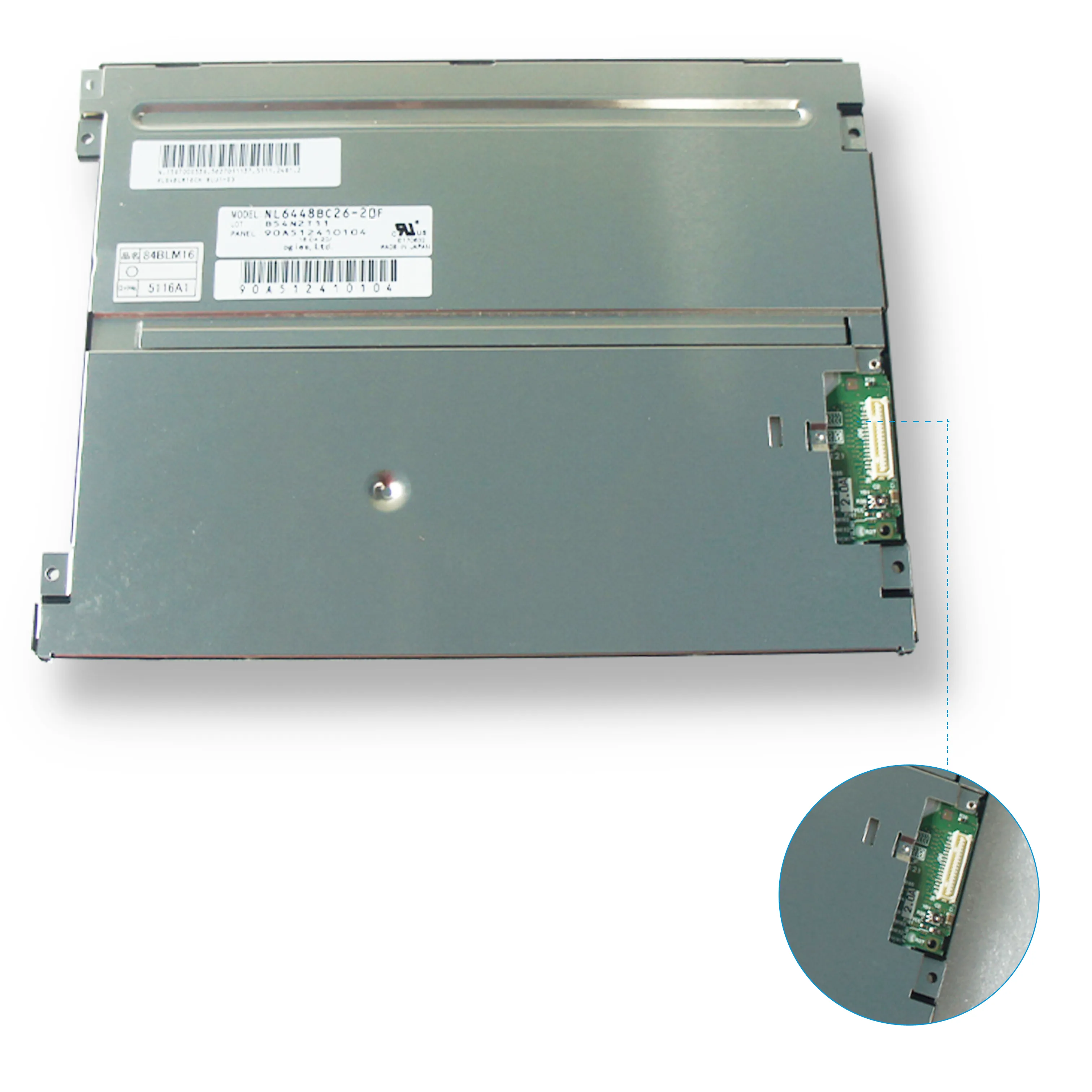

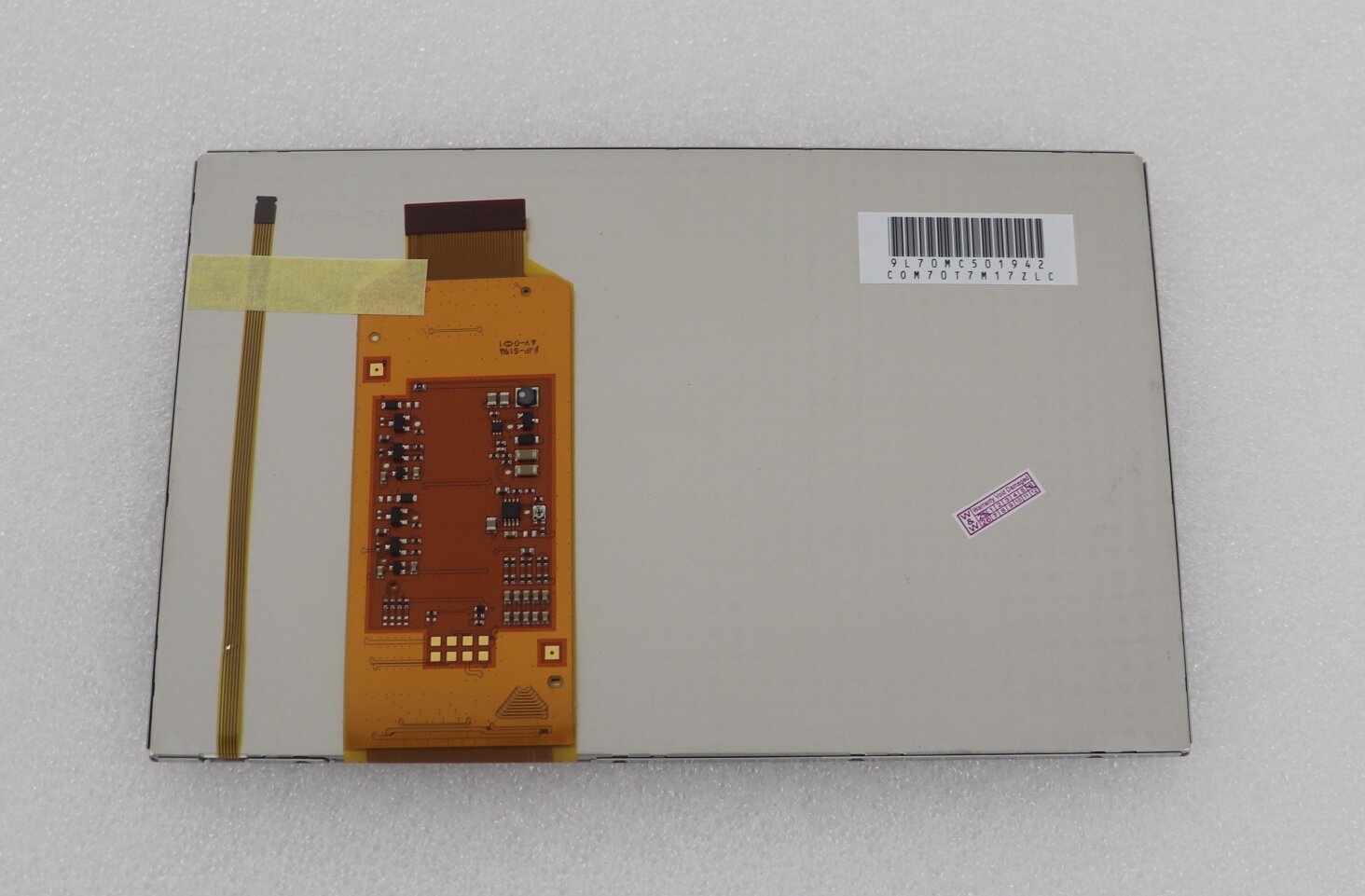
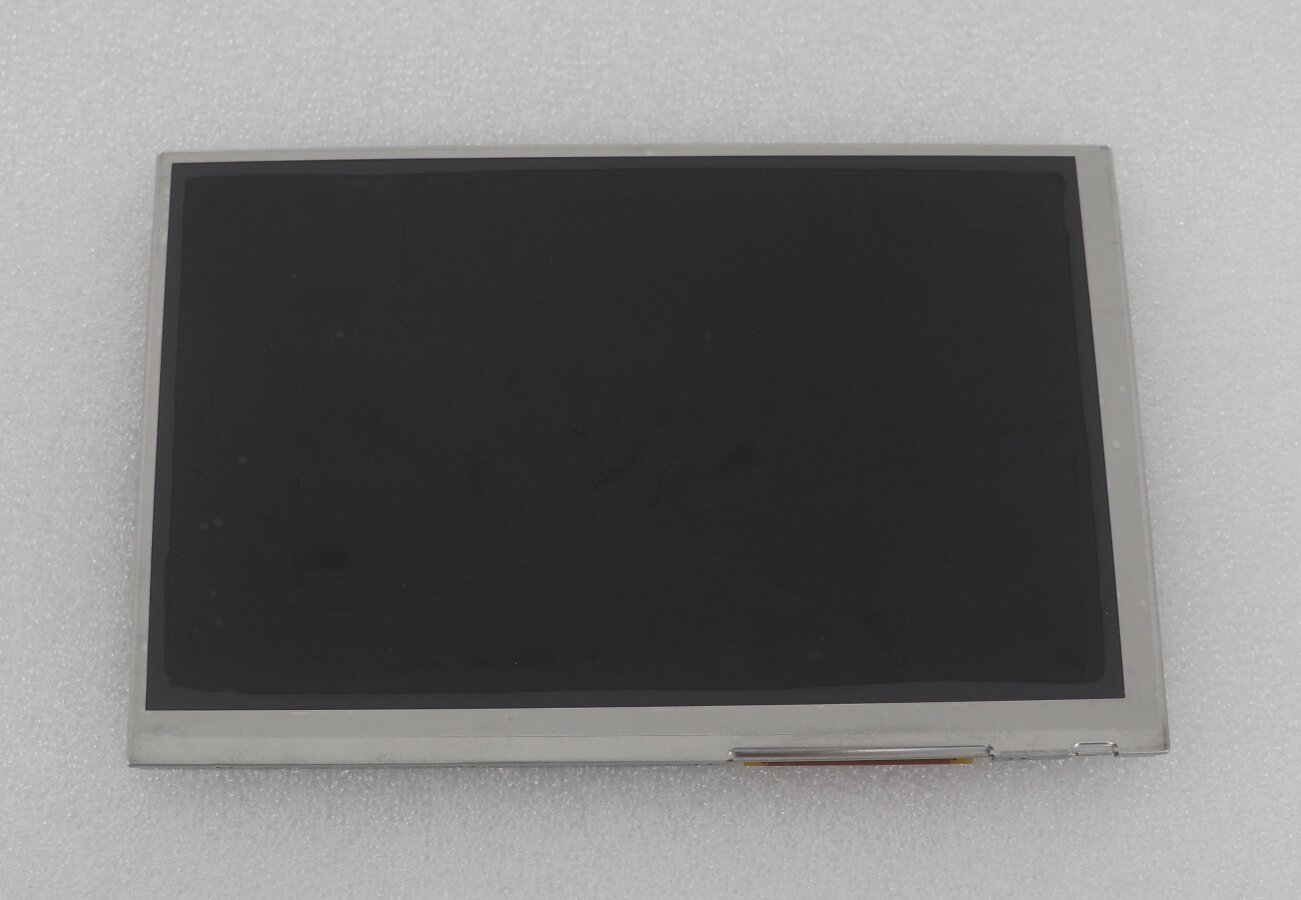
COM70T7M17ZLC Ortustech 7" TFT-LCD screen 800*480 Display
In the intricate world of electronic components, the display often serves as the critical bridge between a machine's functionality and the human user. Selecting the right screen is a decisive factor in the success of embedded systems, industrial controls, portable devices, and countless other applications. This article delves into a detailed examination of the COM70T7M17ZLC, a 7-inch TFT-LCD module from Ortustech, designed to deliver reliable visual performance with its 800 x 480 resolution.
Our exploration will move beyond basic specifications to uncover the practical implications of its technical features. We will analyze its optical characteristics, interface and compatibility considerations, structural durability, and ideal application environments. By providing a comprehensive, expert-level breakdown, this guide aims to equip engineers, product designers, and procurement specialists with the deep insights needed to determine if the Ortustech COM70T7M17ZLC is the optimal display solution for their specific project demands and challenges.
Optical Performance and Viewing Experience
The core mandate of any display is to present information clearly and effectively. The Ortustech COM70T7M17ZLC, with its 800 x 480 pixel resolution on a 7-inch diagonal, offers a balanced pixel density suitable for human-machine interfaces (HMIs) where detailed graphics or small text are not the primary requirement. This WVGA resolution provides ample space for intuitive icons, status indicators, and control buttons.
Key to its performance is the brightness level, typically around 450 cd/m² or higher, ensuring readability in moderately lit industrial or indoor settings. The module's contrast ratio defines the depth between blacks and whites, crucial for visual clarity. Furthermore, the selection of a viewing angle technology—likely IPS or TN—will profoundly impact usability. A wide viewing angle (common in IPS) allows for consistent image quality when viewed from the side, essential for multi-operator stations or kiosks, whereas a narrower TN panel might be chosen for cost-sensitive, front-facing applications.
Interface Architecture and System Integration
A display module does not operate in isolation; its interface is the lifeline to the host controller. The COM70T7M17ZLC commonly features an RGB or LVDS interface, which are standard for mid-range TFT panels. The RGB parallel interface is often simpler to implement with microcontrollers (MCUs) that have built-in LCD controllers, making it a favorite for lower-cost systems.
Conversely, an LVDS (Low-Voltage Differential Signaling) interface offers superior noise immunity and is ideal for longer cable runs or environments with high electromagnetic interference. This choice directly impacts the selection of the main processor and the design of the printed circuit board (PCB). Engineers must also account for the backlight driver circuit, typically requiring a constant current source for the LED array, and the power supply sequencing to ensure stable and long-lasting operation.
Mechanical Design and Environmental Robustness
The physical construction of the COM70T7M17ZLC determines its resilience in real-world deployment. The module is built around a rigid metal frame that provides structural integrity and protects the glass substrate from flexing and stress. The surface is usually fitted with a protective acrylic cover or can be laminated with a touch panel (resistive or capacitive), adding a layer against scratches and impacts.
For challenging environments, specifications like operating temperature range (commonly -20°C to 70°C) are critical. The design must also manage heat dissipation from the LED backlight to prevent premature dimming. The mounting method—through screw holes in the frame or adhesive—must be planned during the product enclosure design. This mechanical foresight ensures the display survives the vibrations, temperature swings, and physical demands of industrial, automotive, or outdoor applications.
Touchscreen Integration and Interactivity
Modern interfaces demand interaction, and integrating a touchscreen transforms a passive display into an active control surface. The COM70T7M17ZLC module is often available as a "bare panel" or as a complete touchscreen solution. The choice between resistive and capacitive touch technology is paramount. Resistive touchscreens, activated by pressure, work with any stylus or gloved hand, making them ideal for factory floors or medical settings.
Capacitive touchscreens, responsive to finger contact, offer multi-touch capability and a superior, glass-like user experience for consumer-facing devices. Integrating touch adds a separate controller chip and a new layer of communication (often USB or I2C) to the system. The calibration and driver software become integral parts of the development process, affecting the overall responsiveness and usability of the end product.
Power Management and Backlight Considerations
Efficiency and longevity are heavily influenced by power design. The LED backlight is the most power-hungry component of this TFT module. Understanding its voltage and current requirements is essential for designing an efficient, reliable power supply circuit. Designers can implement dimming control, either through PWM (Pulse Width Modulation) or analog voltage adjustment, to reduce power consumption and adapt brightness to ambient light conditions.
Proper power sequencing—ensuring the logic power, driver power, and backlight power are applied in the correct order—is crucial to prevent latch-up or damage to the LCD drivers. Furthermore, considering the total system power budget is key, especially for battery-operated portable devices where every milliampere-hour counts, directly impacting the product's runtime and user satisfaction.
Application-Specific Deployment Scenarios
The true test of a component lies in its application. The COM70T7M17ZLC finds its niche in fields where reliability and clarity are valued over ultra-high resolution. It is exceptionally well-suited for industrial automation HMIs, controlling machinery and displaying process data on factory floors. In the transportation sector, it serves as a display for vehicle telematics, rear-seat entertainment, or navigation systems in rugged environments.
Other prime applications include point-of-sale (POS) terminals, building automation control panels, medical monitoring devices, and portable test and measurement equipment. In each scenario, the balance of its 7-inch form factor, adequate resolution, robust construction, and integration options provides a cost-effective and dependable visual interface that meets the specific environmental and functional requirements of the industry.
Frequently Asked Questions (FAQs)
10. Where can I find the technical datasheet?The complete datasheet should be requested directly from Ortustech or an authorized distributor for the most accurate and detailed specifications.
Conclusion
The Ortustech COM70T7M17ZLC 7-inch TFT-LCD module represents a pragmatic and robust solution in the landscape of embedded displays. Its value proposition lies not in cutting-edge pixel density, but in a proven combination of adequate WVGA resolution, reliable optical performance, and a design geared towards real-world integration. As we have explored, its suitability hinges on a holistic understanding of its interface logic, mechanical fortitude, power needs, and touch interactivity options.
For engineers and designers, the selection process must align the module's characteristics with the application's core demands: environmental conditions, user interaction model, and system architecture. When these factors converge, the COM70T7M17ZLC stands as a dependable workhorse, capable of delivering clear visual communication across a diverse range of industrial, commercial, and transportation applications, thereby forming a vital and trustworthy link between complex systems and their human operators.