






- Industrie-LCD-Display
-
Industrial Products
- DC Servo Drive
- AC Servo Drive
- other
- Heidelberg
- FANUC
- IFM
- Meter
- CCD
- Membrane Keypad
- Film
- YOKOGAWA
- Card
- ABB
- MITSUBISHI
- FANUC
- KEYENCE
- BECKHOFF
- Honeywell
- HOLLYSYS
- FUJI servo drives
- HP
- solenoid valve
- thermostat
- Siemens adapter
- color oscilloscope
- Fujitsu connector
- CHELIC
- SMC
- CISCO
- INTEL
- Key board
- FAIRCHILD
- Der Aufsichtsrat
- Board
- Bearing
- other
- Control Panel
- Contactor
- Circuit
- Omron
- Relais.
- Der controller
- Optoelektronische schalter
- Optoelektronische sensoren
- Original
- Fan
- Motortreiber
- Endschalter
- Verstärker
- power supply
- LENZE
- Cable
- Encoder
- Sensor
- Transformator
- Fiber Optic Sensor
- Schutzrelais
- Temperaturregler
- Näherungsschalter
- Switch Sensor
- Siemens
- PCB
- HMI Touch-Glas
-
HMI-Vollautomat Ganze Einheit
- OMRON HMI Touch Panel
- Siemens HMI Touch Panel
- Mitsubishi HMI Touch Panel
- Allen-Bradley Automatisierung HMI Touch
- DELTA HMI Touch Panel
- EVIEW DELTA HMI Touch Panel
- KINCO DELTA HMI Touch Panel
- HITECH HMI Touch Panel
- WEINTECK HMI Touch Panel
- TECVIEW HMI Touch Panel
- WEINVIEW HMI Touch Panel
- PRO-FACE HMI Touch Panel
- SIMATIC HMI Touch Panel
- AMPIRE HMI Touch Panel
- HEIDELBERG HMI Touch Panel
- PANASONIC HMI Touch Panel
- PATLITE HMI Touch Panel
- KYOCERA HMI Touch Panel
- KEYENCE HMI Touch Panel
- WEINVIEW HMI Touch Panel
- HITECH HMI Touch Panel
- FUJI HMI Touch Panel
- HAKKO HMI Touch Panel
- SCHNEIDER HMI Touch Panel
- SAMKOON touch panel
- andere
- Module
- LCD Wechselrichter
- Membran Tastenfeld Schalter
- Winni Touch Screens
- Frequenzumrichter
- Servo Motor
- PLC



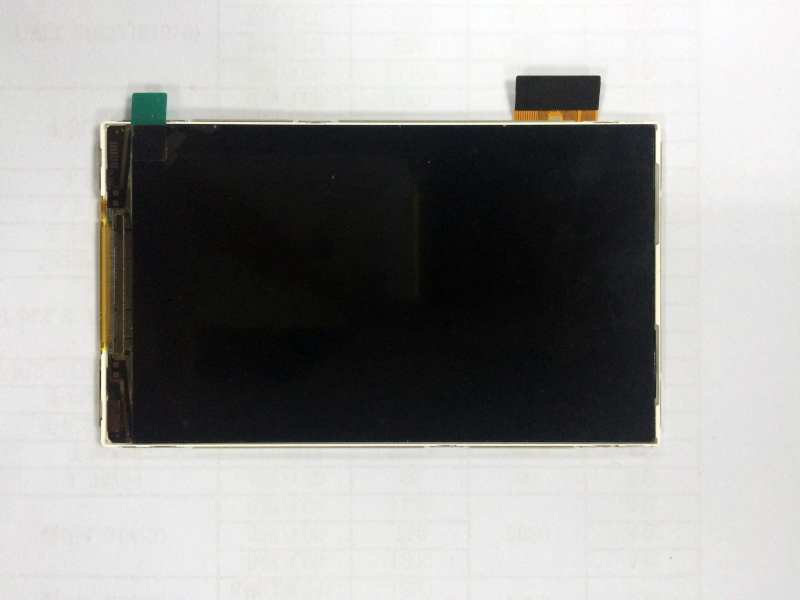
COM40T4M46ULX Ortustech 4" TFT-LCD screen 480*800 Display
In the intricate world of embedded display solutions, the choice of a screen can define the user experience, performance envelope, and ultimate success of a product. This article delves into a detailed examination of the COM40T4M46ULX, a 4-inch TFT-LCD module from Ortustech, engineered with a resolution of 480 x 800 pixels. More than just a component, this display represents a specific intersection of form factor, visual clarity, and integration capability, tailored for a modern generation of portable and handheld devices.
Our exploration will move beyond basic specifications to uncover the practical implications of its design. We will analyze its core technological attributes, dissect its performance in critical areas like readability and power consumption, and evaluate its suitability for various demanding applications. Furthermore, we will provide insights into the integration process and consider its position within the competitive landscape of compact displays. This comprehensive guide aims to equip engineers, product designers, and procurement specialists with the depth of knowledge needed to make an informed decision about this pivotal component.
Decoding the Specifications: A Foundation of Capability
The COM40T4M46ULX is built on a 4-inch diagonal active area, utilizing a Transmissive TFT-LCD structure. Its defining feature is the 480 (RGB) x 800 pixel configuration, which results in a portrait-oriented WVGA resolution. This aspect ratio and pixel density are particularly significant, offering a taller screen ideal for modern menu navigation, text display, and streamlined user interfaces commonly found in professional handheld tools, medical monitors, and portable POS systems.
Fundamentally, it employs an RGB stripe arrangement and typically supports a 24-bit parallel RGB interface, ensuring robust color depth and direct compatibility with many mainstream microprocessors and display controllers. The module incorporates a built-in LED backlight unit, often with adjustable brightness, to ensure visibility across various lighting conditions. Understanding these core specs is the first step in appreciating its targeted design philosophy, which prioritizes sharp detail in a compact, vertically-oriented footprint.
Performance Under Scrutiny: Readability, Color, and Response
Technical specifications only tell part of the story; real-world performance is paramount. The 480x800 resolution on a 4-inch screen yields a high pixel density, translating to crisp text and smooth graphics free from visible pixelation. This is crucial for applications where data integrity and legibility are non-negotiable, such as in diagnostic equipment or measurement devices.
Color performance, while dependent on the driving IC and configuration, typically provides a satisfactory gamut for industrial and instrumentation use-cases. The response time of the LCD panel is engineered to minimize blur in dynamic content, though it is optimized more for interface updates than high-speed video. A key performance aspect is the viewing angle, supported by the TFT technology, which allows for consistent image quality when viewed from off-center positions—a common requirement in shared or handheld environments.
Power Efficiency and Ruggedness for Demanding Environments
For portable and battery-operated devices, power consumption is a critical design constraint. The COM40T4M46ULX module is designed with efficiency in mind. The LED backlight is the primary power draw, and its current can often be modulated via PWM (Pulse Width Modulation) control, allowing developers to fine-tune brightness against battery life. The LCD panel itself has a relatively low operating voltage.
Equally important is its ruggedness. The module is constructed to withstand the vibrations, temperature fluctuations, and potential physical stresses encountered in field operations. Its operating temperature range is typically specified to cover both commercial and extended industrial grades, ensuring reliability from a controlled lab to an outdoor setting. This combination of power-aware design and environmental resilience makes it a robust choice for mobile data terminals, automotive dash displays, and outdoor instrumentation.
Integration Architecture and Interface Considerations
Successfully incorporating the COM40T4M46ULX into a product requires a clear understanding of its integration pathway. The module is a complete sub-assembly, usually including the LCD glass, driver IC, backlight, and touch panel (if specified). This simplifies design by reducing the number of discrete components a developer must source and qualify.
The primary interface is the parallel RGB data bus, which demands careful PCB routing for signal integrity. Designers must also allocate resources for backlight power and control, as well as any touch controller communication (e.g., I2C or SPI). Furthermore, mechanical integration involves precise mounting to avoid stress on the glass and ensuring proper sealing if used in environments requiring ingress protection. A well-planned integration strategy mitigates risks and accelerates time-to-market.
Targeted Applications: Where This Display Excels
The unique combination of its portrait format, high density, and compact size directs the COM40T4M46ULX toward specific application verticals. It is exceptionally well-suited for:
Portable Medical Devices: Patient monitors, diagnostic scanners, and handheld analyzers benefit from the sharp display of graphs and numerical data.
Industrial Handheld Terminals: For inventory management, logistics, and field service, the screen offers clear menus, forms, and barcode displays.
Human-Machine Interfaces (HMIs): As a compact control panel for embedded systems, kiosks, or smart home controllers.
Automotive & Avionics Auxiliary Displays: For rear-seat entertainment, gauge clusters, or navigation in space-constrained cabins.
High-end Consumer Portable Devices: Specialized handheld instruments, advanced remote controls, or portable gaming systems.
Competitive Landscape and Selection Rationale
In the market for 4-inch displays, alternatives exist with varying resolutions (e.g., 480x272, 800x480 landscape) and technologies (like IPS for wider viewing angles). The COM40T4M46ULX carves its niche with its portrait-oriented WVGA resolution. When selecting a display, engineers must weigh factors beyond cost: the necessity of the taller aspect ratio for the UI, the required pixel density, interface compatibility, and the supplier's reliability.
Ortustech positions this module as a balanced solution offering a premium resolution in its size class with proven integration support. The choice ultimately hinges on whether the application's user interaction model and information architecture are better served by a portrait format. For workflows involving scrolling lists, forms, or vertical data presentation, this module presents a compelling, optimized solution against more generic square or landscape screens.
Frequently Asked Questions (FAQs)
Q10: How does it compare to a 4-inch 480x272 display?A: The COM40T4M46ULX offers nearly triple the vertical pixels (800 vs 272), providing significantly more information on screen and much sharper detail.
Conclusion
The Ortustech COM40T4M46ULX 4" TFT-LCD module stands out as a specialized solution engineered for clarity and vertical information density. Its 480x800 resolution in a compact form factor addresses a distinct need in the embedded display market, bridging the gap between basic screens and high-end smartphone-like displays for professional and industrial applications.
This analysis reveals that its value is not merely in its pixels, but in its holistic performance package—combining readability, integration-friendly architecture, and environmental robustness. For product developers targeting portable medical devices, advanced handheld terminals, or any interface where a tall, sharp display enhances usability, the COM40T4M46ULX presents a strategically sound choice. Ultimately, selecting this module is a decision to prioritize superior information presentation within a rigorously defined physical and operational envelope.