






- Industrial LCD display
-
Industrial Products
- DC Servo Drive
- AC Servo Drive
- other
- Heidelberg
- FANUC
- IFM
- Meter
- CCD
- Membrane Keypad
- Film
- YOKOGAWA Module
- Card
- ABB
- MITSUBISHI
- FANUC
- KEYENCE
- BECKHOFF
- Honeywell
- HOLLYSYS
- FUJI servo drives
- HP
- solenoid valve
- thermostat
- Siemens adapter
- color oscilloscope
- Fujitsu connector
- CHELIC
- SMC
- CISCO Module
- INTEL
- Key board
- FAIRCHILD
- Motherboard
- Board
- Bearing
- other
- Control Panel
- Contactor
- Circuit
- OMRON
- Relay
- Controller
- Photoelectric Switch
- Photoelectric Sensor
- Original
- Fan
- Motor Driver
- Limit Switch
- Amplifier
- power supply
- LENZE
- Cable
- Encoder
- Sensor
- Transformer
- Fiber Optic Sensor
- Protection Relay
- Temperature Controller
- Proximity Switch
- Switch Sensor
- Siemens
- Industrial board
- HMI Touch Glass
-
HMI Full Machine Whole unit
- OMRON HMI Touch Panel
- Siemens HMI Touch Panel
- Mitsubishi HMI Touch Panel
- Allen-Bradley automation HMI Touch Panel
- DELTA HMI Touch Panel
- EVIEW DELTA HMI Touch Panel
- KINCO DELTA HMI Touch Panel
- HITECH HMI Touch Panel
- WEINTECK HMI Touch Panel
- TECVIEW HMI Touch Panel
- WEINVIEW HMI Touch Panel
- PRO-FACE HMI Touch Panel
- SIMATIC HMI Touch Panel
- AMPIRE HMI Touch Panel
- HEIDELBERG HMI Touch Panel
- PANASONIC HMI Touch Panel
- PATLITE HMI Touch Panel
- KYOCERA HMI Touch Panel
- KEYENCE HMI Touch Panel
- WEINVIEW HMI Touch Panel
- HITECH HMI Touch Panel
- FUJI HMI Touch Panel
- HAKKO HMI Touch Panel
- SCHNEIDER HMI Touch Panel
- SAMKOON touch panel
- other
- Module
- lcd inverter
- Membrane Keypad Switch
- Winni Touch Screens
- Frequency Inverter
- Servo Motor
- PLC


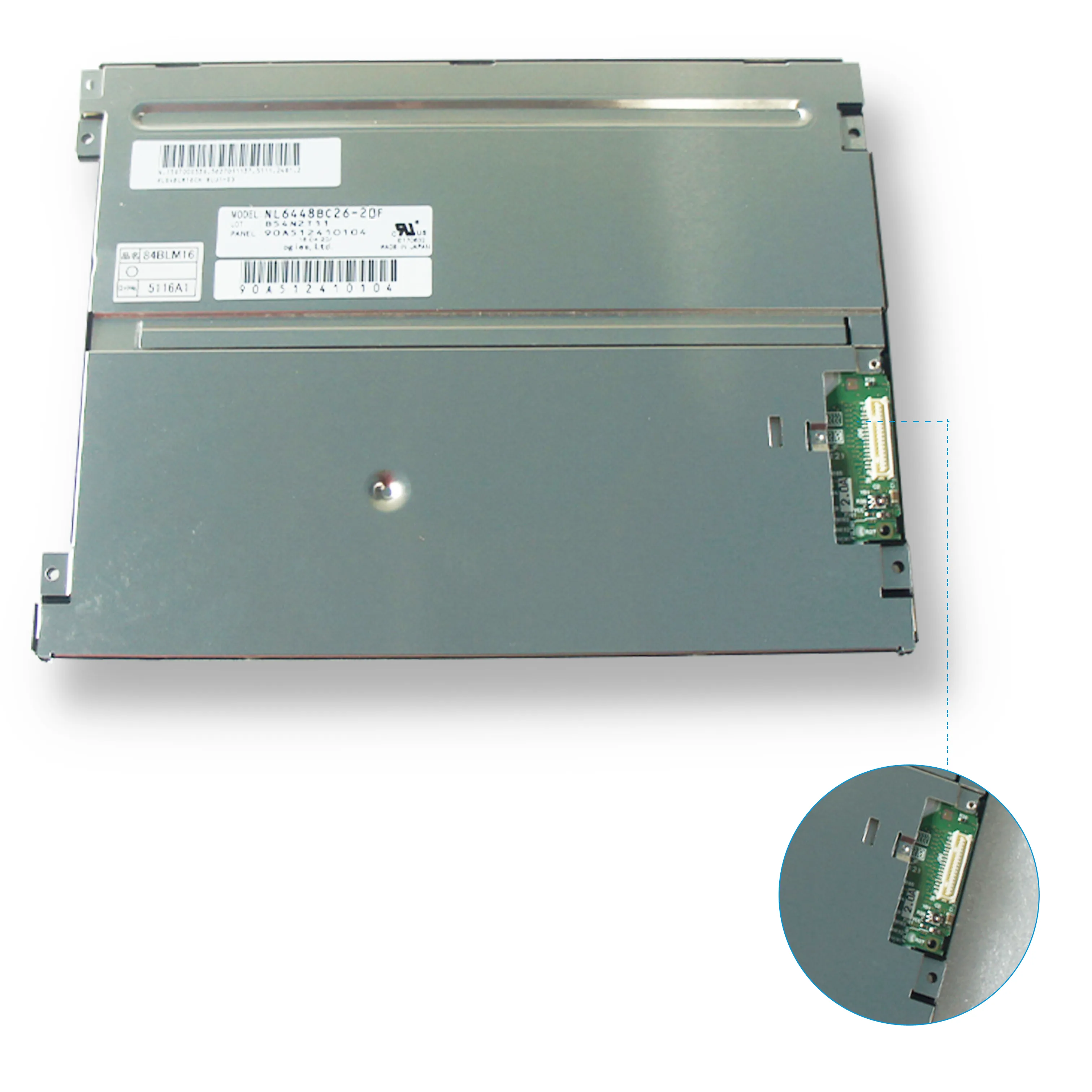

COM37H3N83ULC Ortustech 3.7“ 480*640 LCD PANEL
In the intricate world of electronic components, where specifications often blur into a sea of part numbers, the COM37H3N83ULC from Ortustech stands out as a specialized solution for a specific class of demanding visual applications. This 3.7-inch LCD panel, with its distinctive 480 x 640 pixel resolution, represents more than just a display; it is a carefully engineered interface designed to bridge the gap between compact form factors and high-information-density requirements. This article delves deep into the technical essence and practical implications of this particular display module.
We will move beyond the basic datasheet parameters to explore the "why" behind its design choices. From its non-standard 3:4 aspect ratio to its integration challenges and ideal use cases, this analysis aims to provide engineers, product designers, and procurement specialists with a comprehensive understanding. Our goal is to equip you with the insights needed to evaluate whether the COM37H3N83ULC is the optimal visual heart for your next embedded system, medical device, industrial handheld, or other advanced instrumentation.
Decoding the Specification: A Portrait of Precision
The COM37H3N83ULC is immediately defined by its core attributes: a 3.7-inch diagonal active area and a resolution of 480 (RGB) x 640 pixels. This yields a sharp pixel density of approximately 216 PPI, ensuring crisp text and detailed graphics. The 3:4 aspect ratio is its most distinctive feature in a world dominated by 16:9 widescreens. This "portrait-native" orientation is inherently suited for displaying vertical content stacks, lists, documents, and control panels without wasteful black bars or inefficient screen real estate usage.
Typical specifications include a high brightness level (often exceeding 500 nits) for outdoor or brightly lit industrial visibility, a wide operating temperature range for environmental resilience, and a robust interface like RGB or LVDS for reliable data transmission. Understanding these specs is the first step in recognizing that this panel is built not for consumer media consumption, but for focused, information-driven human-machine interaction where clarity and reliability are paramount.
The Rationale Behind the 3:4 Aspect Ratio
The choice of a 3:4 aspect ratio is a deliberate and functional departure from the norm. In many professional and industrial contexts, information is organized vertically. Consider a patient monitoring screen showing vital signs in a column, a handheld test instrument displaying a long list of parameters and readings, or a point-of-sale terminal presenting a transaction log.
A widescreen display would force this content into a narrow, vertically constrained space, requiring excessive scrolling or inefficient horizontal layout. The COM37H3N83ULC's native portrait format aligns perfectly with this natural information flow, presenting more lines of data or more steps in a process simultaneously. This reduces user cognitive load, minimizes interaction steps (like scrolling), and enhances overall operational efficiency and safety in critical applications.
Core Technology and Performance Characteristics
Ortustech typically employs advanced TFT-LCD technology in such modules, likely with an IPS (In-Plane Switching) or similar wide-viewing angle variant. This ensures that the display content remains clear and color-stable even when viewed from sharp angles, a crucial feature for devices that may be read from non-perpendicular positions. The high brightness rating combats ambient light glare, while a high contrast ratio delivers deep blacks and distinct level separation for graphs and icons.
The module's performance is also defined by its response time, which is typically fast enough to avoid smearing in dynamic data updates or basic GUI animations. Furthermore, its construction often involves robust bonding and sealing techniques to enhance durability against vibration, humidity, and temperature fluctuations. These characteristics collectively transform the panel from a simple visual output into a reliable system component capable of performing in challenging environments.
Integration Considerations for Design Engineers
Integrating the COM37H3N83ULC into a product requires careful planning. The first step is interface compatibility; the designer must ensure the host processor's display controller supports the panel's native interface (e.g., 24-bit RGB) and timing requirements. Power sequencing is critical—the voltages for the logic, LCD bias, and backlight (typically white LEDs) must be applied in the correct order to prevent damage.
Mechanical integration involves accounting for the precise bezel dimensions, mounting hole positions, and the connector location. Thermal management for the backlight LEDs must be addressed to ensure longevity and consistent brightness. Additionally, designers may need to implement or source a compatible touch panel overlay (resistive or capacitive) if user input is required, adding another layer to the mechanical and electrical integration puzzle.

Ideal Application Domains and Use Cases
The specific attributes of the COM37H3N83ULC make it a prime candidate for several specialized vertical markets. In medical devices, its portrait format is ideal for portable patient monitors, infusion pumps, and diagnostic equipment where vertical data presentation is standard. Industrial handhelds for inventory management, field service, and logistics benefit from its rugged potential and screen layout optimized for forms and lists.
It finds a strong fit in test and measurement instruments like oscilloscopes (for vertical signal display) and network analyzers, as well as in professional audio/visual control panels where channel strips are arranged vertically. Other applications include specialized point-of-sale terminals, vehicle telematics units, and embedded HMIs for industrial automation—anywhere a compact, high-resolution, portrait-oriented view into system data provides a tangible user experience advantage.
Comparative Analysis and Market Positioning
Positioning the COM37H3N83ULC against common alternatives clarifies its value proposition. Compared to a generic 3.5" 480x320 (3:2) display, it offers 50% more vertical pixels and a more data-friendly aspect ratio. Against a 4.3" 480x272 (16:9) widescreen, it sacrifices diagonal size for vastly superior vertical information density, often in a similar or smaller module footprint.
Its main competitors are other portrait-format panels in the 3.5" to 4.0" range. Here, Ortustech competes on a mix of specific performance specs (brightness, temperature range, viewing angle), reliability, supply chain stability, and direct engineering support. The panel is not a commodity item; it is a specialized component where performance consistency and long-term availability often outweigh minor cost differences, especially in B2B and embedded markets.
FAQs: COM37H3N83ULC LCD Panel
Q10: Where can I find detailed technical documents?A10: Directly from Ortustech or authorized distributors for the most accurate datasheet, drawing, and application notes.
Conclusion
The Ortustech COM37H3N83ULC 3.7-inch LCD panel is a compelling testament to the principle that optimal design stems from specific application needs. Its 480x640 resolution and 3:4 portrait format are not arbitrary specifications but deliberate choices aimed at maximizing the efficient presentation of structured, vertical data. This makes it an unsung hero in devices where user efficiency, accuracy, and clarity under demanding conditions are non-negotiable.
For engineers and product managers, selecting this panel signifies a focus on functional ergonomics over generic convention. Its value lies in its ability to make complex information more accessible and interactions more intuitive within a compact form factor. In a landscape cluttered with off-the-shelf widescreen displays, the COM37H3N83ULC serves as a specialized tool, reminding us that in advanced technology, the right interface is the one that disappears, allowing the user to focus solely on the task at hand.