






- Industrial LCD display
-
Industrial Products
- DC Servo Drive
- AC Servo Drive
- other
- Heidelberg
- FANUC
- IFM
- Meter
- CCD
- Membrane Keypad
- Film
- YOKOGAWA Module
- Card
- ABB
- MITSUBISHI
- FANUC
- KEYENCE
- BECKHOFF
- Honeywell
- HOLLYSYS
- FUJI servo drives
- HP
- solenoid valve
- thermostat
- Siemens adapter
- color oscilloscope
- Fujitsu connector
- CHELIC
- SMC
- CISCO Module
- INTEL
- Key board
- FAIRCHILD
- Motherboard
- Board
- Bearing
- other
- Control Panel
- Contactor
- Circuit
- OMRON
- Relay
- Controller
- Photoelectric Switch
- Photoelectric Sensor
- Original
- Fan
- Motor Driver
- Limit Switch
- Amplifier
- power supply
- LENZE
- Cable
- Encoder
- Sensor
- Transformer
- Fiber Optic Sensor
- Protection Relay
- Temperature Controller
- Proximity Switch
- Switch Sensor
- Siemens
- Industrial board
- HMI Touch Glass
-
HMI Full Machine Whole unit
- OMRON HMI Touch Panel
- Siemens HMI Touch Panel
- Mitsubishi HMI Touch Panel
- Allen-Bradley automation HMI Touch Panel
- DELTA HMI Touch Panel
- EVIEW DELTA HMI Touch Panel
- KINCO DELTA HMI Touch Panel
- HITECH HMI Touch Panel
- WEINTECK HMI Touch Panel
- TECVIEW HMI Touch Panel
- WEINVIEW HMI Touch Panel
- PRO-FACE HMI Touch Panel
- SIMATIC HMI Touch Panel
- AMPIRE HMI Touch Panel
- HEIDELBERG HMI Touch Panel
- PANASONIC HMI Touch Panel
- PATLITE HMI Touch Panel
- KYOCERA HMI Touch Panel
- KEYENCE HMI Touch Panel
- WEINVIEW HMI Touch Panel
- HITECH HMI Touch Panel
- FUJI HMI Touch Panel
- HAKKO HMI Touch Panel
- SCHNEIDER HMI Touch Panel
- SAMKOON touch panel
- other
- Module
- lcd inverter
- Membrane Keypad Switch
- Winni Touch Screens
- Frequency Inverter
- Servo Motor
- PLC


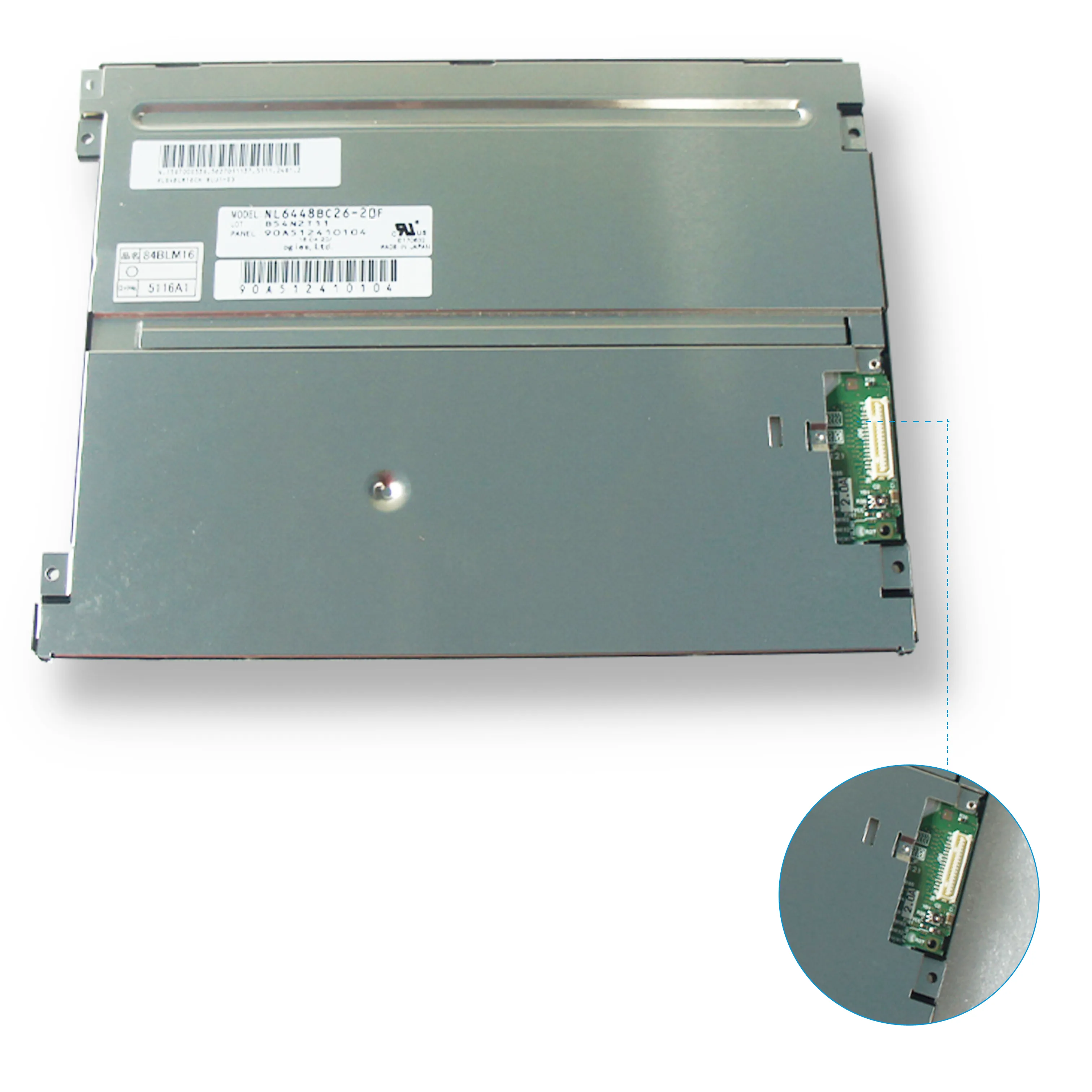

C090VAN01.0 AUO 9inch 800*480 lcd panel
In the intricate world of electronic components, where specifications dictate functionality, the C090VAN01.0 LCD panel emerges as a specialized solution with a clear purpose. This 9-inch display module, manufactured by AU Optronics (AUO), a global leader in display technology, is not a mainstream consumer screen but a critical building block for industrial, commercial, and embedded applications. With its 800 x 480 pixel resolution (commonly known as WVGA), this panel represents a specific balance between size, clarity, and cost-effectiveness for systems where reliability is paramount.
This article delves into a comprehensive technical and application-focused analysis of the AUO C090VAN01.0 LCD panel. We will move beyond basic datasheet parameters to explore its underlying technology, key performance characteristics, and the practical considerations for integration. Our goal is to provide engineers, product designers, and procurement specialists with the depth of understanding needed to evaluate whether this panel is the optimal display engine for their next-generation devices, from human-machine interfaces (HMIs) and point-of-sale systems to portable medical monitors and in-vehicle displays.
Decoding the Model: Anatomy of the C090VAN01.0
The product name C090VAN01.0 is a coded blueprint of the panel's identity. Breaking it down: C typically denotes AUO's product series for industrial/automotive applications. 090 clearly indicates the 9.0-inch diagonal screen size. V often references the display family or technology generation. AN is crucial, signifying an a-Si TFT-LCD (Amorphous Silicon Thin-Film Transistor Liquid Crystal Display) panel, a mature and cost-effective technology known for its stability. Finally, 01.0 represents the revision or version number of the design. This nomenclature underscores its position as a workhorse component, designed for longevity in product cycles, contrasting with the rapidly evolving models in the consumer smartphone market.
Core Technical Specifications and Performance Profile
At its heart, the C090VAN01.0 is defined by a set of fixed parameters that determine its visual output and electrical needs. The 800 x 480 WVGA resolution on a 9-inch diagonal yields a pixel density of approximately 111 PPI, suitable for clear information display without the need for extreme sharpness. It typically offers a standard RGB stripe arrangement and supports a wide viewing angle technology (like TN with wide-view film or possibly IPS/FFS, depending on the variant), which is essential for devices viewed from off-angles.
Key performance metrics include a standard brightness level (often around 300-400 nits), a moderate contrast ratio (e.g., 500:1), and a color gamut covering a significant portion of the NTSC standard. Its interface is almost universally an LVDS (Low-Voltage Differential Signaling) interface, ensuring robust, low-noise signal transmission over a cable to a separate controller board. Understanding these specs is vital for matching the panel to the lighting conditions and image quality requirements of the target environment.
The TFT-LCD Technology: Strengths and Application Fit
The use of a-Si TFT-LCD technology is a deliberate choice that shapes the panel's profile. This mature technology offers significant advantages for industrial applications: high reliability, excellent stability over a wide temperature range, and lower manufacturing costs compared to newer technologies like LTPS or OLED. While it may not offer the ultimate in contrast or the thinnest profile, it provides a predictable and durable performance.
This makes the C090VAN01.0 exceptionally well-suited for applications where the display must operate continuously for years in challenging conditions—factory floors with temperature fluctuations, automotive interiors subject to sunlight and heat, or medical devices requiring consistent color representation. The technology's limitations in response time are negligible for the static or moderately changing content typical in these use cases, making its strengths perfectly aligned with market needs.
Critical Integration Considerations for Engineers
Specifying the panel is only the first step; successful integration is paramount. Designers must account for several key factors. First is the power supply and backlight driving circuit. This panel requires a precise LED backlight driver, as the LEDs are typically driven in series, requiring a constant current source with high voltage. Second, the LVDS interface must be correctly matched with a compatible timing controller (TCON) on the system's mainboard, with careful attention to signal pair routing to avoid electromagnetic interference.
Third, mechanical integration is crucial. The panel's exact outline dimensions, bezel size, and mounting hole positions must be meticulously followed in the product housing design. Furthermore, considerations for thermal management—ensuring adequate heat dissipation from the backlight and driver ICs—are essential to maintain longevity and prevent premature brightness degradation.


Primary Target Applications and Market Relevance
The C090VAN01.0 finds its home in markets where ruggedness and longevity trump ultra-high resolution. Its primary applications are diverse:
Industrial Human-Machine Interfaces (HMIs): For control panels on machinery, PLC interfaces, and factory automation systems.
Point-of-Sale (POS) and Kiosk Systems: In retail and hospitality for order terminals, self-checkout, and information displays.
Transportation and Automotive: As displays for rear-seat entertainment, fleet management systems, or auxiliary screens in commercial vehicles.
Portable Medical and Test/Measurement Devices: Where consistent readability and reliability are non-negotiable.
In these segments, the panel's 9-inch size offers an optimal balance between information capacity and form factor, making it a perennial choice for B2B and industrial product designers.
Sourcing, Alternatives, and Lifecycle Management
As a specific part from a major manufacturer, the C090VAN01.0 is typically sourced through authorized distributors or specialized component suppliers. Engineers must be mindful of product lifecycle; while industrial panels have longer lifecycles than consumer ones, eventual end-of-life (EOL) notifications are inevitable. Proactive management involves securing final batch buys or identifying compatible alternative models.
Alternatives may come from within AUO's own lineup (like similar 8.9" or 10.1" panels with adjusted specs) or from other manufacturers like Innolux or BOE. Evaluation must go beyond matching size and resolution to include interface compatibility, mechanical footprint, brightness, and viewing angle performance. Building a relationship with a knowledgeable distributor is key to navigating these long-term supply chain considerations.
FAQs: C090VAN01.0 LCD Panel
Q10: Where can I find the detailed datasheet for this model?A10: Datasheets are available through AUO's official website or by contacting their authorized distributors and sales representatives.
Conclusion
The AUO C090VAN01.0 LCD panel exemplifies the engineered reliability required in the industrial and embedded display sector. Far more than just a collection of specs, it represents a deliberate design choice favoring proven a-Si TFT technology, robust LVDS interfacing, and a form factor tailored for clear, dependable information display. Its value lies not in cutting-edge specs, but in its predictable performance and suitability for mission-critical applications where failure is not an option.
For designers and engineers, success with this component hinges on a deep understanding of its integration requirements—from power and signal integrity to mechanical fit and thermal design. By appreciating its technical profile and aligning it with the demands of applications like industrial HMIs, transportation systems, and specialized equipment, one can leverage the C090VAN01.0 to build products that are not only functional but also durable and maintainable over the long term.