






- Industrie-LCD-Display
-
Industrial Products
- DC Servo Drive
- AC Servo Drive
- other
- Heidelberg
- FANUC
- IFM
- Meter
- CCD
- Membrane Keypad
- Film
- YOKOGAWA
- Card
- ABB
- MITSUBISHI
- FANUC
- KEYENCE
- BECKHOFF
- Honeywell
- HOLLYSYS
- FUJI servo drives
- HP
- solenoid valve
- thermostat
- Siemens adapter
- color oscilloscope
- Fujitsu connector
- CHELIC
- SMC
- CISCO
- INTEL
- Key board
- FAIRCHILD
- Der Aufsichtsrat
- Board
- Bearing
- other
- Control Panel
- Contactor
- Circuit
- Omron
- Relais.
- Der controller
- Optoelektronische schalter
- Optoelektronische sensoren
- Original
- Fan
- Motortreiber
- Endschalter
- Verstärker
- power supply
- LENZE
- Cable
- Encoder
- Sensor
- Transformator
- Fiber Optic Sensor
- Schutzrelais
- Temperaturregler
- Näherungsschalter
- Switch Sensor
- Siemens
- PCB
- HMI Touch-Glas
-
HMI-Vollautomat Ganze Einheit
- OMRON HMI Touch Panel
- Siemens HMI Touch Panel
- Mitsubishi HMI Touch Panel
- Allen-Bradley Automatisierung HMI Touch
- DELTA HMI Touch Panel
- EVIEW DELTA HMI Touch Panel
- KINCO DELTA HMI Touch Panel
- HITECH HMI Touch Panel
- WEINTECK HMI Touch Panel
- TECVIEW HMI Touch Panel
- WEINVIEW HMI Touch Panel
- PRO-FACE HMI Touch Panel
- SIMATIC HMI Touch Panel
- AMPIRE HMI Touch Panel
- HEIDELBERG HMI Touch Panel
- PANASONIC HMI Touch Panel
- PATLITE HMI Touch Panel
- KYOCERA HMI Touch Panel
- KEYENCE HMI Touch Panel
- WEINVIEW HMI Touch Panel
- HITECH HMI Touch Panel
- FUJI HMI Touch Panel
- HAKKO HMI Touch Panel
- SCHNEIDER HMI Touch Panel
- SAMKOON touch panel
- andere
- Module
- LCD Wechselrichter
- Membran Tastenfeld Schalter
- Winni Touch Screens
- Frequenzumrichter
- Servo Motor
- PLC


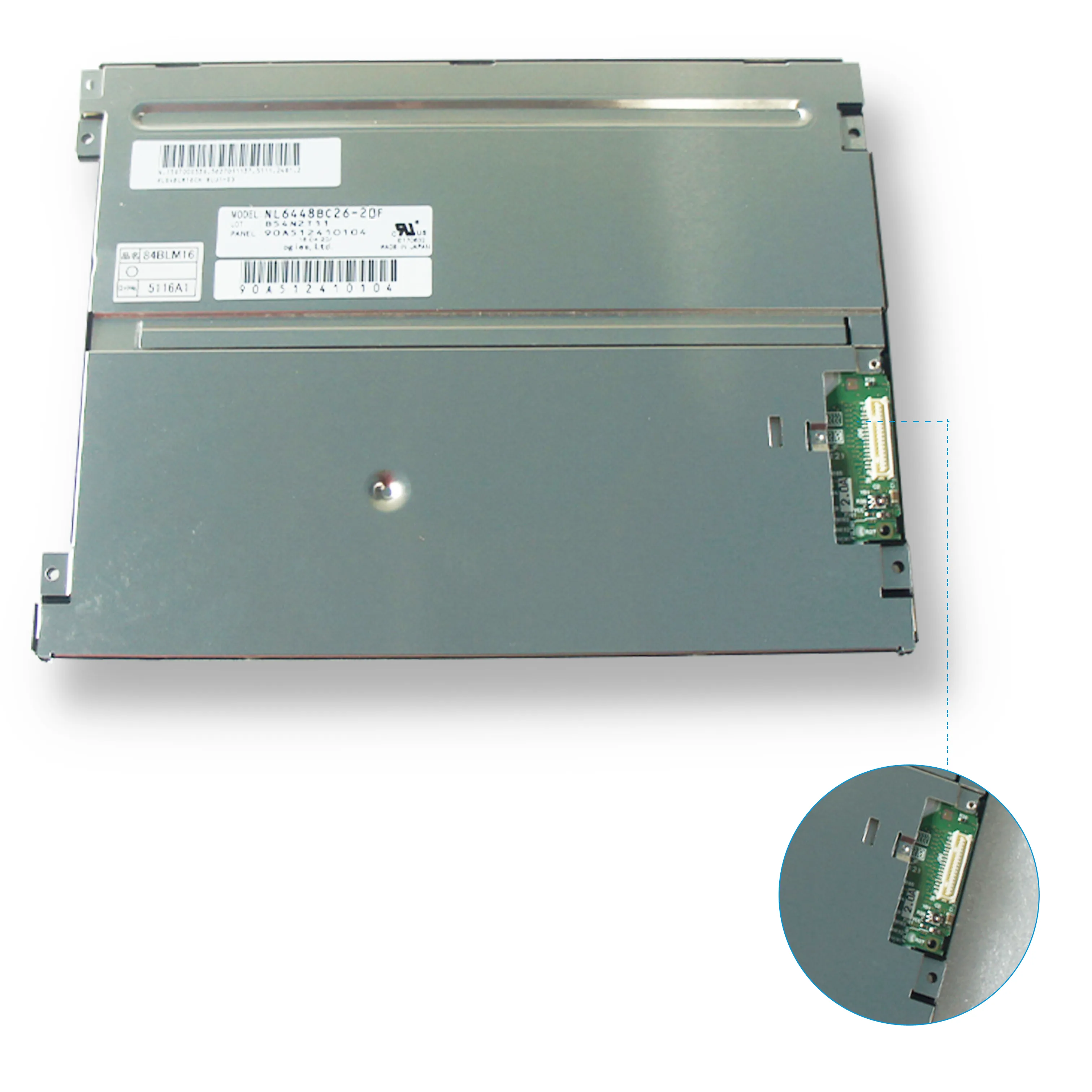

C084XAT01.0 AUO 8.4" TFT-LCD screen 1024*768 Display
In the intricate world of electronic components, where specifications dictate performance and compatibility determines success, the C084XAT01.0 stands out as a precise and pivotal solution. This 8.4-inch TFT-LCD module, manufactured by AUO (AU Optronics), is not merely a screen; it is a carefully engineered display interface designed for applications where clarity, reliability, and space efficiency are non-negotiable. With its XGA resolution of 1024 x 768 pixels, this panel represents a specific sweet spot in the industrial and embedded display market.
This article delves deep into the C084XAT01.0, moving beyond basic datasheet parameters to explore its technological significance, inherent strengths, and ideal application landscapes. We will dissect the advantages of its 4:3 aspect ratio in modern contexts, analyze its optical and electrical performance, and provide practical guidance for integration. Whether you are an engineer sourcing components for a medical device, a developer building a point-of-sale system, or a technical procurement specialist, understanding the nuances of this display module is crucial for making informed design decisions and ensuring long-term project viability.
Decoding the Specification: The 8.4-Inch XGA Advantage
The core identity of the C084XAT01.0 is defined by its 8.4-inch diagonal screen size and its XGA (1024 x 768) resolution. This combination is historically significant and remains practically relevant. The 4:3 aspect ratio, once the standard for computer monitors, offers a distinct vertical workspace advantage over wider 16:9 panels. This makes it exceptionally suited for displaying traditional software interfaces, diagnostic data in vertical lists, or complex control panels without excessive empty sidebars or cramped vertical compression.
With a pixel density of approximately 152 PPI, the display provides sharp text and detailed graphics, which is critical for reading numerical data, schematics, or textual user interfaces in industrial settings. The specification is a deliberate choice for environments where information density and legibility trump the cinematic viewing experience. It targets a niche where the display must serve as an efficient window into machine operations or data systems, not as an entertainment portal.
Optical Performance and Viewing Experience
Beyond size and resolution, the optical characteristics of the C084XAT01.0 are engineered for consistent performance. Typically featuring a standard brightness level (often around 300-400 nits) and a balanced contrast ratio, this module ensures viewability under controlled indoor lighting. Its performance is tuned for reliability rather than extreme high dynamic range (HDR).
A critical feature for industrial and medical applications is its viewing angle. Utilizing mainstream TFT technology, likely IPS (In-Plane Switching) or similar, it offers wide viewing angles, often around 80/80/80/80 degrees (Left/Right/Up/Down). This ensures that the displayed information remains consistent and color-stable even when viewed from off-axis positions, a necessity for equipment that may be monitored from different angles on a factory floor or in a surgical room. The color gamut typically covers a standard range, sufficient for accurate data representation and user interface graphics.
Interface and Signal Integration: The LVDS Standard
The C084XAT01.0 commonly utilizes an LVDS (Low-Voltage Differential Signaling) interface. This is a key technical aspect for system integrators. LVDS has long been the workhorse for internal display connections in embedded systems due to its robustness, noise immunity, and ability to transmit high-speed data over relatively long traces on a PCB with low electromagnetic interference.
This interface choice immediately defines the type of controller board or system-on-chip (SoC) required to drive the display. Engineers must ensure their host system either has a native LVDS transmitter or can accommodate an intermediate converter board (from HDMI, DP, or RGB to LVDS). Understanding the pinout, voltage requirements (typically 3.3V or 5V for logic and a separate backlight supply), and signal timing parameters from the detailed datasheet is an essential step in the integration process to avoid signal integrity issues or display failures.
The Backlight System: LED Longevity and Control
Illumination is provided by a long-life LED backlight system, which has superseded older CCFL technology. LEDs offer significant advantages: lower power consumption, instant-on capability, a wider operating temperature range, and no mercury content. The typical lifespan of the backlight, often rated for 30,000 to 50,000 hours, is a major factor in the module's suitability for 24/7 operational equipment.
Integration involves managing the backlight power, usually a separate higher-voltage circuit (e.g., 12V-24V). Many versions of such modules also feature backlight dimming control, either through PWM (Pulse-Width Modulation) or analog voltage adjustment. This allows the host system to dynamically adjust screen brightness based on ambient light conditions or to implement power-saving modes, further enhancing the system's adaptability and energy efficiency.
Mechanical Design and Environmental Considerations
The C084XAT01.0 is designed as a panel module, meaning it requires mechanical integration into a final product. Its dimensions, bezel size, and mounting hole positions are critical for enclosure design. The module is built to withstand the rigors of its target environments, often operating reliably within a temperature range of 0°C to 50°C or wider for extended grades.
For challenging environments, considerations such as optical bonding (where the touch panel or cover glass is laminated directly to the LCD to reduce internal reflection and improve durability) or the addition of a robust metal frame may be necessary. Resistance to vibration, dust, and moderate humidity are inherent expectations for industrial-grade modules, making proper mechanical securing and environmental sealing of the final assembly paramount for long-term reliability.


Primary Application Verticals and Use Cases
The specific attributes of the C084XAT01.0 funnel it towards well-defined application verticals. Its 4:3 XGA format is highly valued in industrial human-machine interfaces (HMIs) for manufacturing machinery, process control systems, and test/measurement equipment. In the medical field, it finds use in diagnostic devices, patient monitoring systems, and laboratory instruments where data clarity is critical.
Other key areas include point-of-sale (POS) terminals and kiosks, where the screen size is ample for transaction interfaces and the robust design supports constant public use. It is also employed in transportation (e.g., in-vehicle information systems for buses or trains) and specialized commercial equipment like printing presses or CNC controllers. In each case, the module serves as a dependable, high-legibility portal between the user and the machine's core functions.
FAQs: C084XAT01.0 Display Module
10. Where can I find the detailed datasheet?The official datasheet should be sourced from AUO or authorized distributors and contains critical electrical, mechanical, and optical specifications for integration.
Conclusion
The AUO C084XAT01.0 8.4-inch XGA TFT-LCD module exemplifies how a "legacy" format like 4:3 continues to deliver exceptional value in specialized modern applications. Its strength lies not in chasing the latest consumer trends, but in its focused optimization for clarity, reliability, and efficient data presentation. From the robustness of its LVDS interface to the longevity of its LED backlight and its suitability for harsh environments, every aspect is tailored for integration into professional and industrial systems.
For engineers and product developers, selecting this module is a strategic decision that prioritizes functional performance over novelty. It represents a proven, dependable component that solves specific human-machine interface challenges in medical, industrial, and commercial settings. In a landscape of rapidly changing display technology, the C084XAT01.0 remains a steadfast and high-performance solution where mission-critical readability and unwavering reliability are the ultimate benchmarks of success.