






- Industrie-LCD-Display
-
Industrial Products
- DC Servo Drive
- AC Servo Drive
- other
- Heidelberg
- FANUC
- IFM
- Meter
- CCD
- Membrane Keypad
- Film
- YOKOGAWA
- Card
- ABB
- MITSUBISHI
- FANUC
- KEYENCE
- BECKHOFF
- Honeywell
- HOLLYSYS
- FUJI servo drives
- HP
- solenoid valve
- thermostat
- Siemens adapter
- color oscilloscope
- Fujitsu connector
- CHELIC
- SMC
- CISCO
- INTEL
- Key board
- FAIRCHILD
- Der Aufsichtsrat
- Board
- Bearing
- other
- Control Panel
- Contactor
- Circuit
- Omron
- Relais.
- Der controller
- Optoelektronische schalter
- Optoelektronische sensoren
- Original
- Fan
- Motortreiber
- Endschalter
- Verstärker
- power supply
- LENZE
- Cable
- Encoder
- Sensor
- Transformator
- Fiber Optic Sensor
- Schutzrelais
- Temperaturregler
- Näherungsschalter
- Switch Sensor
- Siemens
- PCB
- HMI Touch-Glas
-
HMI-Vollautomat Ganze Einheit
- OMRON HMI Touch Panel
- Siemens HMI Touch Panel
- Mitsubishi HMI Touch Panel
- Allen-Bradley Automatisierung HMI Touch
- DELTA HMI Touch Panel
- EVIEW DELTA HMI Touch Panel
- KINCO DELTA HMI Touch Panel
- HITECH HMI Touch Panel
- WEINTECK HMI Touch Panel
- TECVIEW HMI Touch Panel
- WEINVIEW HMI Touch Panel
- PRO-FACE HMI Touch Panel
- SIMATIC HMI Touch Panel
- AMPIRE HMI Touch Panel
- HEIDELBERG HMI Touch Panel
- PANASONIC HMI Touch Panel
- PATLITE HMI Touch Panel
- KYOCERA HMI Touch Panel
- KEYENCE HMI Touch Panel
- WEINVIEW HMI Touch Panel
- HITECH HMI Touch Panel
- FUJI HMI Touch Panel
- HAKKO HMI Touch Panel
- SCHNEIDER HMI Touch Panel
- SAMKOON touch panel
- andere
- Module
- LCD Wechselrichter
- Membran Tastenfeld Schalter
- Winni Touch Screens
- Frequenzumrichter
- Servo Motor
- PLC


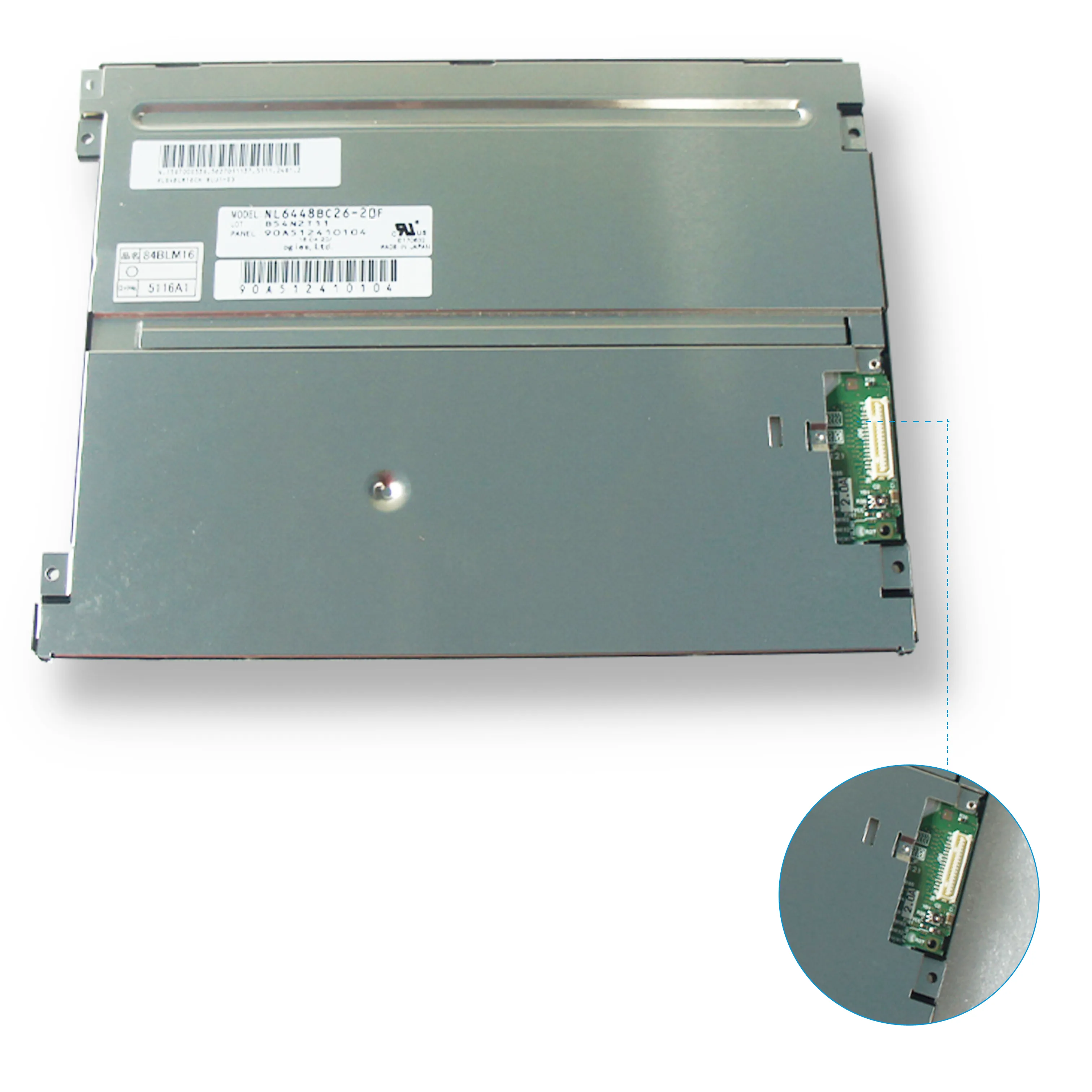


C080EAN04.3 AUO 8" 1280*720 TFT-LCD screen Display
In the intricate world of electronic components, where specifications dictate performance and form factor enables innovation, the C080EAN04.3 AUO 8" TFT-LCD screen emerges as a pivotal solution for modern display applications. This specific model, with its 1280 x 720 resolution packed into an 8-inch diagonal, represents a carefully calibrated balance between pixel density, physical size, and power efficiency. It is far more than just a part number; it is a key enabler for devices requiring crisp, clear visual feedback within a compact footprint.
This article delves into a comprehensive analysis of the C080EAN04.3 display module. We will move beyond basic datasheet parameters to explore its underlying technology, dissect its performance characteristics in real-world contexts, and examine the specific engineering challenges it is designed to overcome. From its optical performance to its interface and integration nuances, our goal is to provide designers, engineers, and procurement specialists with the depth of understanding necessary to evaluate its suitability for their next-generation projects, whether in industrial HMIs, portable medical devices, or advanced consumer electronics.
Decoding the Specification: A Deep Dive into HD in 8 Inches
The model number C080EAN04.3 itself is a descriptor. The "C080" indicates an 8.0-inch diagonal size, while "EAN" points to AUO's product series with specific performance traits. The "04.3" often references a revision or specific backlight configuration. The core specification—1280 x 720 resolution on an 8-inch panel—yields a pixel density of approximately 184 PPI (Pixels Per Inch). This is a critical figure. It situates the panel firmly in "HD" territory, offering significantly sharper imagery and finer text rendering than older, lower-resolution panels of the same size, while avoiding the excessive power draw and cost associated with pushing to Full HD (1920x1080) at this dimension.
This resolution-to-size ratio is a strategic sweet spot. It provides enough pixel real estate for complex graphical user interfaces, detailed data visualization, and acceptable video playback, without necessitating extreme miniaturization of components or imposing unsustainable processing loads on the system's controller. Understanding this balance is fundamental to appreciating the module's target application space.
The Heart of the Display: TFT-LCD Technology and Optical Performance
At its core, the C080EAN04.3 utilizes Thin-Film Transistor Liquid Crystal Display (TFT-LCD) technology. Each of the 921,600 pixels (1280x720) is controlled by its own dedicated transistor, allowing for precise and fast switching. This active-matrix design is what enables the sharp, stable images required for modern applications. The optical stack is then engineered to deliver key performance metrics.
Typical for this class, the module will offer a brightness specification in the range of 300-500 nits, ensuring readability in various ambient lighting conditions. The contrast ratio defines the difference between the brightest white and the darkest black, crucial for image depth. Viewing angles, often specified using the IPS (In-Plane Switching) or similar wide-view technology, are particularly important for an 8-inch screen used in shared or handheld environments, ensuring color and contrast remain consistent even when viewed from the side. These optical characteristics are not just numbers; they directly translate to user experience and product usability.
Interface and Integration: Connecting to the System
A display module does not operate in isolation. The C080EAN04.3 requires a specific interface to receive image data and control signals from the host processor. This model commonly utilizes an LVDS (Low-Voltage Differential Signaling) interface. LVDS is a mature, robust, and noise-resistant standard ideal for transmitting high-speed data over relatively short distances within a device chassis. It helps maintain signal integrity, which is paramount for a clean, flicker-free image.
Integration involves more than just the ribbon cable. Designers must consider the power supply requirements, the timing controller (T-Con) logic often embedded on the module's PCB, and the mechanical mounting. The interface choice dictates the need for a compatible controller chip on the mainboard, influencing overall system design, cost, and complexity. Successful integration is where the display's on-paper specifications become a reliable component in a functioning product.
Application Landscape: Where This Screen Excels
The specific attributes of the C080EAN04.3 define its ideal application niches. Its combination of compact size, HD clarity, and robust interface makes it a prime candidate for Industrial Human-Machine Interfaces (HMIs). On factory floors, it provides operators with a clear window into machine status and control parameters. In the medical field, it can be found in portable diagnostic devices or bedside monitors where reliability and readability are non-negotiable.
Beyond these, it serves transportation applications (in-vehicle infotainment or control systems), point-of-sale (POS) terminals, and high-end consumer appliances with smart interfaces. In each case, the 8-inch form factor offers sufficient space for interaction without dominating the device, and the HD resolution ensures modern, polished graphics. It is a bridge between basic indicator screens and high-end tablet-like displays.
Comparative Analysis: Positioning in the Market Ecosystem
To fully grasp the value of the C080EAN04.3, it must be viewed relative to alternatives. Compared to a 7-inch display with the same 1280x720 resolution, it offers a larger viewing area with a slightly lower PPI, which can be beneficial for reducing eye strain. Against an 8-inch display with only 800x600 resolution, it provides a dramatic leap in sharpness and information density.
The most significant comparison is with newer technologies like OLED. While OLED offers superior contrast, faster response, and potentially thinner form factors, the C080EAN04.3's TFT-LCD technology typically wins on cost-effectiveness, longevity (avoiding potential burn-in), and proven reliability in demanding environments. Its position is that of a high-performance, mature, and dependable workhorse solution.
Design Considerations and Sourcing Strategy
Implementing this module requires careful forethought. Designers must account for its physical dimensions, bezel size, and mounting hole patterns in their enclosures. Thermals are important; the backlight generates heat that must be managed to ensure long-term reliability. Electromagnetic compatibility (EMC) shielding may also be necessary.
From a sourcing perspective, the C080EAN04.3, as an AUO (AU Optronics) product, comes from a major panel manufacturer, implying certain supply chain stability and quality assurance. However, lead times, minimum order quantities, and the availability of compatible touch screen overlays (resistive or capacitive) are critical logistical factors. Establishing a relationship with a reputable distributor or considering potential second-source alternatives is a prudent part of the procurement strategy.

FAQs: C080EAN04.3 AUO 8" Display
10. Where can I find the official datasheet?The official technical datasheet should be sourced from AU Optronics (AUO) or an authorized distributor for accurate, detailed specifications.
Conclusion
The C080EAN04.3 AUO 8" TFT-LCD screen is a testament to optimized engineering, offering a compelling blend of HD resolution, manageable form factor, and proven reliability. It occupies a critical niche in the display ecosystem, providing the visual fidelity required for today's interactive devices without venturing into the cost and complexity of ultra-high-density panels.
For product developers, its value lies in this balance. It enables the creation of professional, user-friendly interfaces across a wide spectrum of industries, from the factory floor to the medical clinic. By understanding its technical underpinnings, integration requirements, and market position, engineers can make an informed decision, leveraging this component to build devices that are not only functional but also visually superior and robust in their intended environments.