






- Industrial LCD display
-
Industrial Products
- DC Servo Drive
- AC Servo Drive
- other
- Heidelberg
- FANUC
- IFM
- Meter
- CCD
- Membrane Keypad
- Film
- YOKOGAWA Module
- Card
- ABB
- MITSUBISHI
- FANUC
- KEYENCE
- BECKHOFF
- Honeywell
- HOLLYSYS
- FUJI servo drives
- HP
- solenoid valve
- thermostat
- Siemens adapter
- color oscilloscope
- Fujitsu connector
- CHELIC
- SMC
- CISCO Module
- INTEL
- Key board
- FAIRCHILD
- Motherboard
- Board
- Bearing
- other
- Control Panel
- Contactor
- Circuit
- OMRON
- Relay
- Controller
- Photoelectric Switch
- Photoelectric Sensor
- Original
- Fan
- Motor Driver
- Limit Switch
- Amplifier
- power supply
- LENZE
- Cable
- Encoder
- Sensor
- Transformer
- Fiber Optic Sensor
- Protection Relay
- Temperature Controller
- Proximity Switch
- Switch Sensor
- Siemens
- Industrial board
- HMI Touch Glass
-
HMI Full Machine Whole unit
- OMRON HMI Touch Panel
- Siemens HMI Touch Panel
- Mitsubishi HMI Touch Panel
- Allen-Bradley automation HMI Touch Panel
- DELTA HMI Touch Panel
- EVIEW DELTA HMI Touch Panel
- KINCO DELTA HMI Touch Panel
- HITECH HMI Touch Panel
- WEINTECK HMI Touch Panel
- TECVIEW HMI Touch Panel
- WEINVIEW HMI Touch Panel
- PRO-FACE HMI Touch Panel
- SIMATIC HMI Touch Panel
- AMPIRE HMI Touch Panel
- HEIDELBERG HMI Touch Panel
- PANASONIC HMI Touch Panel
- PATLITE HMI Touch Panel
- KYOCERA HMI Touch Panel
- KEYENCE HMI Touch Panel
- WEINVIEW HMI Touch Panel
- HITECH HMI Touch Panel
- FUJI HMI Touch Panel
- HAKKO HMI Touch Panel
- SCHNEIDER HMI Touch Panel
- SAMKOON touch panel
- other
- Module
- lcd inverter
- Membrane Keypad Switch
- Winni Touch Screens
- Frequency Inverter
- Servo Motor
- PLC


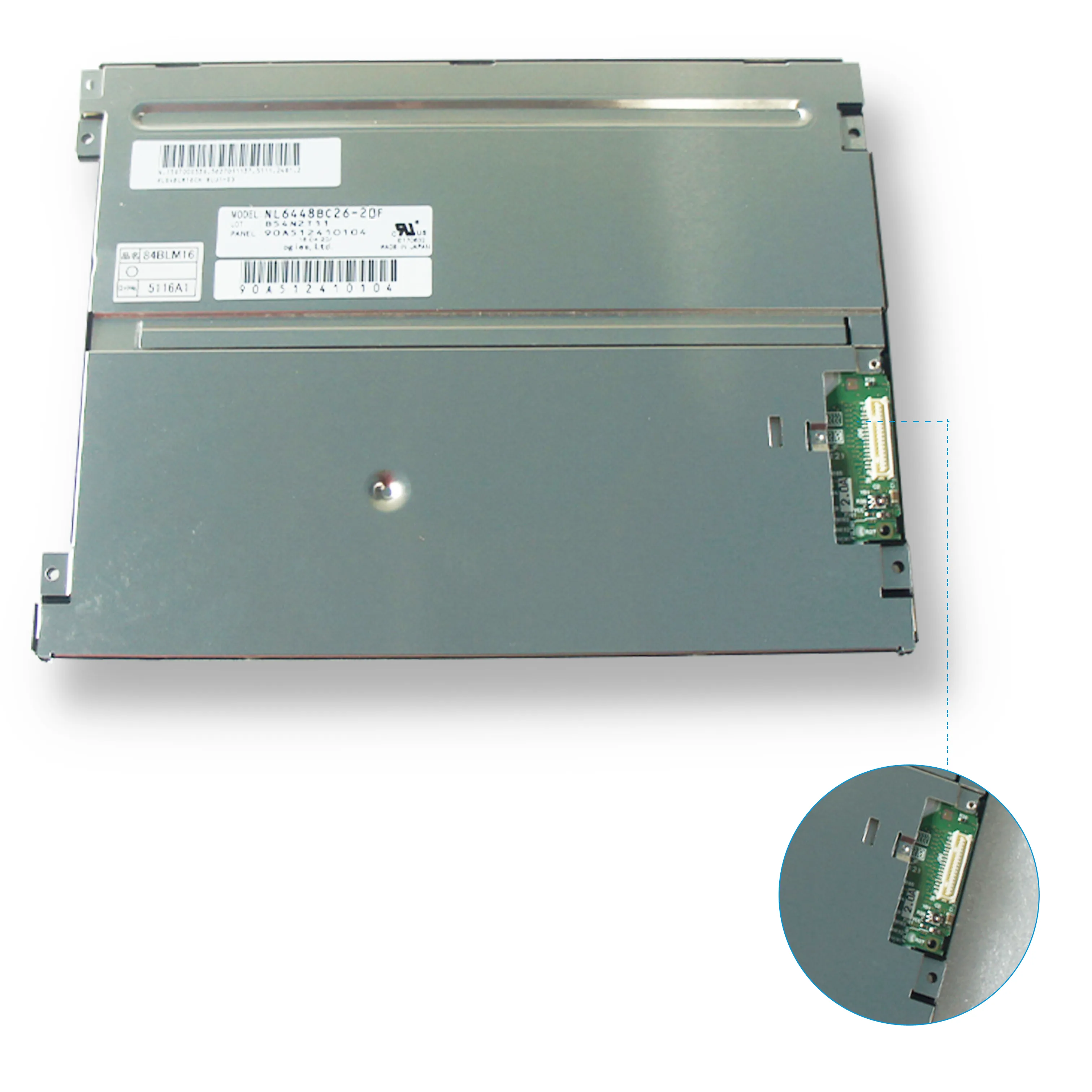

C070VAN02.1 AUO 7" TFT-LCD screen 800*480 Display
In the intricate world of electronic components, the display often serves as the critical interface between machine and user. Among the myriad of options available to engineers and product developers, the C070VAN02.1 from AUO (AU Optronics) stands out as a mature and highly reliable solution for applications demanding a compact yet capable visual panel. This 7-inch TFT-LCD module, with its 800 x 480 (WVGA) resolution, represents a cornerstone in industrial, automotive, and embedded system design.
This article delves deep into the technical DNA of the C070VAN02.1 screen, moving beyond basic specifications to explore its architectural advantages, performance nuances, and ideal application landscapes. We will dissect the engineering considerations behind its design, compare its positioning in the current market, and provide practical guidance for integration, ensuring you have a comprehensive understanding of where and how this display module can bring value to your next project.
Decoding the C070VAN02.1: Core Architecture and Specifications
The AUO C070VAN02.1 is a 7.0-inch diagonal a-Si TFT-LCD module built on a fundamental WVGA (800 horizontal by 480 vertical pixels) architecture. This resolution, in a 16:9 aspect ratio, offers a balanced pixel density for its size, ensuring legible text and clear graphics without excessive processing overhead. The module typically incorporates a standard RGB interface, making it compatible with a wide range of controllers and system-on-chip (SoC) solutions prevalent in embedded design.
At its heart lies the TFT active matrix, which provides superior image stability, contrast, and response time compared to passive displays. Key specifications include its brightness level (often around 300-400 nits), contrast ratio, and color depth (typically 262K colors). The physical and electrical interface, including pinout definitions and power requirements, is designed for direct integration into larger systems, emphasizing reliability and signal integrity in potentially noisy environments.
The Engineering Edge: Performance and Reliability Features
What distinguishes the C070VAN02.1 in practical use are the features engineered for resilience. Many variants are equipped with an LED backlight system, which offers longer lifespan, better power efficiency, and a more robust physical profile compared to older CCFL technology. The operating temperature range is a critical factor; industrial-grade versions are specified to function reliably across a wide span, from -20°C or lower to +70°C or higher, ensuring performance in non-climate-controlled settings.
The module's construction often includes strengthened glass and stable polarizers to resist humidity, vibration, and mild physical stress. Furthermore, its optical performance is tuned for consistent viewing angles (both horizontal and vertical), which is vital for applications where the screen may not be viewed head-on. This combination of durability and stable performance under varying conditions forms the bedrock of its reputation in demanding fields.
Ideal Application Landscapes: Where This Screen Excels
The C070VAN02.1 finds its true calling in environments where reliability trumps cutting-edge consumer specs. Its primary domain is industrial human-machine interfaces (HMIs), controlling machinery, factory automation systems, and test equipment. The 7-inch size is a sweet spot—large enough for interactive control elements yet compact enough for panel-mounted installations.
Another significant application is in aftermarket automotive and transportation systems, such as rear-seat entertainment, navigation units for commercial vehicles, or fleet management displays. Its robustness against temperature swings and vibration is key here. Additionally, it serves well in medical monitoring devices, point-of-sale terminals, and ruggedized portable instruments, where clarity and long-term operational stability are non-negotiable.
Integration Considerations and Design Challenges
Successfully integrating the C070VAN02.1 requires attention to several technical details. Power supply design must be clean and stable to avoid display artifacts. Designers must correctly handle the LCD bias voltages (VCOM, AVDD, etc.) and implement the power sequencing recommended by AUO to prevent damage. The RGB parallel interface demands careful PCB layout for data and clock signals to maintain signal integrity and prevent electromagnetic interference (EMI).
Mechanically, engineers must account for the bezel size, mounting holes, and the connector location. Thermal management is also crucial, especially in sealed enclosures or high-ambient-temperature applications, as excessive heat can degrade the LCD fluid and LED backlight lifespan. Proper ESD protection on all external-facing connections is a must for field durability.


Comparative Market Position: Legacy vs. Modern Alternatives
In today's market, the C070VAN02.1 is often categorized as a mature or established product. Its primary competition comes from newer 7-inch panels with higher resolutions like 1024x600, or from lower-cost alternatives that may compromise on temperature range or build quality. Its strength lies not in having the highest pixel count, but in its proven track record, widespread availability of technical data, and known reliability.
For new designs, the choice between this module and a newer alternative boils down to a trade-off: the C070VAN02.1 offers lower technical risk, known driver compatibility, and potentially lower cost due to its longevity in production. Newer panels might offer slightly better aesthetics or power consumption but could involve more development time and unknown long-term supply chain factors.
Sourcing, Longevity, and Future-Proofing Your Project
As a component that has been in production for years, sourcing the C070VAN02.1 requires diligence. While available through major distributors, it's essential to verify authenticity and version compatibility. Engaging with reputable suppliers or directly with AUO's channel is advised. For long-term projects, understanding the product's End-of-Life (EOL) roadmap is critical.
Future-proofing a design using this module involves several strategies: securing a lifetime buy of critical components, designing the PCB to be pin-compatible with alternative 7-inch WVGA modules (considering potential differences in pinout or thickness), and documenting all driver parameters thoroughly. Its standardized interface makes it a relatively safe choice from an obsolescence management perspective, as form-fit-function replacements are likely to be available from AUO or other manufacturers for the foreseeable future.
FAQs: C070VAN02.1 AUO 7" TFT-LCD Screen
10. Is this module still recommended for new designs?Yes, particularly for industrial, automotive, and embedded applications where proven reliability, wide compatibility, and a stable supply chain are more critical than having the absolute latest resolution.
Conclusion
The AUO C070VAN02.1 7-inch TFT-LCD module exemplifies how a well-executed, balanced design achieves enduring relevance in the fast-paced electronics industry. Its value proposition is clear: it delivers robust and reliable visual performance for specialized, demanding applications rather than competing in the consumer spec race. For engineers and developers, it represents a low-risk, high-confidence component choice that simplifies the integration process.
In summary, when your project demands a compact display that must perform consistently under challenging environmental conditions, the C070VAN02.1 remains a compelling and intelligent selection. Its legacy is built not on being the newest, but on being a dependable workhorse that continues to enable innovation across industrial, automotive, and medical technologies.