






- Industrie-LCD-Display
-
Industrial Products
- DC Servo Drive
- AC Servo Drive
- other
- Heidelberg
- FANUC
- IFM
- Meter
- CCD
- Membrane Keypad
- Film
- YOKOGAWA
- Card
- ABB
- MITSUBISHI
- FANUC
- KEYENCE
- BECKHOFF
- Honeywell
- HOLLYSYS
- FUJI servo drives
- HP
- solenoid valve
- thermostat
- Siemens adapter
- color oscilloscope
- Fujitsu connector
- CHELIC
- SMC
- CISCO
- INTEL
- Key board
- FAIRCHILD
- Der Aufsichtsrat
- Board
- Bearing
- other
- Control Panel
- Contactor
- Circuit
- Omron
- Relais.
- Der controller
- Optoelektronische schalter
- Optoelektronische sensoren
- Original
- Fan
- Motortreiber
- Endschalter
- Verstärker
- power supply
- LENZE
- Cable
- Encoder
- Sensor
- Transformator
- Fiber Optic Sensor
- Schutzrelais
- Temperaturregler
- Näherungsschalter
- Switch Sensor
- Siemens
- PCB
- HMI Touch-Glas
-
HMI-Vollautomat Ganze Einheit
- OMRON HMI Touch Panel
- Siemens HMI Touch Panel
- Mitsubishi HMI Touch Panel
- Allen-Bradley Automatisierung HMI Touch
- DELTA HMI Touch Panel
- EVIEW DELTA HMI Touch Panel
- KINCO DELTA HMI Touch Panel
- HITECH HMI Touch Panel
- WEINTECK HMI Touch Panel
- TECVIEW HMI Touch Panel
- WEINVIEW HMI Touch Panel
- PRO-FACE HMI Touch Panel
- SIMATIC HMI Touch Panel
- AMPIRE HMI Touch Panel
- HEIDELBERG HMI Touch Panel
- PANASONIC HMI Touch Panel
- PATLITE HMI Touch Panel
- KYOCERA HMI Touch Panel
- KEYENCE HMI Touch Panel
- WEINVIEW HMI Touch Panel
- HITECH HMI Touch Panel
- FUJI HMI Touch Panel
- HAKKO HMI Touch Panel
- SCHNEIDER HMI Touch Panel
- SAMKOON touch panel
- andere
- Module
- LCD Wechselrichter
- Membran Tastenfeld Schalter
- Winni Touch Screens
- Frequenzumrichter
- Servo Motor
- PLC


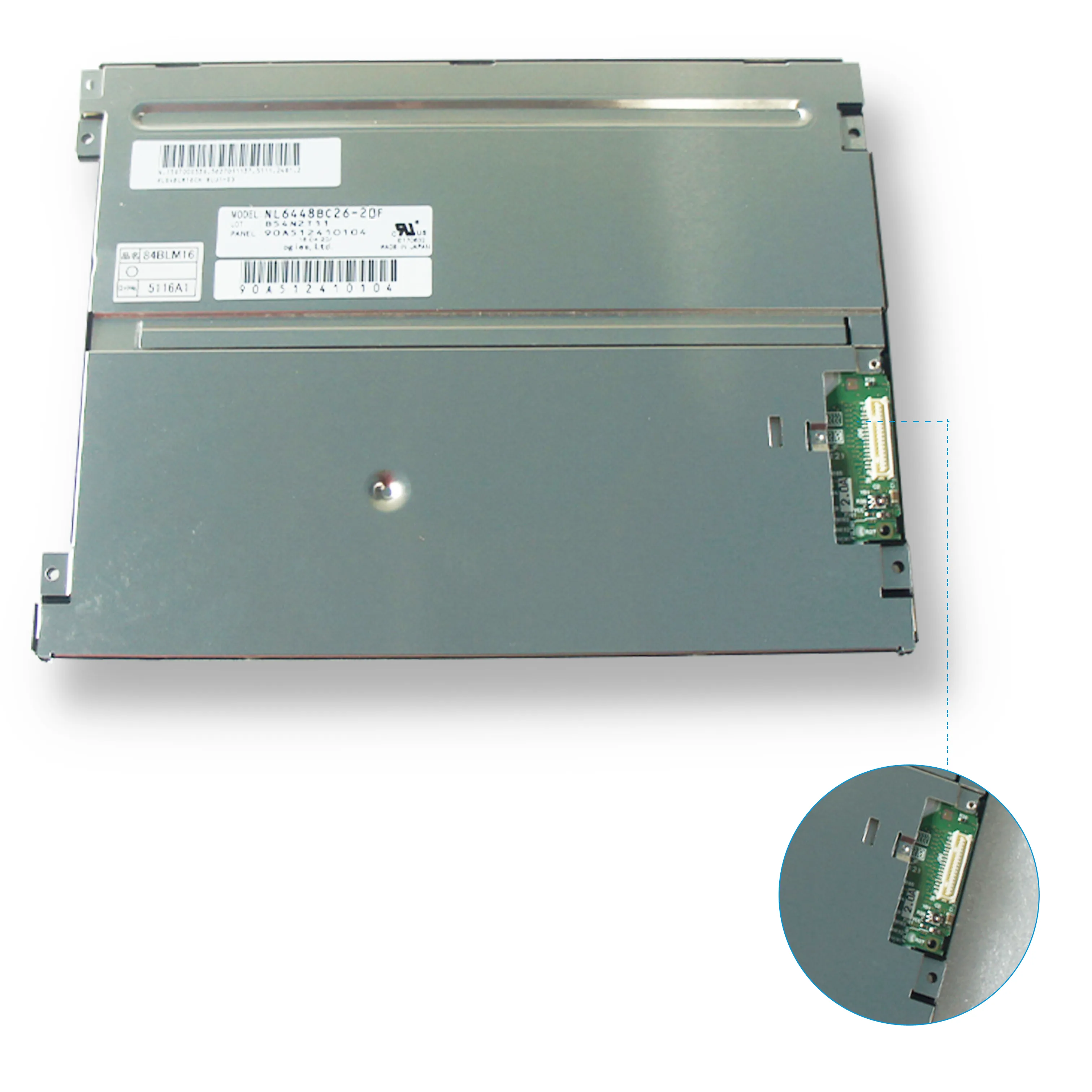

AUO 9" 1280*720 TFT-LCD screen Display C090EAN04.1
In the intricate world of electronic components, the display panel often serves as the critical interface between technology and user. Among the myriad of options available to designers, specific industrial-grade panels stand out for their reliability and tailored performance. This article delves into a detailed examination of one such component: the AUO C090EAN04.1, a 9-inch TFT-LCD display module. We will move beyond basic datasheet specifications to explore its architectural nuances, technological underpinnings, and the tangible impact of its features in real-world applications.
Understanding this display is not merely an exercise in cataloging its 1280x720 resolution or its dimensions. It is about comprehending how its specific blend of optical performance, rugged construction, and signal interface choices makes it a preferred solution in demanding environments. From industrial control systems to specialized medical and transportation equipment, the C090EAN04.1 represents a convergence of engineering decisions aimed at stability and clarity. Our analysis will provide system integrators, product developers, and procurement specialists with the insights needed to evaluate its suitability for their next-generation projects, ensuring that the chosen display becomes a seamless and robust extension of their core technology.
Decoding the Core Specifications: A 9-Inch Powerhouse
The AUO C090EAN04.1 is fundamentally defined by its key parameters, which establish its position in the market. Its 9-inch diagonal screen size, measured actively, offers a substantial viewing area while maintaining a compact form factor, crucial for space-constrained embedded systems. The 1280 x 720 pixel resolution, commonly known as HD or 720p, delivers a sharp pixel density of approximately 164 PPI. This ensures that text, graphics, and user interface elements are rendered with crisp clarity, reducing eye strain during prolonged use.
Furthermore, the panel employs an RGB vertical stripe sub-pixel arrangement and typically utilizes a-Si (amorphous Silicon) TFT technology, a mature and cost-effective process known for its stability. The aspect ratio of 16:9 aligns with modern widescreen standards, making it suitable for displaying video content or data-rich dashboards without black bars. These core specs form the foundation upon which its more advanced features—such as high brightness, wide temperature tolerance, and robust signal compatibility—are built, setting the stage for deployment in non-consumer environments.


Optical Performance and Readability Under Duress
Where the C090EAN04.1 truly distinguishes itself is in its optical engineering, tailored for challenging viewing conditions. A high brightness specification, often reaching 1000 nits or more, is a standout feature. This intense luminance enables perfect readability in direct sunlight or under bright ambient lighting, a non-negotiable requirement for outdoor kiosks, agricultural machinery, or aviation displays.
Complementing this is a high contrast ratio, which enhances the depth of image by making dark areas darker and bright areas brighter, improving overall legibility. The panel also features wide viewing angles (typically 80/80/80/80 in Left/Right/Up/Down directions), ensuring consistent color and contrast even when viewed from off-axis positions. This is vital in multi-operator environments or when a display is mounted at an angle. These optical characteristics are not accidental; they are the result of deliberate design choices in backlighting and liquid crystal cell construction to combat environmental interference.
Ruggedized Design for Industrial Longevity
Unlike consumer-grade screens, the C090EAN04.1 is engineered for endurance. Its construction accounts for the harsh realities of industrial, medical, and transportation settings. A key aspect is its extended operating temperature range, often spanning from -30°C to +85°C. This ensures reliable boot-up and stable performance in freezing cold warehouses or the heated enclosures of factory floor equipment.
The module is designed to resist vibration and shock, with components securely fastened and the panel assembly able to withstand significant G-forces. This mechanical robustness prevents internal connections from loosening and protects the delicate TFT array. Additionally, the surface often features a hard-coated or anti-glare treatment to resist scratches and mitigate reflections. This focus on ruggedization translates directly into reduced downtime, lower total cost of ownership, and compliance with stricter industry reliability standards.
Interface and Signal Compatibility: The Connection Backbone
A display module is only as good as its ability to reliably receive and process signals. The C090EAN04.1 commonly features an LVDS (Low-Voltage Differential Signaling) interface. LVDS remains a prevalent standard in industrial applications due to its robustness against electromagnetic interference (EMI), which is rampant in environments with motors, power supplies, and wireless equipment.
The interface supports a specific color depth and clock frequency to handle the 1280x720 resolution at a target refresh rate (e.g., 60Hz). This compatibility dictates the type of controller or system-on-chip (SoC) needed to drive the panel. Understanding the pinout, power sequence requirements, and signal timing is crucial for hardware engineers during the system integration phase. A mismatch here can lead to image artifacts, flickering, or complete failure to display, making the interface a critical, though often overlooked, component of the selection criteria.
Backlighting Technology and Power Considerations
The light source behind the LCD layer is a major determinant of performance, lifespan, and power efficiency. The C090EAN04.1 typically employs an LED backlight system, arranged in an edge-lit or direct-lit configuration. LED backlights offer significant advantages over older CCFL technology, including longer life (often 50,000 hours or more), instant-on capability, a wider dimming range, and no mercury content.
Power management is a critical design consideration. The high-brightness LED array requires a stable and efficient driver circuit. Designers must account for the inrush current at power-on and provide appropriate heat dissipation to prevent thermal throttling or premature aging. The ability to digitally dim the backlight via PWM (Pulse-Width Modulation) signals allows the system to dynamically adjust brightness based on ambient light sensors, conserving energy and enhancing user comfort in low-light conditions.
Application Scenarios: Where This Display Excels
The synthesis of its features makes the AUO C090EAN04.1 ideal for a spectrum of specialized applications. In industrial human-machine interfaces (HMIs) and programmable logic controller (PLC) panels, its readability and ruggedness ensure continuous operation on the factory floor. The medical field utilizes it in diagnostic equipment and patient monitoring systems, where clarity and reliability are paramount.
Transportation and logistics represent another key domain, featuring in fleet management terminals, railway control systems, and aviation displays, where sunlight readability and temperature tolerance are tested daily. Additionally, it finds use in test and measurement instruments, gaming machines, and specialized point-of-sale systems. In each case, the panel is chosen not for its novelty, but for its proven ability to perform as a dependable visual conduit in systems where failure is not an option.
Frequently Asked Questions (FAQs)
Q10: Where can I find detailed technical documentation?A10: Full datasheets, application notes, and interface pinouts are available through authorized AUO distributors or on AUO's official industrial display portals.
Conclusion
The AUO C090EAN04.1 9-inch TFT-LCD is far more than a simple screen; it is a meticulously engineered component designed to bridge the gap between digital information and human interaction in the most demanding physical environments. Its value proposition lies not in any single feature, but in the holistic integration of high-definition clarity, exceptional optical performance under bright light, rugged construction for industrial longevity, and a reliable signal interface.
For engineers and product managers, selecting this display represents a strategic decision to prioritize reliability and total cost of ownership over initial component cost. It is a solution built for systems that cannot afford the luxury of failure. As interfaces continue to evolve, the fundamental requirements of readability, durability, and stability remain constant, and it is in fulfilling these enduring needs that the AUO C090EAN04.1 demonstrates its true worth as a cornerstone of robust embedded visual systems.