






- Industrial LCD display
-
Industrial Products
- DC Servo Drive
- AC Servo Drive
- other
- Heidelberg
- FANUC
- IFM
- Meter
- CCD
- Membrane Keypad
- Film
- YOKOGAWA Module
- Card
- ABB
- MITSUBISHI
- FANUC
- KEYENCE
- BECKHOFF
- Honeywell
- HOLLYSYS
- FUJI servo drives
- HP
- solenoid valve
- thermostat
- Siemens adapter
- color oscilloscope
- Fujitsu connector
- CHELIC
- SMC
- CISCO Module
- INTEL
- Key board
- FAIRCHILD
- Motherboard
- Board
- Bearing
- other
- Control Panel
- Contactor
- Circuit
- OMRON
- Relay
- Controller
- Photoelectric Switch
- Photoelectric Sensor
- Original
- Fan
- Motor Driver
- Limit Switch
- Amplifier
- power supply
- LENZE
- Cable
- Encoder
- Sensor
- Transformer
- Fiber Optic Sensor
- Protection Relay
- Temperature Controller
- Proximity Switch
- Switch Sensor
- Siemens
- Industrial board
- HMI Touch Glass
-
HMI Full Machine Whole unit
- OMRON HMI Touch Panel
- Siemens HMI Touch Panel
- Mitsubishi HMI Touch Panel
- Allen-Bradley automation HMI Touch Panel
- DELTA HMI Touch Panel
- EVIEW DELTA HMI Touch Panel
- KINCO DELTA HMI Touch Panel
- HITECH HMI Touch Panel
- WEINTECK HMI Touch Panel
- TECVIEW HMI Touch Panel
- WEINVIEW HMI Touch Panel
- PRO-FACE HMI Touch Panel
- SIMATIC HMI Touch Panel
- AMPIRE HMI Touch Panel
- HEIDELBERG HMI Touch Panel
- PANASONIC HMI Touch Panel
- PATLITE HMI Touch Panel
- KYOCERA HMI Touch Panel
- KEYENCE HMI Touch Panel
- WEINVIEW HMI Touch Panel
- HITECH HMI Touch Panel
- FUJI HMI Touch Panel
- HAKKO HMI Touch Panel
- SCHNEIDER HMI Touch Panel
- SAMKOON touch panel
- other
- Module
- lcd inverter
- Membrane Keypad Switch
- Winni Touch Screens
- Frequency Inverter
- Servo Motor
- PLC


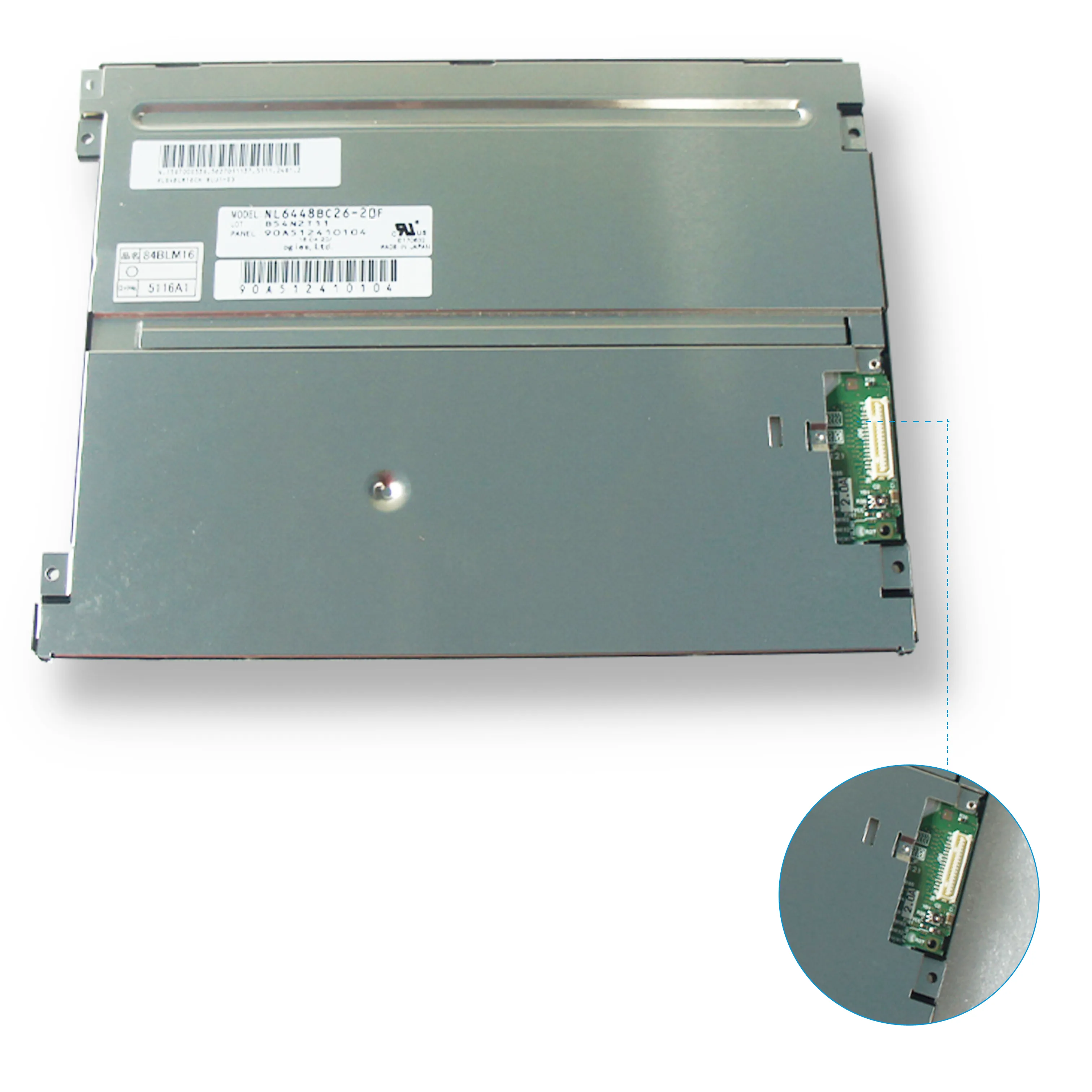

AC121SA02 12.1"800*600 LCD PANEL FOR MITSUBISHI
In the intricate world of industrial and commercial display solutions, specific components become the unsung heroes of reliability and performance. Among these, the 12.1" 800x600 AC121SA02 LCD Panel stands out as a critical display module, originally engineered for Mitsubishi's robust line of Human Machine Interfaces (HMIs) and industrial computers. This panel is far more than a simple screen; it represents a convergence of durability, precise engineering, and legacy compatibility that continues to support vital operations in manufacturing floors, process control rooms, and automated systems worldwide.
As legacy Mitsubishi systems age, the need for authentic, high-quality replacement parts becomes paramount to avoid costly system-wide upgrades or failures. This article delves deep into the technical specifications, application ecosystems, and enduring relevance of the AC121SA02 panel. We will explore why this specific model remains in demand, how to identify compatible systems and genuine parts, and the critical considerations for sourcing and integrating this component to ensure seamless operational continuity and optimal visual performance in demanding environments.
Decoding the AC121SA02: Technical Specifications and Legacy Significance
The Mitsubishi AC121SA02 is a 12.1-inch diagonal LCD panel with a native resolution of 800 x 600 pixels (SVGA). This 4:3 aspect ratio was the standard for industrial monitors of its era, perfectly suited for displaying traditional control software interfaces without wasteful black bars. The panel typically utilizes a CCFL (Cold Cathode Fluorescent Lamp) backlighting system, offering bright, even illumination capable of performing under various ambient lighting conditions.
Its significance lies in its integration as the core display component within Mitsubishi's GOT series HMIs and other industrial PCs. These systems were designed for longevity, often operating continuously for years. The panel itself was built to withstand the vibrations, temperature fluctuations, and extended runtimes typical of factory environments. Understanding these specs is the first step in recognizing why a direct, quality replacement is crucial—a mismatched panel can lead to interface distortion, connection failures, or physical incompatibility with the original chassis.
Primary Applications: Where This Mitsubishi Panel Excels
The AC121SA02 panel found its home in some of the most critical control points within industrial automation. Its primary application is within Mitsubishi Electric's GOT-900 and GOT-1000 series graphic operation terminals. These HMIs serve as the communication bridge between factory personnel and complex programmable logic controllers (PLCs), providing visualization, control, and monitoring of machinery and processes.
Beyond standalone HMIs, this panel was also used in various industrial computers and dedicated display units across sectors like automotive manufacturing, food and beverage processing, packaging, and semiconductor production. In these settings, the display is not for casual use; it is an integral part of the control loop. A failure can mean production stoppages, leading to significant financial loss. Therefore, the reliability of the display module directly impacts overall operational efficiency and cost.
The Critical Importance of Authentic and Compatible Replacements
Sourcing a replacement for the AC121SA02 is not a task for generic LCD panels. The compatibility extends beyond just physical size and resolution. It encompasses the electrical interface (typically LVDS), the pin configuration, the placement of mounting holes, the voltage requirements for the backlight inverter, and the precise dimensions of the bezel.
Installing an incompatible or low-quality panel can have severe consequences. Issues range from simple failure to power on, to intermittent flickering, distorted images, or damage to the host system's video controller. An authentic or properly engineered compatible panel ensures signal integrity, maintains the original brightness and viewing angles, and guarantees a physical fit. This preserves the investment in the larger Mitsubishi system and avoids the domino effect of a display failure.


Navigating the Sourcing Landscape: New Old Stock vs. Refurbished
For a discontinued industrial component like the AC121SA02, buyers typically encounter two main options: New Old Stock (NOS) and professionally refurbished/remanufactured panels. New Old Stock refers to brand-new, unused panels that have been in storage since manufacture. They offer the closest experience to an original part but may carry a premium price and can suffer from age-related issues like capacitor degradation if stored improperly.
Professionally refurbished panels are often a more sustainable and reliable choice. A quality refurbishment process involves: fully testing the LCD glass for defects, replacing aging CCFL lamps with new or LED-retrofitted backlights, recapping the control board to prevent power issues, and thoroughly cleaning the unit. This process effectively resets the panel's lifespan, often at a lower cost than NOS, while ensuring performance meets or exceeds original specifications.
The LED Backlight Retrofit Consideration
A significant trend in maintaining legacy displays like the AC121SA02 is the retrofitting of LED backlights to replace the original CCFL system. CCFL tubes dim over time and are susceptible to failure from vibration and cold starts. An LED retrofit kit replaces these tubes with energy-efficient, long-lasting LED light bars.
The advantages are substantial: LEDs generate less heat, consume less power, offer instant-on capability, and provide a more consistent brightness over a much longer operational life. For an industrial panel, this translates to reduced downtime for backlight replacements and improved reliability. However, this procedure requires technical skill to ensure proper light diffusion and electrical compatibility, and is best performed by specialized service providers.
Integration and Installation Best Practices
Successfully replacing the AC121SA02 panel requires careful procedure. First, ensure electrostatic discharge (ESD) protection throughout the process to prevent damaging sensitive electronics. Document the disassembly of the old unit, noting cable orientations and screw locations. Before installing the new panel, verify the interface connector matches perfectly.
After physical installation, power on the system in a controlled manner. Check for even backlight illumination, the absence of dead pixels, and correct color representation. It is advisable to run the display for an extended burn-in period (e.g., 24-48 hours) to identify any infant mortality failures before returning the HMI to critical service. Proper installation secures the investment and guarantees the continuity of the control system.
FAQs: Mitsubishi AC121SA02 LCD Panel
10. Where is the best place to source a replacement AC121SA02?Specialized industrial electronic component suppliers or professional refurbishment services that guarantee compatibility and quality.
Conclusion
The 12.1" 800x600 AC121SA02 LCD panel exemplifies the critical role of specialized components in sustaining industrial infrastructure. Its continued relevance underscores a fundamental truth in manufacturing and process control: the longevity of a system often depends on the availability of high-fidelity replacement parts. Choosing between NOS, refurbished, or LED-upgraded versions is not merely a procurement decision but a strategic one impacting operational uptime, maintenance costs, and system integrity.