






- Industrie-LCD-Display
-
Industrial Products
- DC Servo Drive
- AC Servo Drive
- other
- Heidelberg
- FANUC
- IFM
- Meter
- CCD
- Membrane Keypad
- Film
- YOKOGAWA
- Card
- ABB
- MITSUBISHI
- FANUC
- KEYENCE
- BECKHOFF
- Honeywell
- HOLLYSYS
- FUJI servo drives
- HP
- solenoid valve
- thermostat
- Siemens adapter
- color oscilloscope
- Fujitsu connector
- CHELIC
- SMC
- CISCO
- INTEL
- Key board
- FAIRCHILD
- Der Aufsichtsrat
- Board
- Bearing
- other
- Control Panel
- Contactor
- Circuit
- Omron
- Relais.
- Der controller
- Optoelektronische schalter
- Optoelektronische sensoren
- Original
- Fan
- Motortreiber
- Endschalter
- Verstärker
- power supply
- LENZE
- Cable
- Encoder
- Sensor
- Transformator
- Fiber Optic Sensor
- Schutzrelais
- Temperaturregler
- Näherungsschalter
- Switch Sensor
- Siemens
- PCB
- HMI Touch-Glas
-
HMI-Vollautomat Ganze Einheit
- OMRON HMI Touch Panel
- Siemens HMI Touch Panel
- Mitsubishi HMI Touch Panel
- Allen-Bradley Automatisierung HMI Touch
- DELTA HMI Touch Panel
- EVIEW DELTA HMI Touch Panel
- KINCO DELTA HMI Touch Panel
- HITECH HMI Touch Panel
- WEINTECK HMI Touch Panel
- TECVIEW HMI Touch Panel
- WEINVIEW HMI Touch Panel
- PRO-FACE HMI Touch Panel
- SIMATIC HMI Touch Panel
- AMPIRE HMI Touch Panel
- HEIDELBERG HMI Touch Panel
- PANASONIC HMI Touch Panel
- PATLITE HMI Touch Panel
- KYOCERA HMI Touch Panel
- KEYENCE HMI Touch Panel
- WEINVIEW HMI Touch Panel
- HITECH HMI Touch Panel
- FUJI HMI Touch Panel
- HAKKO HMI Touch Panel
- SCHNEIDER HMI Touch Panel
- SAMKOON touch panel
- andere
- Module
- LCD Wechselrichter
- Membran Tastenfeld Schalter
- Winni Touch Screens
- Frequenzumrichter
- Servo Motor
- PLC


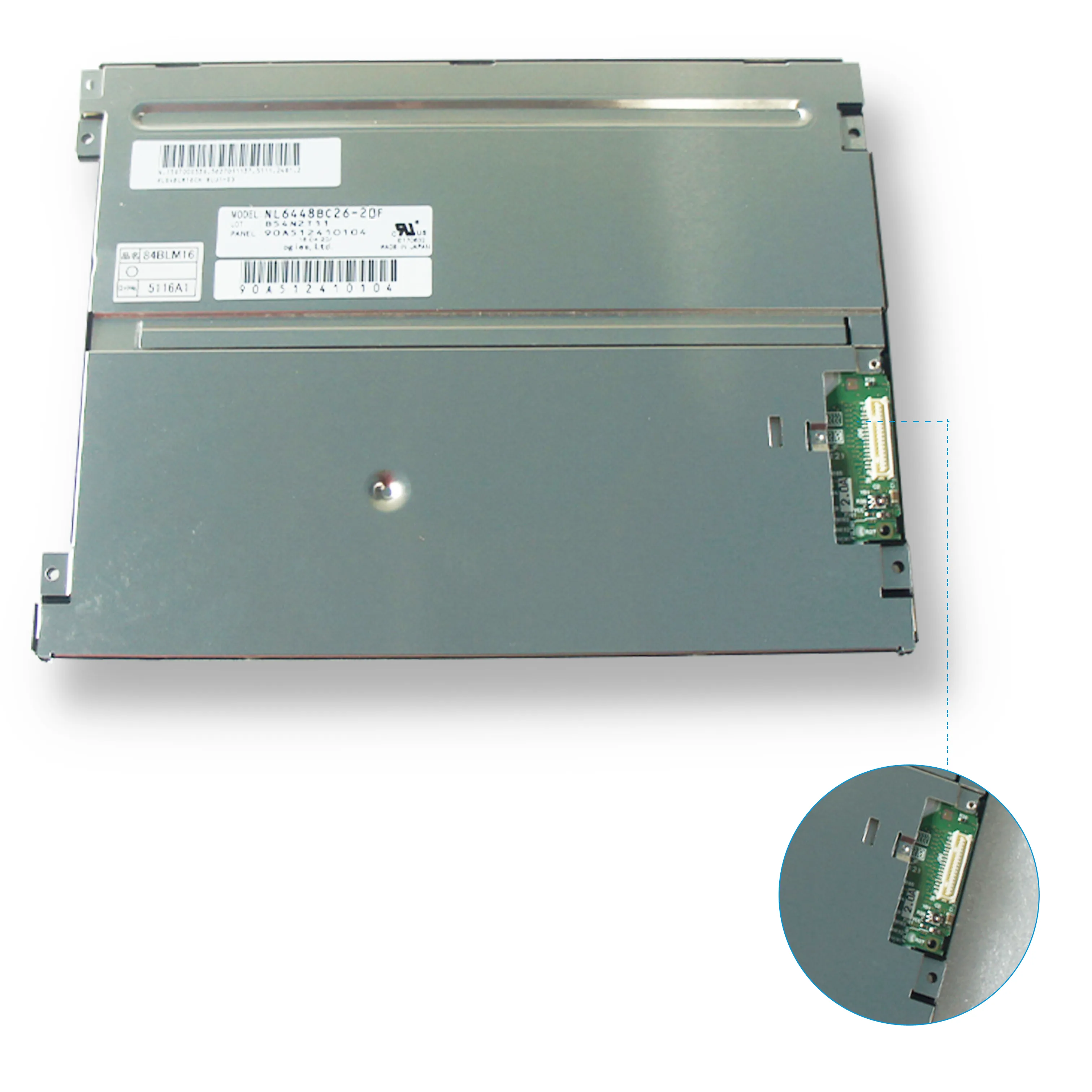

AA104VB04 Mitsubishi 10.4" 640*480 TFT-LCD Panel
In the intricate world of industrial automation, medical instrumentation, and specialized human-machine interfaces (HMIs), the display panel is far more than a simple window to data—it is the critical touchpoint of reliability and clarity. At the heart of many legacy and purpose-built systems lies a specific component: the Display AA104VB04 a-Si TFT-LCD Panel. This 10.4-inch display, with its characteristic 640 x 480 (VGA) resolution, represents a cornerstone of durable display technology, famously integrated into Mitsubishi's robust line of industrial monitors and PLC interfaces.
This article delves deep into the technical essence and enduring application relevance of the AA104VB04 panel. We will move beyond basic specifications to explore the engineering rationale behind its amorphous Silicon (a-Si) TFT architecture, its performance characteristics in demanding environments, and the specific ecosystem for which it was designed. Understanding this panel is not merely an exercise in nostalgia; it is crucial for professionals tasked with maintaining, repairing, or modernizing systems where this display serves as an indispensable component, ensuring operational continuity in mission-critical settings.
The Engineering Foundation: a-Si TFT-LCD Technology
The AA104VB04 is built upon amorphous Silicon (a-Si) Thin-Film Transistor (TFT) technology, a workhorse in the LCD industry known for its balance of performance, manufacturing maturity, and cost-effectiveness for mid-sized panels. Unlike newer technologies like LTPS or OLED, a-Si TFTs are deposited in a non-crystalline form, making the production process relatively stable and scalable. Each pixel in this 640x480 array is controlled by its own TFT, allowing for precise and fast switching that results in a stable image with good response times—a key factor in displaying dynamic data or interface elements without smearing.
This technological choice underpins the panel's reliability and longevity. a-Si TFT-LCDs are less susceptible to image burn-in compared to OLEDs and offer consistent brightness over long operational lifetimes, which is paramount in industrial applications where displays may run continuously for years. The technology provides a robust foundation that meets the essential requirements of clarity, durability, and predictable performance, forming the bedrock upon which the panel's specific features are built.
Decoding the Specifications: 10.4" VGA in Context
The core specifications—10.4-inch diagonal and 640 x 480 VGA resolution—are defining characteristics with clear intentionality. The 10.4-inch form factor became an industry standard for embedded systems and industrial HMIs, offering a substantial viewing area while remaining compact enough for integration into control panels, medical carts, and test equipment. The 4:3 aspect ratio is perfectly suited for legacy software interfaces, diagnostic readouts, and data entry screens that were designed for traditional CRT monitors.
The VGA resolution, while considered low by modern consumer standards, delivers a pixel pitch that yields sharp, legible characters and graphics in a controlled viewing environment. It strikes an optimal balance between information density and rendering simplicity, reducing the computational load on the connected controller. This combination ensures compatibility with a vast array of older generation systems and graphics controllers, making the AA104VB04 a direct replacement component in countless existing installations, thereby extending the service life of critical capital equipment.
Optical and Electrical Performance Profile
The performance of the AA104VB04 is tailored for functional readability under various conditions. It typically features a brightness level of approximately 300-400 nits, sufficient for indoor industrial or medical use without causing excessive power draw or heat generation. The contrast ratio ensures that text and graphics pop from the background, reducing operator eye strain during prolonged monitoring sessions.
Electrically, the panel operates on a single 3.3V power supply for the logic interface and a higher voltage for the backlight (often CCFL, though LED-backlit versions exist), simplifying power design. The interface is usually LVDS (Low-Voltage Differential Signaling), a standard known for its robustness against electromagnetic interference—a critical consideration in electrically noisy factory floors or medical environments. These parameters are not about achieving cinematic brilliance but about delivering unwavering, consistent, and interference-free visual communication.
The Mitsubishi Ecosystem and Integration
The AA104VB04 panel is intrinsically linked to Mitsubishi Electric's ecosystem of industrial automation products. It was the designated display module for several generations of Mitsubishi's GOT (Graphic Operation Terminal) series, PLC touchscreen interfaces, and other specialized monitors. These systems are deployed globally in manufacturing plants, energy facilities, and infrastructure projects.
Integration here is key. The panel is not a standalone consumer product but a component engineered to precise mechanical, electrical, and optical specifications to fit seamlessly into a larger housing with a dedicated controller board. Understanding this integration is vital for repair technicians and engineers. It involves matching not just the physical dimensions and mounting holes, but also the connector type, pinout, backlight inverter requirements, and firmware compatibility to ensure a perfect functional match within the Mitsubishi system architecture.


Typical Applications and Use Case Scenarios
Industrial Automation: As the interface for PLCs on factory assembly lines, robotic control stations, and process monitoring systems.
Medical Equipment: Integrated into diagnostic devices, patient monitoring systems, and laboratory analyzers where reliability is non-negotiable.
Transportation and Infrastructure: Used in fleet management systems, railway control displays, and utility substation HMIs.
Specialized Point-of-Sale/Kiosks: In environments demanding longer lifecycles and higher durability than commercial panels.
In each scenario, the panel is valued for its ability to perform continuously in temperature-variable, potentially humid, and vibration-prone environments where a commercial display would quickly fail. Its role is operational and mission-critical, far removed from the disposable nature of consumer electronics.
Maintenance, Sourcing, and Legacy Considerations
As systems containing the AA104VB04 age, maintenance becomes a central concern. The panel is a common point of failure due to backlight degradation, physical damage, or eventual TFT wear. Sourcing a genuine or high-quality compatible replacement is crucial. The market offers original, refurbished, and third-party compatible modules.
Professionals must verify not just the model number but also the revision code and backlight type (CCFL vs. LED) to ensure compatibility. Furthermore, the growing obsolescence of such panels presents a challenge, pushing many to consider system-wide upgrades. However, for cost-sensitive or certification-bound industries (like medical or aviation), a direct panel replacement remains the most practical and often the only viable path to extend the operational lifespan of the entire system for another decade.
FAQs
Q10: Where can I source a reliable AA104VB04 replacement?A10: From specialized industrial electronic component distributors, reputable refurbishers, or through official Mitsubishi service channels, ensuring quality is critical.
Conclusion
The Display AA104VB04 a-Si TFT-LCD Panel is far more than a collection of specifications. It is a durable, purpose-built component that has powered the visual interface of critical systems across industries for years. Its design, centered on reliable a-Si technology, the pragmatic 10.4-inch VGA format, and robust electrical performance, reflects an engineering philosophy prioritizing longevity and functional clarity over fleeting trends.
For engineers, technicians, and procurement specialists, a deep understanding of this panel is invaluable. It empowers informed decision-making for maintenance and repair, ensuring the continuity of essential operations. In an era of rapid technological turnover, the AA104VB04 stands as a reminder that in industrial and medical contexts, proven reliability and seamless integration often hold greater value than mere pixel count, cementing its legacy as a workhorse of the embedded display world.