






- Industrial LCD display
-
Industrial Products
- DC Servo Drive
- AC Servo Drive
- other
- Heidelberg
- FANUC
- IFM
- Meter
- CCD
- Membrane Keypad
- Film
- YOKOGAWA Module
- Card
- ABB
- MITSUBISHI
- FANUC
- KEYENCE
- BECKHOFF
- Honeywell
- HOLLYSYS
- FUJI servo drives
- HP
- solenoid valve
- thermostat
- Siemens adapter
- color oscilloscope
- Fujitsu connector
- CHELIC
- SMC
- CISCO Module
- INTEL
- Key board
- FAIRCHILD
- Motherboard
- Board
- Bearing
- other
- Control Panel
- Contactor
- Circuit
- OMRON
- Relay
- Controller
- Photoelectric Switch
- Photoelectric Sensor
- Original
- Fan
- Motor Driver
- Limit Switch
- Amplifier
- power supply
- LENZE
- Cable
- Encoder
- Sensor
- Transformer
- Fiber Optic Sensor
- Protection Relay
- Temperature Controller
- Proximity Switch
- Switch Sensor
- Siemens
- Industrial board
- HMI Touch Glass
-
HMI Full Machine Whole unit
- OMRON HMI Touch Panel
- Siemens HMI Touch Panel
- Mitsubishi HMI Touch Panel
- Allen-Bradley automation HMI Touch Panel
- DELTA HMI Touch Panel
- EVIEW DELTA HMI Touch Panel
- KINCO DELTA HMI Touch Panel
- HITECH HMI Touch Panel
- WEINTECK HMI Touch Panel
- TECVIEW HMI Touch Panel
- WEINVIEW HMI Touch Panel
- PRO-FACE HMI Touch Panel
- SIMATIC HMI Touch Panel
- AMPIRE HMI Touch Panel
- HEIDELBERG HMI Touch Panel
- PANASONIC HMI Touch Panel
- PATLITE HMI Touch Panel
- KYOCERA HMI Touch Panel
- KEYENCE HMI Touch Panel
- WEINVIEW HMI Touch Panel
- HITECH HMI Touch Panel
- FUJI HMI Touch Panel
- HAKKO HMI Touch Panel
- SCHNEIDER HMI Touch Panel
- SAMKOON touch panel
- other
- Module
- lcd inverter
- Membrane Keypad Switch
- Winni Touch Screens
- Frequency Inverter
- Servo Motor
- PLC


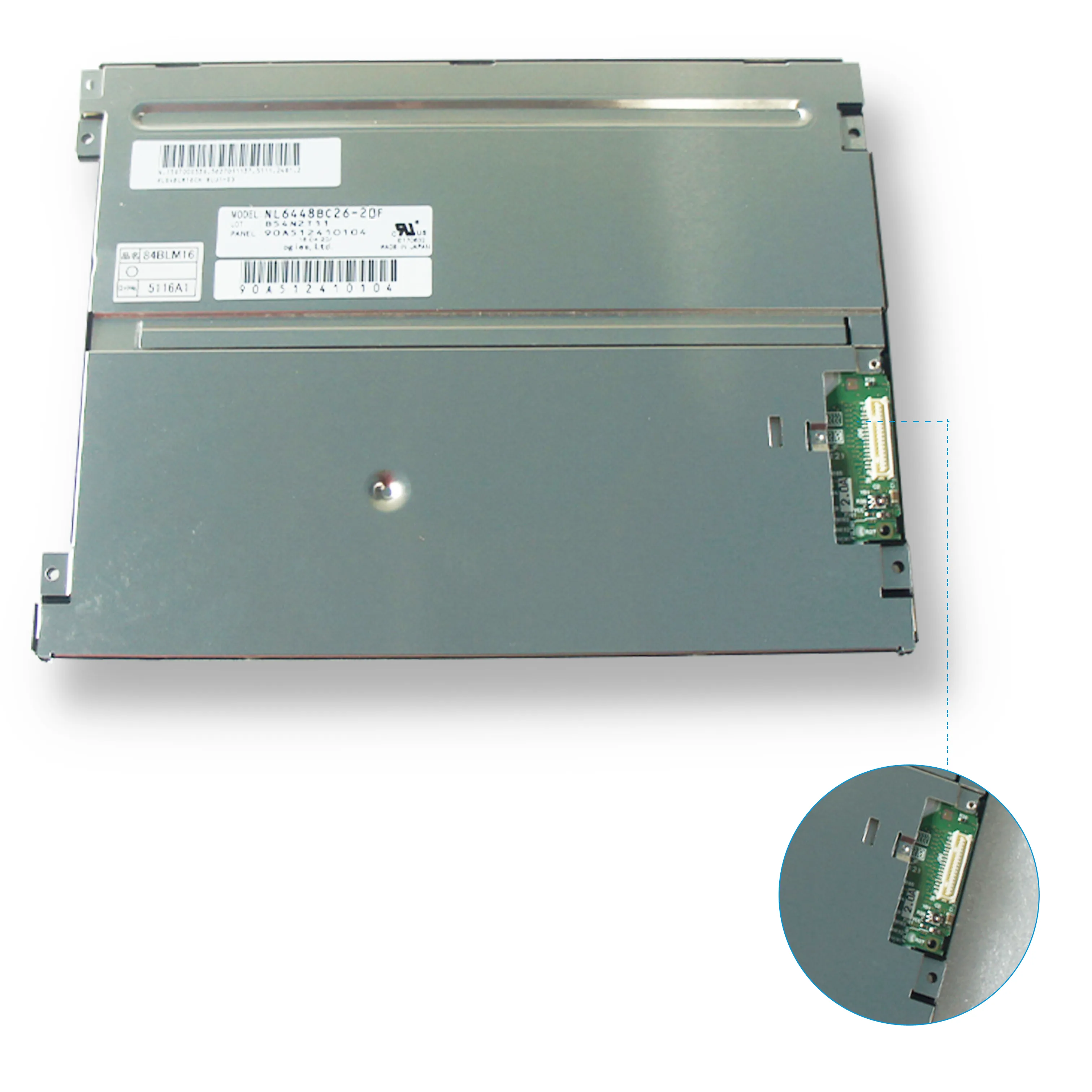

In the intricate ecosystem of electronic devices, the display panel serves as the critical interface between human and machine. For engineers, procurement specialists, and product developers, selecting the right component is a decision that directly impacts performance, cost, and end-user satisfaction. This article delves into a detailed examination of the new AA084VF01 8.4" LCD display screen panel, a component garnering significant attention in industrial, medical, and embedded systems markets.
Moving beyond basic datasheet specifications, we will explore the technical architecture that defines this panel, from its TFT-LCD core to its advanced optical bonding options. We will analyze its performance benchmarks, including luminance, contrast, and color gamut, and contextualize these figures within real-world application demands. Furthermore, this analysis will cover the panel's ruggedized design features, compatibility and interface considerations, and provide a comparative market analysis. Our goal is to offer a comprehensive resource that empowers professionals to make an informed decision on whether the AA084VF01 is the optimal visual solution for their next-generation project.
Technical Architecture and Core Specifications
The AA084VF01 is built on a robust a-Si TFT (Thin-Film Transistor) LCD foundation, engineered for stability and long-term reliability. Its 8.4-inch diagonal screen offers a resolution of 800 x 600 pixels (SVGA), delivering a balanced pixel density suitable for detailed graphical user interfaces and data visualization without excessive processing overhead. The panel typically features a standard RGB stripe arrangement, ensuring accurate color reproduction for icons, graphs, and text.
At its heart, the panel utilizes a high-efficiency LED backlighting system. This system is key to its performance, providing a uniform light source that can be tuned for specific brightness requirements. The core mechanical and electrical specifications—such as its outline dimensions, active area, and standard operating voltage—are designed for drop-in compatibility with a wide range of existing chassis and controller boards. Understanding this foundational architecture is crucial, as it sets the stage for the enhanced features and performance capabilities discussed in subsequent sections.


Performance Benchmarks: Luminance, Contrast, and Color
Complementing its brightness is a high static contrast ratio, such as 1000:1. This metric defines the difference between the darkest black and the brightest white the panel can produce simultaneously. A high ratio translates to deeper blacks, more vibrant colors, and superior image depth, which is critical for distinguishing fine details in medical imaging or complex CAD diagrams. While color gamut (often covering 70%+ of NTSC) is adequate for most professional applications, the combination of high luminance and high contrast forms the cornerstone of its visual clarity.
Ruggedized Design for Demanding Environments
The true value of the AA084VF01 becomes apparent in its construction, tailored for non-consumer applications. Many variants feature optical bonding, a process where a transparent resin is laminated directly onto the LCD cell. This technology eliminates the air gap between the glass and the touch sensor or cover lens, drastically reducing internal reflection and fogging. The result is enhanced sunlight readability, superior mechanical durability, and a more robust seal against moisture and dust ingress.
Furthermore, the panel is designed to operate across a wide temperature range, typically from -30°C to +80°C. This resilience ensures reliable startup and operation in freezing cold warehouses or near hot industrial machinery. The glass surface is often chemically strengthened to resist scratches and impacts. This ruggedized package makes it an ideal candidate for transportation, heavy equipment, avionics, and field-deployed devices where reliability is non-negotiable.
Compatibility and Interface Integration
Seamless integration is a primary concern for engineers. The AA084VF01 commonly utilizes an LVDS (Low-Voltage Differential Signaling) interface. LVDS is a mature, widely adopted standard in the industrial display market, known for its robustness, noise immunity, and ability to transmit high-speed data over longer distances within a device. This simplifies the connection to a host of compatible controller boards and single-board computers.
Procurement teams must pay close attention to the specific pin configuration, connector type (often a standard 20-pin or 30-pin FPC connector), and power requirements detailed in the panel's datasheet. Additionally, the market offers versions with integrated resistive or projective capacitive touchscreens, providing a complete human-machine interface (HMI) solution. Verifying these interface details against the system's main controller is a critical step to avoid costly redesigns or compatibility issues later in the development cycle.
Comparative Market Analysis and Application Scenarios
Positioning the AA084VF01 within the broader market clarifies its unique value proposition. Compared to consumer-grade 8-inch panels, it commands a premium, justified by its high-brightness, wide-temperature operation, and rugged features. Against other industrial panels, it often strikes a competitive balance between performance, availability, and cost, especially in volume procurement.
Its application scenarios are highly specialized. In the medical field, it is suited for diagnostic equipment, patient monitors, and surgical displays where clarity and reliability are paramount. In industrial automation, it serves as the interface for PLCs, control panels, and test/measurement devices. Transportation and logistics utilize it in fleet management systems, forklift terminals, and aviation displays. Understanding these target applications helps buyers assess if the panel's capabilities align with their specific environmental and performance demands.
Procurement Considerations and Supply Chain Factors
Finalizing the selection of the AA084VF01 involves several practical considerations. Lead time and availability are crucial, especially for projects with tight development schedules. Establishing a relationship with a reputable distributor or directly with the manufacturer can mitigate supply chain risks. Secondly, consider the total cost of ownership, which includes not just the unit price, but also potential costs for mounting brackets, custom cables, or compatible controllers.
Evaluating the manufacturer's support and documentation is also vital. Comprehensive datasheets, application notes, and technical support can significantly accelerate integration. For long-lifecycle products, inquire about the panel's end-of-life (EOL) policy and long-term availability forecasts. Finally, requesting evaluation samples is a highly recommended step to physically test the panel's performance in the actual application environment before committing to a large-scale purchase.
FAQs
Q10: What should I request from a supplier before purchasing?A: Always ask for the detailed datasheet, a sample for evaluation, current lead times, and information on long-term availability.
Conclusion
The AA084VF01 8.4" LCD panel emerges as a specialized component engineered for performance beyond the consumer realm. Its value proposition is built on a triad of exceptional high-brightness output, ruggedized construction featuring technologies like optical bonding, and reliable operation across extreme environmental conditions. These attributes make it not merely a display, but a critical, durable interface for mission-critical systems in industrial, medical, and transportation sectors.
Selecting such a component requires a holistic view that balances technical specifications with practical integration and supply chain realities. By thoroughly evaluating its architecture, performance, compatibility, and lifecycle within the context of your specific application, you can determine if the AA084VF01 is the optimal solution to ensure clarity, reliability, and longevity in your product's visual interface. In a world where device performance is often judged at the point of interaction, investing in a superior display panel is an investment in the product's ultimate success.