






- Industrie-LCD-Display
-
Industrial Products
- DC Servo Drive
- AC Servo Drive
- other
- Heidelberg
- FANUC
- IFM
- Meter
- CCD
- Membrane Keypad
- Film
- YOKOGAWA
- Card
- ABB
- MITSUBISHI
- FANUC
- KEYENCE
- BECKHOFF
- Honeywell
- HOLLYSYS
- FUJI servo drives
- HP
- solenoid valve
- thermostat
- Siemens adapter
- color oscilloscope
- Fujitsu connector
- CHELIC
- SMC
- CISCO
- INTEL
- Key board
- FAIRCHILD
- Der Aufsichtsrat
- Board
- Bearing
- other
- Control Panel
- Contactor
- Circuit
- Omron
- Relais.
- Der controller
- Optoelektronische schalter
- Optoelektronische sensoren
- Original
- Fan
- Motortreiber
- Endschalter
- Verstärker
- power supply
- LENZE
- Cable
- Encoder
- Sensor
- Transformator
- Fiber Optic Sensor
- Schutzrelais
- Temperaturregler
- Näherungsschalter
- Switch Sensor
- Siemens
- PCB
- HMI Touch-Glas
-
HMI-Vollautomat Ganze Einheit
- OMRON HMI Touch Panel
- Siemens HMI Touch Panel
- Mitsubishi HMI Touch Panel
- Allen-Bradley Automatisierung HMI Touch
- DELTA HMI Touch Panel
- EVIEW DELTA HMI Touch Panel
- KINCO DELTA HMI Touch Panel
- HITECH HMI Touch Panel
- WEINTECK HMI Touch Panel
- TECVIEW HMI Touch Panel
- WEINVIEW HMI Touch Panel
- PRO-FACE HMI Touch Panel
- SIMATIC HMI Touch Panel
- AMPIRE HMI Touch Panel
- HEIDELBERG HMI Touch Panel
- PANASONIC HMI Touch Panel
- PATLITE HMI Touch Panel
- KYOCERA HMI Touch Panel
- KEYENCE HMI Touch Panel
- WEINVIEW HMI Touch Panel
- HITECH HMI Touch Panel
- FUJI HMI Touch Panel
- HAKKO HMI Touch Panel
- SCHNEIDER HMI Touch Panel
- SAMKOON touch panel
- andere
- Module
- LCD Wechselrichter
- Membran Tastenfeld Schalter
- Winni Touch Screens
- Frequenzumrichter
- Servo Motor
- PLC


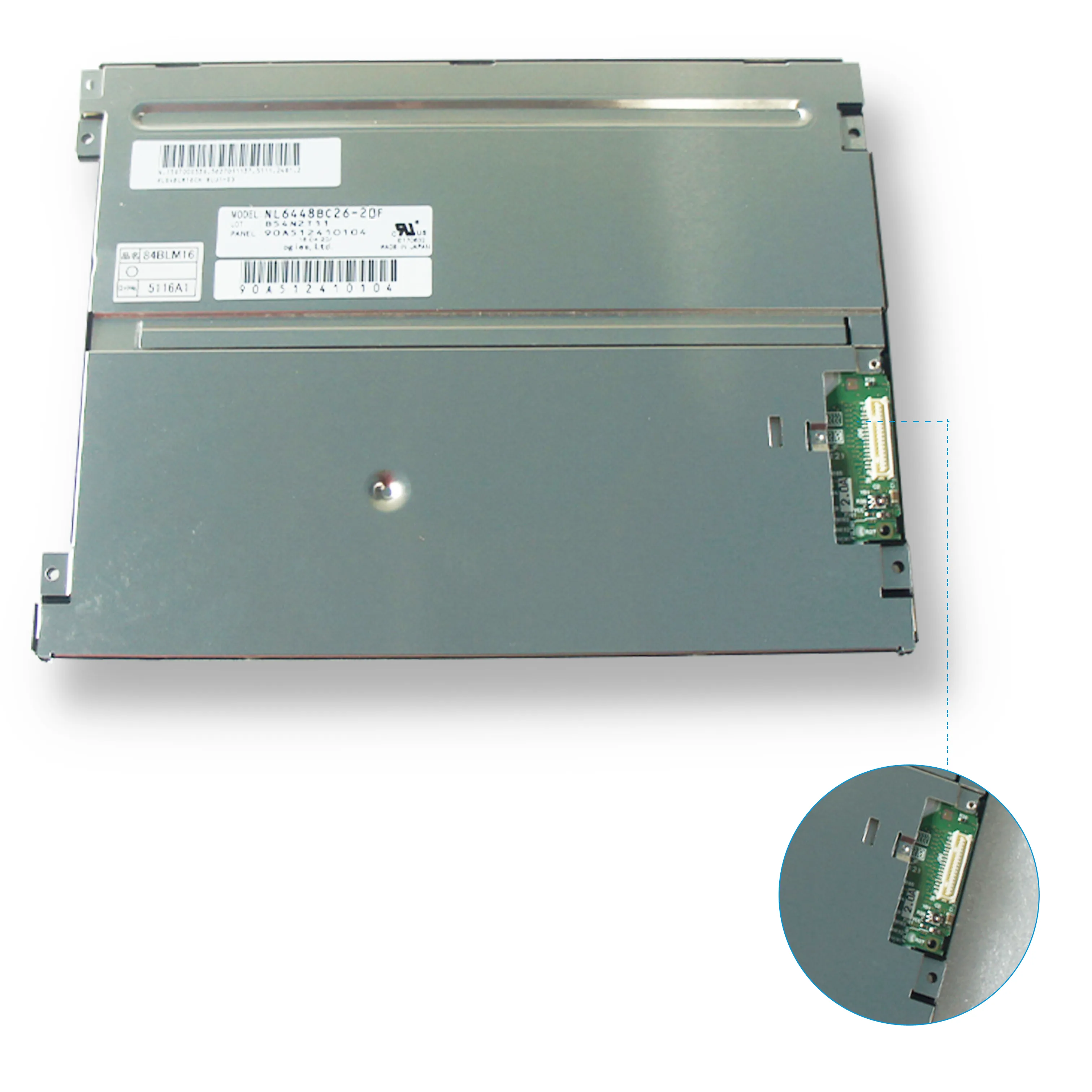

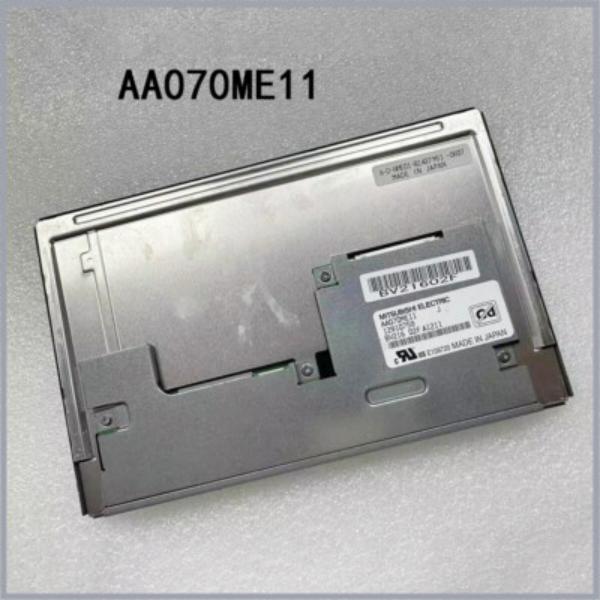
In the intricate world of industrial automation, control, and specialized display applications, the choice of human-machine interface (HMI) components is a critical decision that impacts system reliability, clarity, and user interaction. Among the myriad of options available, the AA070ME11 Mitsubishi 7-inch LCD Display stands out as a notable solution from a renowned industrial electronics manufacturer. This new display module represents more than just a screen; it is a sophisticated integration of proven technology designed for demanding environments.
This article delves into a comprehensive analysis of the AA070ME11, moving beyond basic specifications to explore its architectural strengths, ideal application scenarios, and the tangible value it brings to system integrators and product designers. We will examine why this specific module is engineered for longevity and performance, how it interfaces with broader systems, and what considerations are paramount for its successful implementation. Our goal is to provide a resource that informs strategic decision-making for professionals seeking a robust and high-quality display solution.
Engineering Excellence: Core Architecture of the AA070ME11
The Mitsubishi AA070ME11 is built upon a foundation of industrial-grade engineering. At its heart is a 7-inch diagonal TFT (Thin-Film Transistor) LCD panel, typically offering a resolution of 800 x RGB x 480 (WVGA). This resolution ensures sharp text and clear graphics, which is essential for displaying complex control parameters or diagnostic data. The module incorporates a high-brightness LED backlight system, guaranteeing excellent visibility even in brightly lit operational settings such as factory floors or outdoor kiosks.
Unlike consumer-grade displays, the AA070ME11 is designed for continuous operation and extended lifecycle. It features robust construction that mitigates common failure points. The integration of a LVDS (Low-Voltage Differential Signaling) interface is a key aspect of its architecture. LVDS provides a high-speed, low-noise, and low-power data transmission link between the display module and the controlling board (such as an SBC or FPGA), ensuring signal integrity over longer cable runs typical in industrial cabinets. This focus on reliable signal transmission and environmental resilience forms the bedrock of its value proposition.
Defining the Application Landscape
The true measure of a component lies in its suitability for real-world tasks. The AA070ME11 finds its niche in applications where reliability is non-negotiable and environmental factors are challenging. It is a prime candidate for industrial HMIs on PLC-controlled machinery, CNC operator panels, and process control dashboards. Its clarity and durability make it equally suitable for medical monitoring equipment, where consistent performance is critical.
Beyond heavy industry, this module excels in transportation systems (e.g., in-vehicle information displays, railway status boards), test and measurement instruments, and point-of-sale/information kiosks. In each scenario, the display must withstand vibrations, temperature fluctuations, and prolonged usage without degradation. The AA070ME11’s design philosophy directly addresses these demands, positioning it not as a generic screen, but as a specialized component for integrated systems where failure is not an option.
The Critical Role of Interface and Integration
Purchasing a display module is only the first step; seamless integration into the larger electronic ecosystem is paramount. The AA070ME11’s LVDS interface, while a standard for performance, requires a compatible controller. System designers must either select a single-board computer with an LVDS output or utilize an intermediary controller board (often called a LCD driver board) to convert signals from common interfaces like HDMI or VGA.
This integration phase involves careful attention to the pinout definition, power supply requirements (typically 3.3V or 5V for logic and a higher voltage for the backlight), and timing control signals. Furthermore, mechanical integration—considering bezel dimensions, mounting holes, and the connection of the delicate LVDS ribbon cable—requires precise planning. Successful deployment hinges on understanding these electrical and physical interfacing requirements, which are detailed in the module's datasheet.
Comparative Advantages in a Crowded Market
When evaluated against other 7-inch industrial displays, the AA070ME11 presents distinct advantages rooted in the Mitsubishi brand's heritage. First is supply chain consistency and longevity; industrial manufacturers often require components with guaranteed availability over many years, which reputable suppliers like Mitsubishi provide. Second is quality assurance; the module undergoes rigorous testing for performance under extreme temperatures, humidity, and shock, offering peace of mind that cheaper commercial panels cannot.
While lower-cost alternatives exist, they frequently compromise on backlight uniformity, viewing angle consistency, or long-term reliability. The AA070ME11 offers a balanced proposition of proven performance, comprehensive technical documentation, and supplier accountability. For projects where total cost of ownership (including maintenance and downtime) is a key metric, this module’s reliability often leads to a lower long-term cost despite a potentially higher initial purchase price.
Key Specification Deep Dive and Selection Criteria
Informed selection requires a detailed look at the specifications. Key parameters for the AA070ME11 include:
Brightness: Often exceeding 400 cd/m², crucial for daylight visibility.
Viewing Angles: Typically 70/70/50/70 (Left/Right/Up/Down) degrees, ensuring readability from various positions.
Operating Temperature Range: A wide range, often from -20°C to +70°C, defining its environmental robustness.
Backlight Lifetime: Rated for tens of thousands of hours, often at 50,000 hours or more.
Selecting this module involves matching these specs to the project's environmental demands and lifecycle expectations. Designers must also verify mechanical dimensions against their enclosure design and confirm the exact LVDS pin configuration matches their controller. Overlooking these details can lead to integration delays and increased costs.
Future-Proofing and Long-Term Support Considerations
Investing in an industrial component like the AA070ME11 is a long-term decision. One of its most significant, though less tangible, benefits is the support infrastructure behind it. Mitsubishi provides detailed technical datasheets, application notes, and often, continued manufacturing support for years, protecting customers from abrupt obsolescence. This is vital for products with long development and field life cycles, such as capital equipment or medical devices.
Furthermore, the module’s use of the stable LVDS standard helps future-proof designs. As a mature and widely adopted interface in the industrial space, finding compatible controllers and expertise is easier compared to more proprietary solutions. By choosing a well-documented, standards-based module from a reliable manufacturer, engineers mitigate the risk of their display becoming a single point of failure or obsolescence in the future, safeguarding their product's serviceability and reputation.
FAQs: AA070ME11 Mitsubishi 7-Inch LCD Display
Q10: Why is long-term supply important?A10: For industrial products with multi-year lifecycles, consistent component availability prevents costly redesigns due to parts obsolescence.
Conclusion
The Mitsubishi AA070ME11 7-inch LCD display module exemplifies the intersection of precision engineering and practical application. It transcends being a mere commodity screen, establishing itself as a core component for systems where performance cannot be left to chance. Its value is derived from a combination of robust construction, the reliable LVDS interface, and the assurance of quality and support associated with the Mitsubishi brand.
For system integrators and product developers, selecting this module is a strategic decision that prioritizes long-term reliability and clarity over short-term cost savings. It is an investment in reducing field failures, simplifying integration through clear standards, and ensuring product longevity. In the demanding arenas of industrial and professional electronics, the AA070ME11 stands as a testament to the principle that the right component, chosen for the right reasons, forms the foundation of a superior end product.